
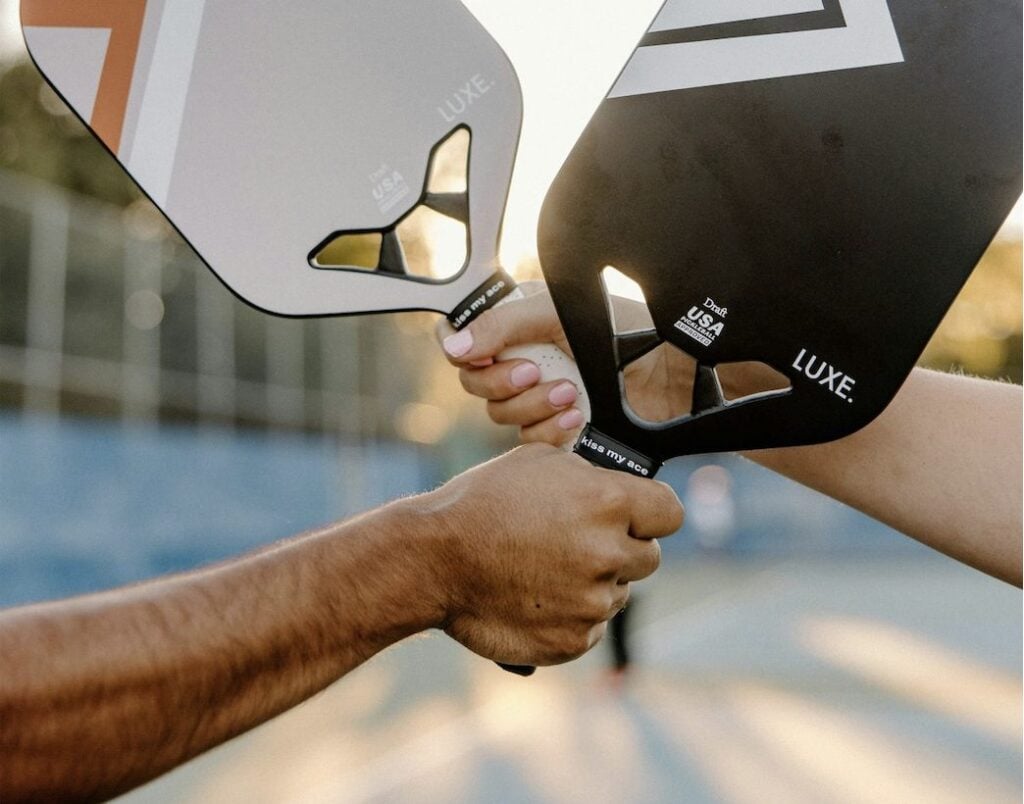

How High to Hold the Paddle
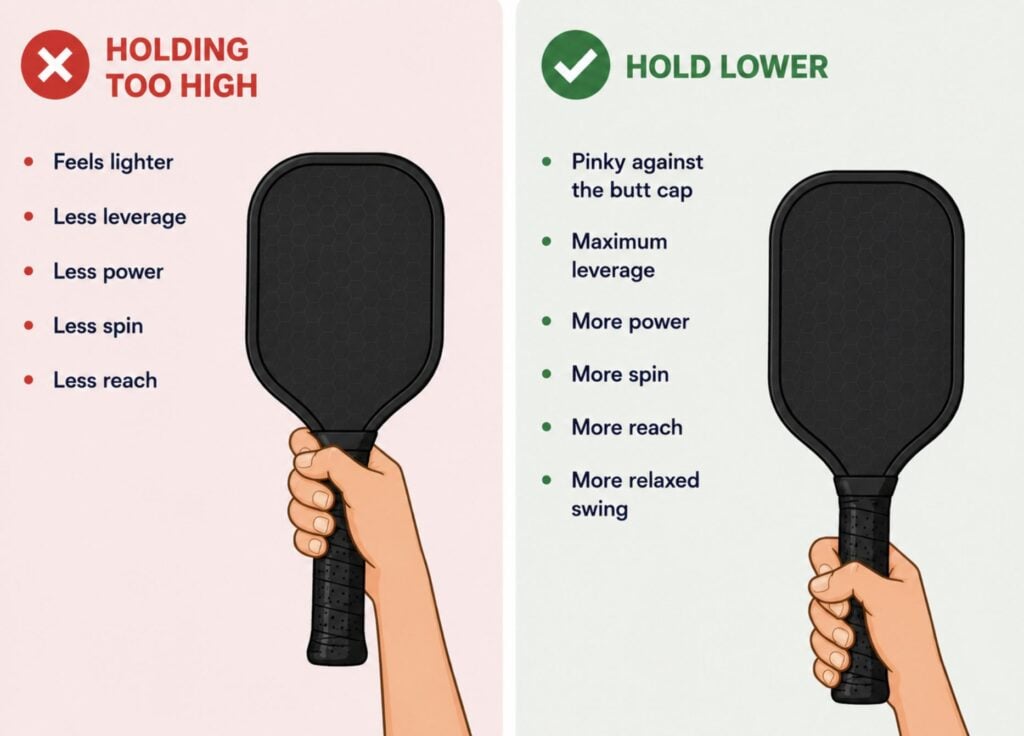
It’s not just how you hold the paddle that matters, it’s also how high you hold it on the handle.
Many newer players naturally grip the paddle close to the paddle face because it feels lighter, more stable, and easier to control. While it may feel comfortable at first, holding the paddle too high actually reduces your leverage and limits your performance.
Instead, aim to hold the paddle lower on the handle, with your pinky finger resting flush against the butt cap. This simple adjustment maximizes the length of the lever, allowing the paddle to work more efficiently.
Holding the paddle lower gives you:
✅ More power with less effort
✅ Greater reach on wide balls
✅ More spin by increasing paddle head speed
✅ A smoother, more relaxed swing, helping reduce tension and lowering your risk of injury
Holding the paddle lower is one of the easiest changes you can make to improve your game immediately!
Choosing the Right Grip Size
Most players spend hours choosing a paddle but very little time thinking about grip size. Yet the diameter of your grip affects comfort, control, wrist movement and even injury risk.
1.Grip That’s Too Small
A grip that’s too small forces your fingers to wrap too far around the handle. This can cause excess wrist movement, reduced stability, paddle twisting on off-centre hits, hand fatigue and increased risk of tennis or golfer’s elbow.
Some players deliberately use a slightly smaller grip because it makes generating spin easier, but it also requires greater grip strength to control the paddle.
2.A Grip That’s Too Large
A grip that’s too large makes it harder to fully wrap your fingers around the handle. This often leads to reduced wrist mobility, slower grip changes, less feel on dinks and resets, earlier forearm fatigue.
Large grips can also make it difficult for players with smaller hands to maintain a relaxed grip pressure.
How To Measure
The best way to select the correct grip size is to allow for one index finger space between your hand and fingers when wrapped around the handle. It’s always better to buy a grip that is too small because then you can make it bigger using over grips.
Grip Pressure
How tightly you hold the paddle matters just as much as which grip you use. Many players grip their paddle very tight. This can cause injuries, cause early arm fatigue, reduces your power capability, reduces spin, touch and control.
A good rule of thumb on a scale of 1 to 10, your grip pressure should sit around a 4 or 5. Firm enough to control the paddle, loose enough that your wrist and forearm stay relaxed. Think of holding a tube of tooth paste. Hold it firm enough that you don’t drop it, but loose enough that you don’t squeeze out the paste!
How To Find The Grips
Before we talk about all of the main grips and what shots they work best for let’s look at how to find them around the handle.
Bevel Method:
To find the correct grip, the best method is using the bevel method. Bevel number one starts at the top with the paddle being on edge and the paddle face to the side:
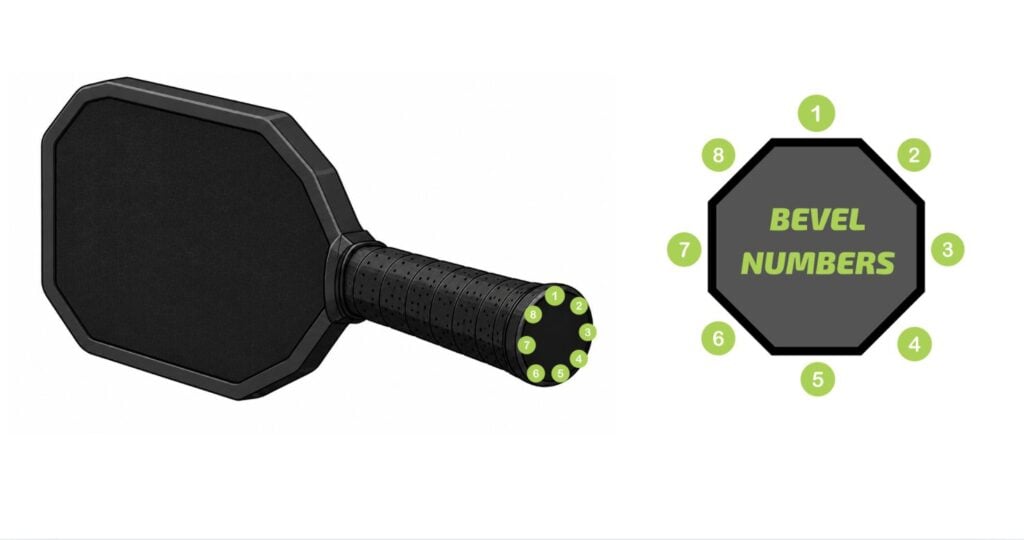
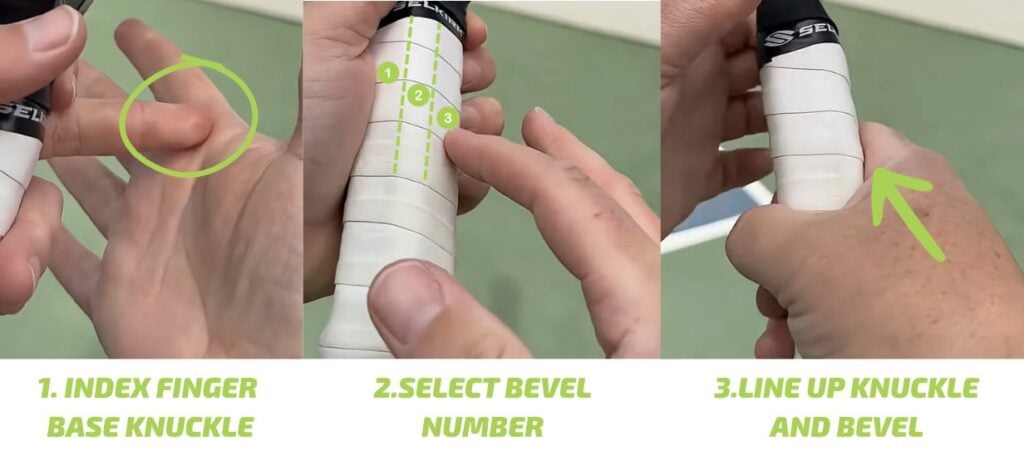
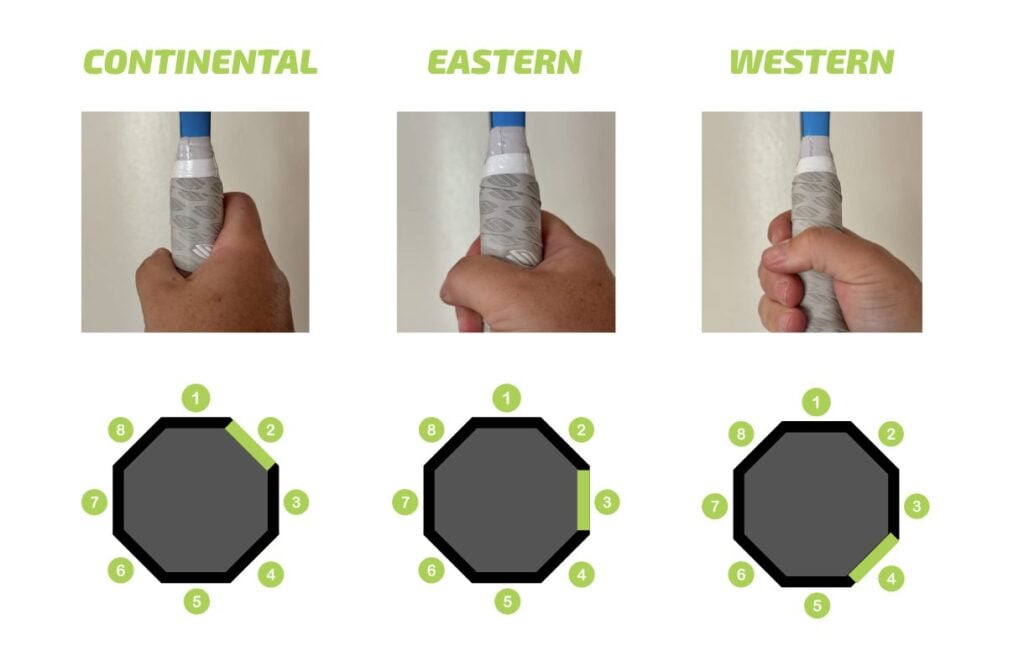
Each grip corresponds to a specific bevel number. To find the correct grip, place the base knuckle/pad of your index finger on the matching bevel. The required bevel number for each grip is listed below. For example see image below: Eastern Forehand Grip (Bevel 3).
The Forehand Grips
There are three main forehand grips:
1. The Continental Grip
The continental grip is the one most coaches recommend beginners start with, and for good reason. You don’t need to switch your grip between shots, it’s the only grip that allows this. In a fast kitchen exchange, the last thing you want to be thinking about is repositioning your hand. The continental lets you react instinctively. It’s the most versatile grip in pickleball. However continental doesn’t enable you to apply topspin as easily as the other grips.
What It’s Great For
- All shots
- Fast exchanges (hand battles)
- Fast changes from forehand to backhand side (volleys, dinks)
- Slice (both forehand and backhand side)
- Can reach lower shots more easily
How To Find The Continental Grip
To find it, hold the paddle like you are hammering a nail so the edge of the paddle is facing straight down. Also the base knuckle of your index finger should sit on bevel number 2.

2. The Eastern Grip
The eastern grip moves your hand a little further onto the back of the handle so pushes your natural contact point a bit further out in front. This suits forehand drives, drops and dinks and enables you to more naturally generate some topspin. It also helps you get more spin on your volleys and serves.
What It’s Great For
- All forehand side shots (serve, return, drive, drop, dinks, volleys and lob)
- Enables a faster change from forehand to backhand grip than western.
How To Find The Eastern Grip
The base knuckle of your index finger should sit on bevel number 3.
3. The Western Grip
If you are coming from tennis then the pickleball western grip is the equivalent of the semi-western. It turns the hand round another bevel towards the back of the paddle and forces the contact further out in front. It’s great for generating topspin but limits your ability to handle lower balls.
What It’s Great For
- Heavy Topspin shots that don’t require a fast grip change (serve, lob, high volleys)
- Singles play that requires more groundstrokes with topspin
How To Find The Western Grip
The base knuckle of your index finger should sit on bevel number 4.
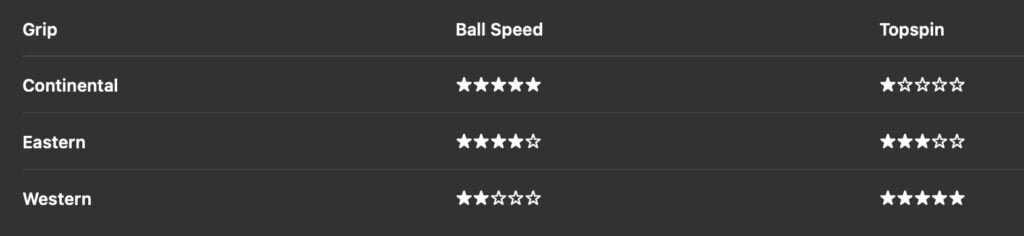
Forehand Grips: Power x Spin
Continental grip provides the most power because it naturally promotes a flatter shot and western helps you generate the most spin.
The Backhand Grips
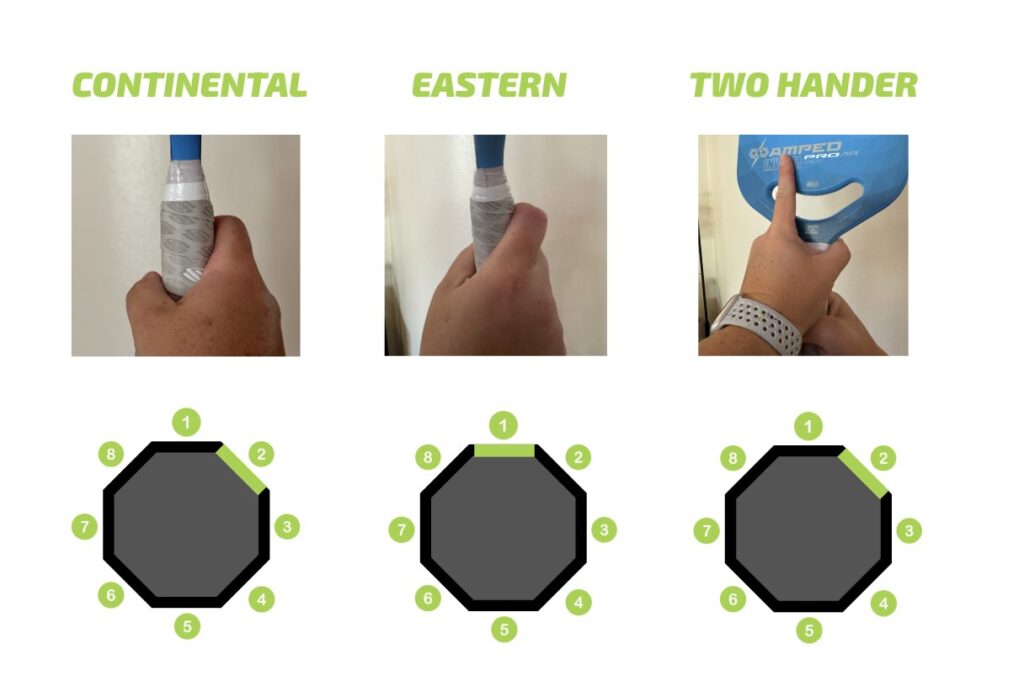
There are three main backhand grips:
1. The Continental Grip
As we have already discussed in the forehand section, the continental grip can also be used for the backhand!
What It’s Great For
- All shots
- Fast exchanges (hand battles)
- Fast changes from forehand to backhand side (volleys, dinks)
- Slice (both forehand and backhand side)
- Can reach lower shots more easily
How To Find The Continental Grip
To find it, hold the paddle like you are hammering a nail so the edge of the paddle is facing straight down. Also the base knuckle of your index finger should sit on bevel number 2.
2. The Eastern Backhand Grip
The eastern backhand grip moves your hand a little further onto the back of the handle so pushes your natural contact point a bit further out in front to generate more topspin. This suits backhand drives, drops and dinks and enables you to more naturally generate some topspin. It’s a great choice for those who play a lot of singles and rely on some heavy groundstrokes.
What It’s Great For
- All backhand shots (return, drive, drop, dinks, volleys and lob)
How To Find The Eastern Grip
The base knuckle of your index finger should sit on bevel number 1.
3. The Two Hander Grip
There are several ways you can hold the paddle with two hands but this is the most common way. It makes use of a supporting index finger on the back of the paddle face. This helps with hook shots and also for stability.
What It’s Great For
- Heavy Topspin shots that require shaping such as dinks and drops.
- Extra stability and dealing with incoming pace.
Why Do Grips Change Your Contact Point?
We already mentioned that different grips promote different contact points. Rotating your hand around the handle also rotates the paddle face. The further your hand moves underneath the handle, the further out in front you must contact the ball to keep the paddle square at contact. It also changes the natural height of contact. This is why continental is better for reaching lower balls and western good for high forehand shots such as a volley.
Continental = lower and closer to the body
Eastern/Two Hander = mid height and further in front
Western = highest contact and furthest in front
Which Grip Should You Use?
If you’re a beginner or don’t feel comfortable making quick grip changes between shots, the continental grip is the best place to start. It allows you to hit serves, volleys, dinks, resets, overheads, and backhands without changing your hand position, making it ideal for learning the fundamentals and reacting quickly at the kitchen.
As your forehand develops, many players naturally transition to an eastern grip. This offers a great balance of power and topspin while still allowing relatively quick grip changes for volleys and backhands. It’s the most versatile option and is used by many of today’s top pickleball players.
Players looking to generate heavier topspin on drives and groundstrokes may prefer a western grip. While it produces the most spin, it also makes volleys, dinks, and resets more challenging because the paddle face naturally closes. Unless you’re prepared to make frequent grip changes, a Western grip can limit your all-court game.
For most recreational players, the eastern grip offers the best overall balance, while the continental remains an excellent choice for beginners and players who prioritize versatility and hand speed. Ultimately, the best grip is the one that complements your playing style, athletic ability, and willingness to change grips during a rally.
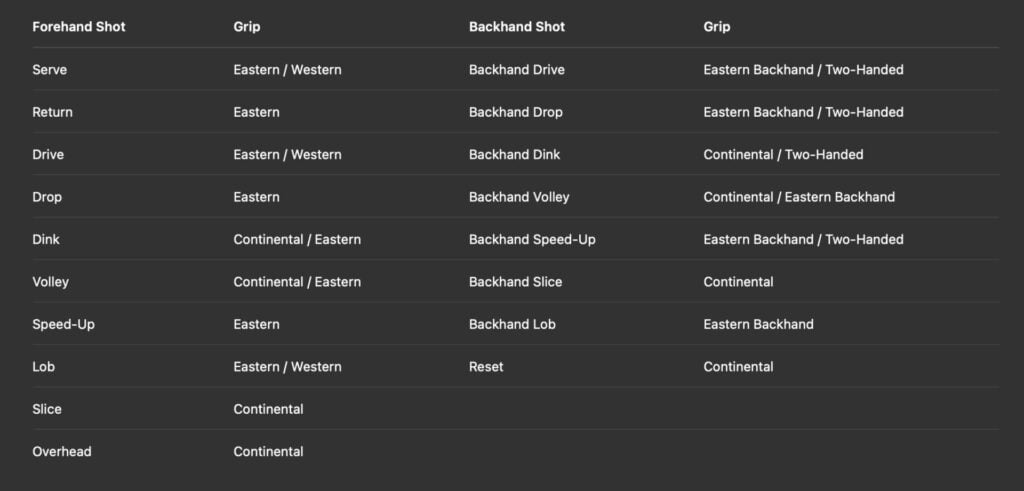
Grips By Shot
If you are advancing your game and looking to change your grip by shot here are some good examples of grips to use by shot:
Summary
Your grip influences every shot you hit in pickleball. It affects your contact point, paddle face angle, power, spin, control, and how quickly you can react during a rally. By understanding the strengths and limitations of each grip, you can make better decisions about when to use them and develop a more complete all-court game.
For most beginners, the Continental grip is the ideal starting point because it allows you to play every shot without changing your hand position. As your game develops, the Eastern grip offers an excellent balance of power, topspin, and versatility, making it the preferred choice for many advanced recreational and professional players. If your game revolves around aggressive topspin, particularly in singles, the Western grip can be a valuable weapon, provided you’re comfortable making quicker grip changes.
Remember that good gripping technique goes beyond simply choosing the right grip. Holding the paddle lower on the handle improves leverage, selecting the correct grip size enhances comfort and control, and maintaining relaxed grip pressure allows you to generate more power, spin, and touch while reducing fatigue and injury risk.
Finally, don’t think of grips as fixed positions. As you improve, you’ll naturally begin making small grip adjustments depending on the shot you’re playing. Learning when to use each grip and understanding how it changes your ideal contact point is one of the biggest steps towards becoming a more consistent, versatile, and confident pickleball player.
FAQs
-
Where should I hold the paddle on the handle?
Aim to hold the paddle lower on the handle, with your pinky finger resting flush against the butt cap. This maximizes the length of the lever, giving you more power with less effort, greater reach, more spin, and a smoother, more relaxed swing.
-
How do I know if my pickleball grip size is right?
The best way to select the correct grip size is to allow for one index finger space between your hand and fingers when wrapped around the handle. It’s always better to buy a grip that is too small because you can make it bigger using over grips.
-
How tight should I hold the paddle?
On a scale of 1 to 10, your grip pressure should sit around a 4 or 5. Think of holding a tube of tooth paste: firm enough that you don’t drop it, but loose enough that you don’t squeeze out the paste.
-
Which grip should beginners start with?
The continental grip is the best place to start because it allows you to hit serves, volleys, dinks, resets, overheads, and backhands without changing your hand position. In a fast kitchen exchange, the last thing you want to be thinking about is repositioning your hand.
-
What’s the difference between continental, eastern, and western grips?
Continental gives the most versatility and helps you reach lower balls, eastern offers a great balance of power and topspin, and western helps generate the most spin but makes volleys, dinks, and resets more challenging. The further your hand moves underneath the handle, the further out in front you must contact the ball to keep the paddle square.
Enjoyed this article?
Be sure to sign up for our newsletter and we'll keep you up to date about new posts
3 comments
very good
Thanks for reading Gordon!
nice and detail! one of the best explanation so far for me.