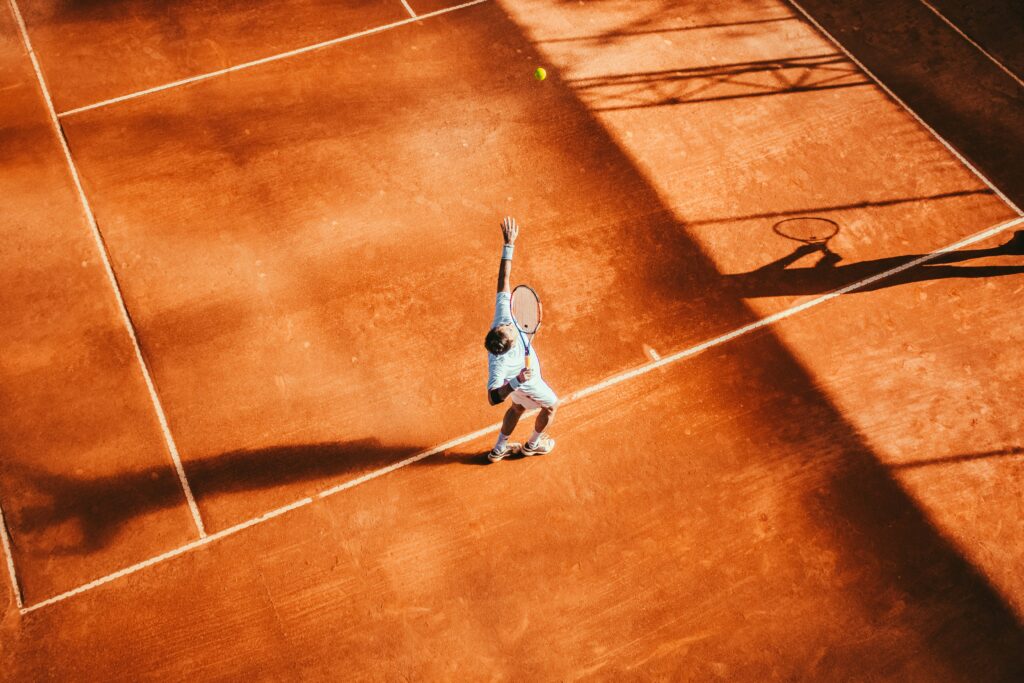

At the intermediate level, it’s very common for players to rely on basic tactics like “hit to the opponent’s weakness” or simply “keep the ball in play.” While those ideas aren’t wrong, they’re not enough to consistently win matches as you move toward the intermediate and advanced level. By this stage, you should have a set of reliable patterns of play you can call upon during a match. Patterns help:
- Give structure to your rallies
- You stay composed under pressure
- Provide clear solutions when you’re unsure what to do next
Instead of reacting ball by ball, you begin constructing points with intention.
In this guide, we’ll look at some high-percentage singles patterns you can use against virtually any opponent. These aren’t flashy tricks, they’re repeatable frameworks that give you clarity, control, and a tactical edge when it matters most.
Patterns of Play
First we'll look at some patterns of play you can use consistently in your matches. These are all simple to remember and easy to practice in training sessions. These are the types of patterns that can be used all the way from intermediate level to best in the world:
1.Serve Wide → Inside-Out Forehand
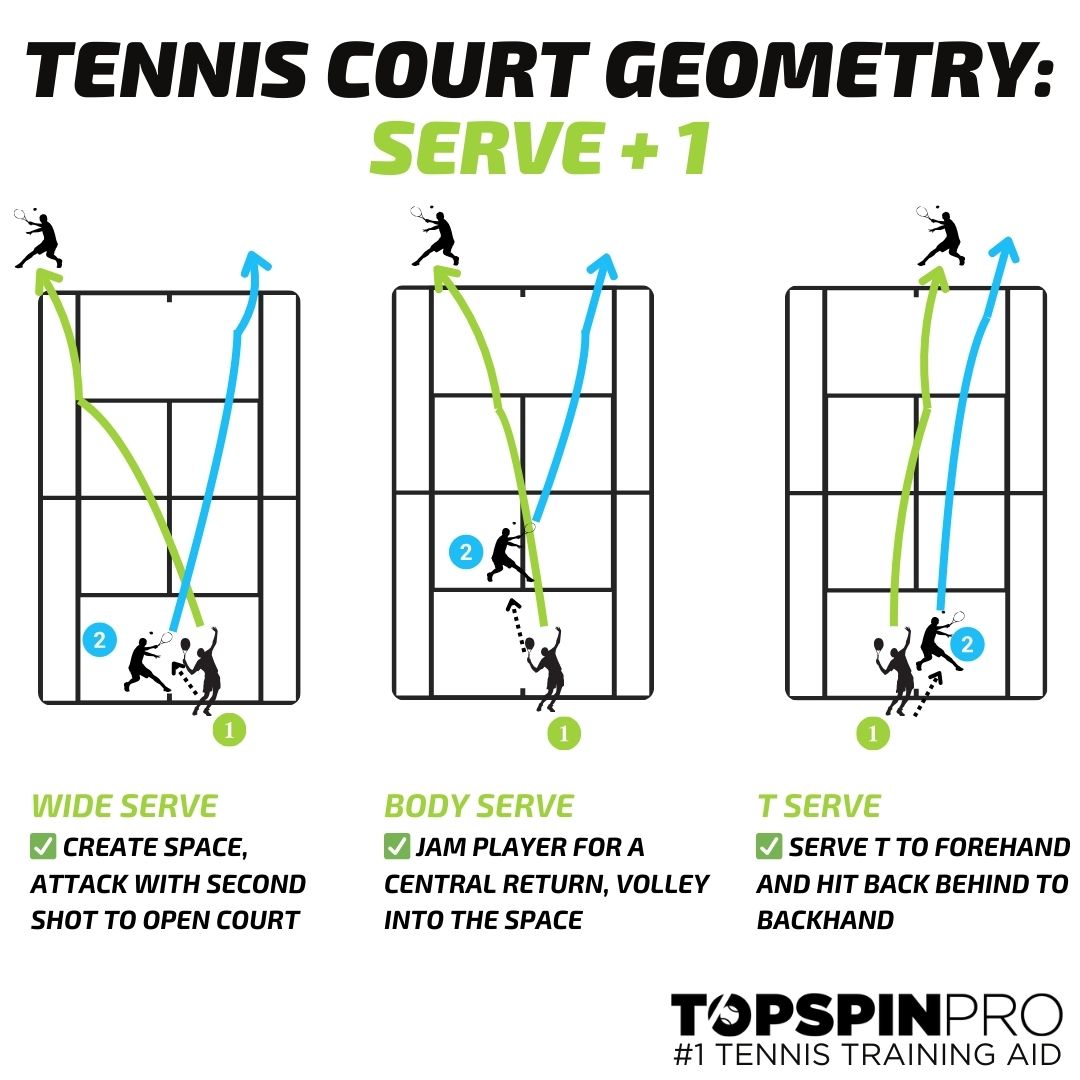
Pattern: Wide Serve (Deuce side or Ad side if you are lefty) to create space. Look instantly to take the return with a forehand even if more toward the backhand side. Use that inside out angle to attack the open space (opposite corner).
Why it works:
- Serve opens up court
- Establishes forehand as weapon
- Forces opponent to move and into defensive crosscourt
Tips: At the intermediate level building around the serve + 1 should be central to your game. Take a look at the image below for some other choices:
2.Body Serve → Volley To Space
Pattern: Body serve towards the T side, expect a central block return, move in behind and volley to the space.
Why it works:
- Instant pressure on your opponent seeing you move forward
- No space for them to block their return
- Forces opponent to scramble for volley
Tips: Especially effective vs aggressive returners who love baseline rallies.
3.Serve T → Hit Back Behind
Pattern: Serve T (Either side) and hit next ball behind the player (opposite side of their return).
Why it works:
- Reduces angles
- Forces the opponent to turn around from their return shot and scramble to the opposite direction.
- Keeps them in defense
Tips: Try this on both sides and see which side they struggle with more. Some players recover faster to one side than the other.
4. Crosscourt Rallies → Down-the-Line Strike
Pattern: Lock into a crosscourt rally and wait for a short or more neutral ball and change direction down the line.
Why it works:
- Shows opponent you are happy to stay both solid and attack
- Staying patient and choosing the right balls to attack wins you matches.
- Your opponent may panic in a consistent rally scenario
Tips: Premature down-the-line attempts lose points. Stay patient and mentally pressure your opponent.
5. Heavy Crosscourt → Short Angle
Pattern: Pressure opponent with consistent deep heavy crosscourt. Wait for a shorter ball and use less pace but heavy spin on short crosscourt to create space.
Why it works:
- Opponent expecting more aggressive attack.
- Using geometry to your advantage to create space.
- Wears opponent down through extra lateral movement
Tips: Doesn’t have to be perfect angle, even deeper heavy spin angles can quickly wear your opponent out by having to take extra steps.
6. Serve/Return Deep Middle → Hit middle
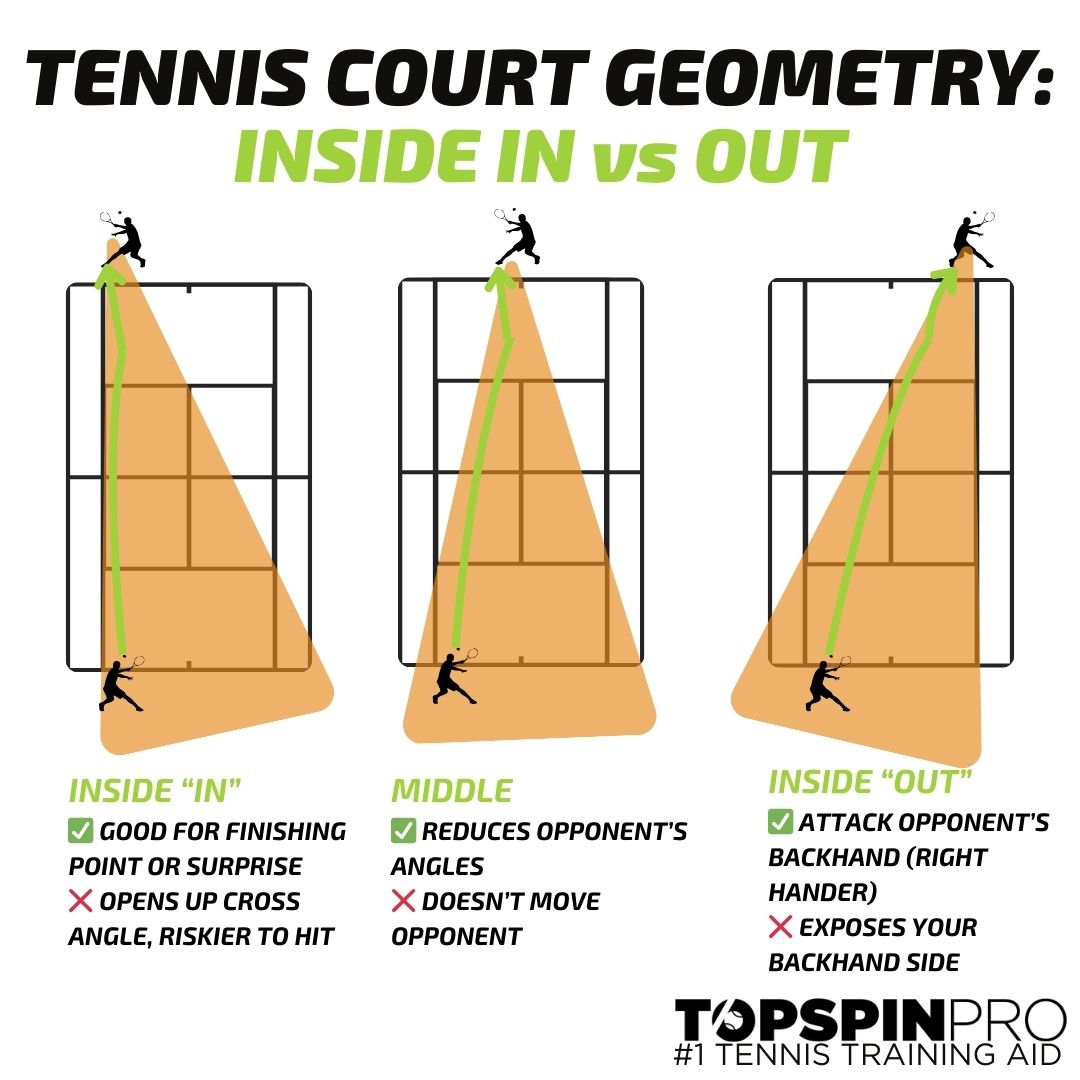
Pattern: Stay central. It’s possible to win matches by just staying central and asking your opponent to do something with it. It's a great tactic if you aren't having the best day. Keep it simple and make less mistakes.
Why it works:
- Throws off your opponent and puts pressure on them to do something.
- Keeps it safe for you with less errors
- Less angles available for them to hit
Tips: Make sure you keep good depth if hitting central and utilize topspin to push them back.
See the image below which demonstrates how hitting central reduces your opponent’s angles:
Smarter Shot Selection
Using patterns of play isn’t always about rigid, pre-set sequences. At the intermediate level and higher, it’s just as much about recognizing your options in real time and making better decisions within the rally, whether you in planned pattern or simply reacting to your opponent.
For example, you may have the option to drive the ball hard to your opponent’s backhand. But instead of increasing pace, the smarter decision might be to loop the ball higher and deeper to the same target, pushing them further back and buying yourself time or forcing a weaker return. The placement stays the same, but the intention changes and that subtle adjustment often wins more points than simply hitting harder.
Let’s look at some ways you can improve your choices either within set patterns of play or in a reactive rally.
1. Forehand Instead of Backhand
Seeing the ball early and getting round the backhand to use a forehand is one of the ways you can really pressure your opponent. For most players the forehand is the heavier shot, both with spin and pace. It also is generally easier to angle the ball using a forehand. Yet at the intermediate level many players tend to favor using the backhand rather than take the extra steps for a forehand. it often comes down to confidence and the belief that they can recover in time. But, if you hit a good enough shot you will be in a stronger position.
2. Change Height
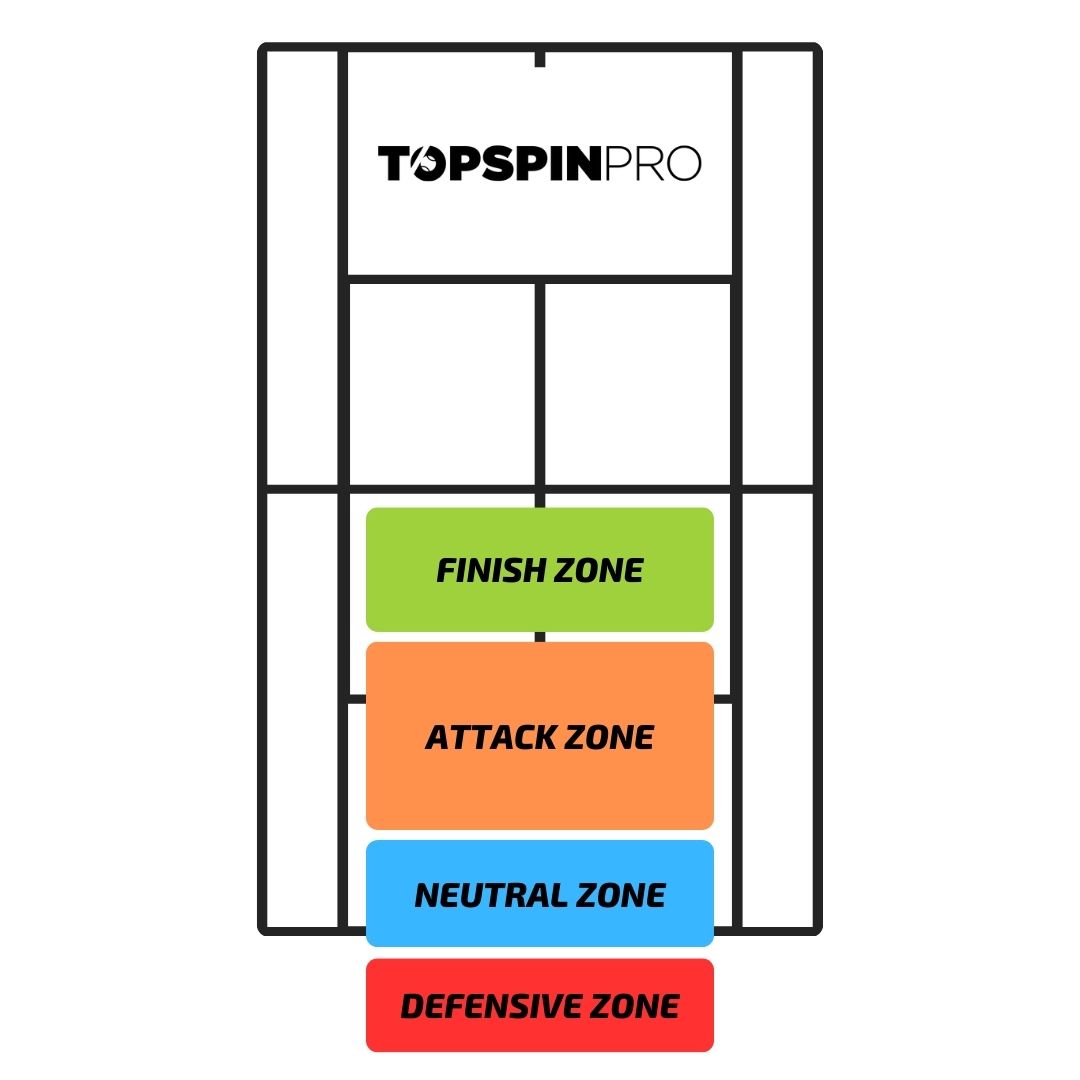
Most intermediate players struggle with height changes more than direction. Rather than fixating on moving your opponent side to side try creating spaces with depth. Push them off the court to the back as well as the side. By keeping your opponent deep it keeps the front of the court available for attack and will also force more errors. Keep them in the defensive zone (see image below).
3.Two Ball Attack rule
If you’ve ever played golf you should know that most of the time when you are on the green you should always aim to two putt, not sink the first ball. The same applies in tennis, don’t try to put the ball away too early. When you get an attacking opportunity, whether stepping inside the baseline or approaching the net, think in two steps:
- First ball: Controlled and purposeful attack.
- Second ball: The put-away.
For example, when approaching the net, set up with the first volley to make them be more aggressive on the second. Don’t try to put the ball away on the first.
Conclusion
At the intermediate level, improvement isn’t about learning more strokes, it’s about making better decisions with the strokes you already have. By this stage, most players can rally, serve, and attack reasonably well. The difference isn’t technical ability. It’s choosing the right option at the right time.
Even if you’re not consciously running set patterns in every rally, you should still be aware of your shot choices. Can you add more height instead of more pace? Can you change depth instead of direction? Can you build one more ball before trying to finish?
Small adjustments in decision-making often create bigger gains than technical overhauls. When you start thinking this way, you’re no longer just hitting the ball, you’re managing the point.
And that’s where real improvement begins.
Enjoyed this article?
Be sure to sign up for our newsletter and we'll keep you up to date about new posts