
For years, the third-shot drop was considered the “proper” play in pickleball. In fact, hitting a drive was almost looked down on, as if it were the wrong choice or a sign of inexperience. But the pro game has evolved, and with it, the strategy has shifted. Today, we’re seeing far more third-shot drives at the highest levels, and that trend is naturally making its way down to the rec courts.
But here’s the real question. Should recreational players be copying the same drive-to-drop ratios the pros use, or are those percentages based on skills and conditions that don’t translate to typical rec play?
In this breakdown, we explore in depth, and by the end, you’ll know exactly when to pull the trigger on a drive and when to soften into a drop, so you can win more points with decisions that match your level, style, and strengths.
What’s the Purpose of the Third Shot?
Before we look more in-depth at the drive and the drop let's talk about the purpose of the third shot:
Objective
Get your team to the kitchen line without giving your opponents a high, attackable ball. Simple in theory. Tricky in practice! Because of the double-bounce rule, the serving team starts at a positional disadvantage. After the return, the returning team is already establishing at the kitchen line, prime real estate in pickleball, while the serving team is still back near the baseline.
How?
Before you strike your third shot the returning team usually has:
- Better court position
- More time to react
- An easier chance to attack your third shot
How to get to the kitchen without giving your opponents a high attackable ball:
- Drop - Executed well at the feet can force your opponent to pop the ball up and put you in attacking position. Executed consistently will allow you to get in to the kitchen in a neutral position.
- Drive - Executed well at either the body or spaces will put your opponent's under pressure and hopefully force a mid court attackable shot. Executed consistently will allow you to get into the kitchen in a neutral position.
- Lob - The occasional lob to keep you opponents on their toes is worth throwing in!
If you hit a ball that’s too high or too fast without control, your opponents will punish it. And if you hit a ball that’s too soft or too short without intention, you’ll get stuck at the baseline.
That’s why learning when to drive, when to drop, and when to mix the two is crucial. The third shot isn’t just another rally ball, it’s the strategic moment that determines who controls the point.
Third Shot Drive
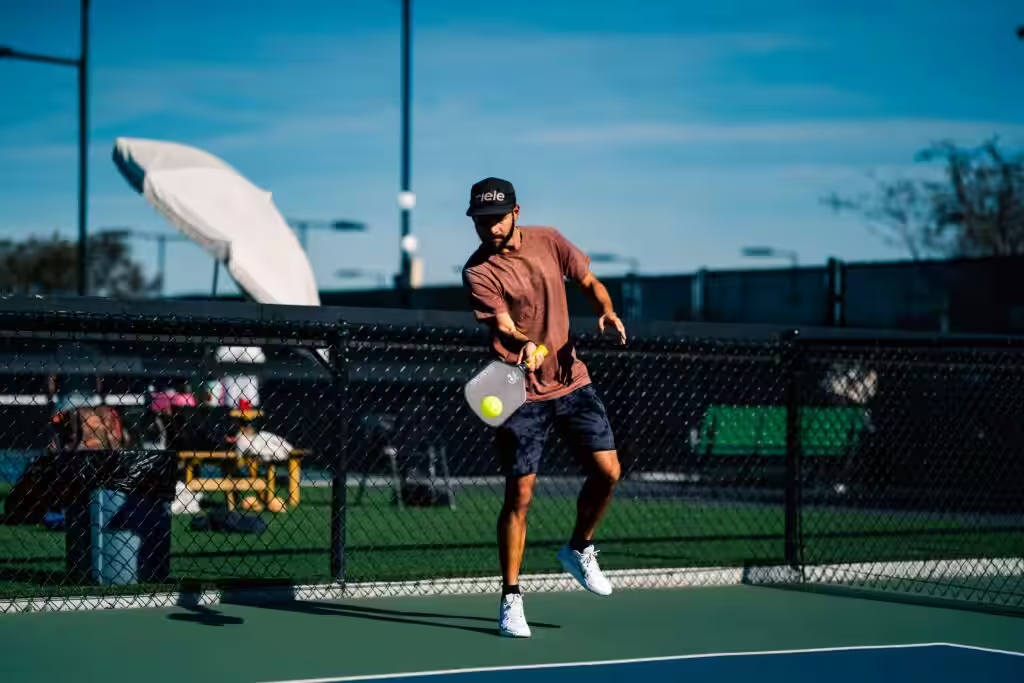
A third shot drive is a fast, powerful groundstroke hit off the bounce, typically when the return sits up at waist height or higher. Instead of trying to drop a soft ball into the kitchen, you use pace and pressure to force your opponents into a difficult volley.
When executed well, the drive:
- Rushes your opponents, giving them less time to react
- Forces an uncomfortable block, which often lands short or pops up = easy to attack
- Creates an offensive opportunity on the 5th shot
• Buys you time to move forward behind the ball
• Targets weaknesses, such as poor hands, slow reactions, or a shaky backhand volley
Because the returning team is usually already stationed at the kitchen line, they naturally have the advantage. A strong drive helps you flip that dynamic, not by winning the point outright, but by producing a predictable, softer reply you can attack or follow in behind.
When a Drive Is Best
Choose a drive when:
- The ball sits up enough that you can drive it straight without lifting
- If the return is deep but not low, driving is the higher-percentage option.
- You have a strong forehand
- Opponents have weak volleys or don't soften hands well
- Opponents have slow reactions or struggle with pace
- You want to drop a 5th shot. Drive → 4th: Blocked → 5th: Easy Drop
- You play at the 3.0-3.5 level - Beginners and early intermediates often struggle to hit consistent drops under pressure. Most players can hit a better drive than drop. Driving gives you more margin for error at these levels.
Opponents who struggle with any of the above usually want you to drop because they prefer slower balls and it suits their style of play.
Common Mistakes With The Drive
- Driving a Ball That’s Too Low - Most common mistake you see on the pickleball court below a 5.0 level. Trying to drive a ball below knee height usually sends it straight into the net or produces a high, attackable shot. If it’s low, don’t drive it.
- Swinging Too Hard - Players often over-swing, thinking a drive must be a winner. This leads to big backswings, late contact and mishits. Think 80% max pace on the drive.
- Aiming Straight at the Strongest Player - Hitting hard at someone with great hands is a losing strategy, they’ll send your pace right back at you.
Target the weaker volleyer, not the best one. For consistency and confusion aim down the center or at the weaker player. - Standing Still After the Drive - Many players freeze after hitting the ball. A drive should be followed by immediate forward movement, ready for the 5th shot drop or attack
- Using Only The arm - Your power in the drive should come from using the whole body as a kinetic chain. See the drill video below for some practice tips:
Third Shot Drop
A third shot drop is a soft to medium pace arc from the baseline that lands in the opponent’s kitchen.
When executed well, the drive:
- Forces them to let it bounce.
- Forces opponents to either lift the ball or play a neutral shot
- Creates spaces for your 5th shot
- Creates an offensive opportunity on the 5th shot
• Buys you time to move forward behind the ball
• Targets weaknesses, such as bad footwork, poor backhand dink.
When a Drop Is Best
Choose a drop when:
- The return is low and you have to lift the ball
- You are playing against strong volleyers
- You are playing against bangers who love a fast ball
- You want to slow the game down
- Your partner is already moving forwards
- Opponents have inconsistent touch shots
Opponents who struggle with any of the above usually want you to drive because they prefer faster balls and it suits their style of play.
Common Mistakes With The Drop
- Dropping a Ball That’s Too High - It's easier to drop the ball off a lower ball just like it's easier to drive off a higher ball. Choose wisely!
- Hitting either too hard or too soft - The drop is a precision shot. It requires just the right amount of pace to land well. This can also be blended with topspin or slice.
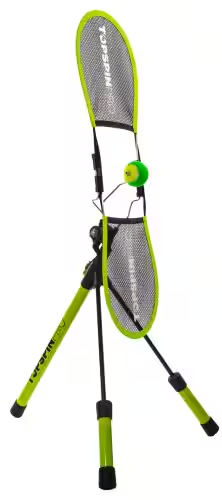
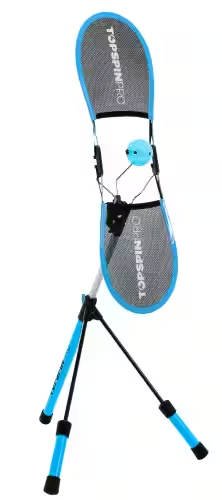
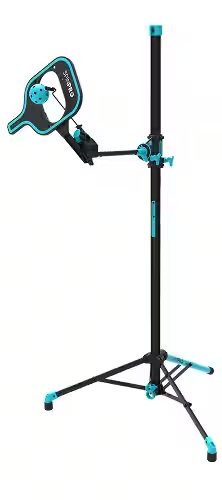
- Not using any spin - Using either slice or topspin adds a level of difficulty for your opponents. Adding topspin means you can also hit a more aggressive drop and place it more precisely. For extra help with your spin check out either the TopspinPro or SpinPro.
- Not having a target - The drop is the one shot in pickleball that always needs 100% commitment with body and swing. If you hesitate slightly then it blobs in the net. Having a target helps avoid this and also gives you a tactical intention.
Bonus: Third Shot Drip
A third shot drip is a controlled, medium-paced shot that blends the drive and the drop. It travels with topspin, has a smooth downward arc, and lands at your opponent’s feet or in the kitchen. It’s hit harder than a drop but softer than a drive, giving you pressure and safety at the same time.
When executed well, the drip:
- Forces opponents to hit the ball up
- Forces opponents into difficult low contact or neutral replies
- Creates space for your 5th shot to be more aggressive
- Creates an offensive opportunity on the 5th shot by causing poor footwork or rushed digs
- Buys you time to move forward behind the ball
- Targets weaknesses, such as slow footwork, poor low-ball handling, or weak backhand dinks
When a Drip Is Best
Choose a drip when:
- The return is between knee and waist height (too high to drop, too low to crush a drive)
- You want to apply pressure but still keep the ball un-attackable
- You’re playing opponents with great hands but poor footwork
- You want to slow the ball down slightly without giving up court position
- Your partner is moving forward and you need a safer transitional shot
- Opponents struggle with touch or with digging out balls at their feet
Players who struggle with any of the above often prefer fast balls and predictable drives. The drip disrupts their rhythm by attacking their feet with pace and shape, making their first volley significantly harder.
Common Mistakes With The Drip
- Dripping a Ball That’s Too Low – The drip works best off a ball you can lift with topspin. If it’s below the knee, it’s usually better to drop or reset instead.
- Hitting Too Hard or Too Soft – The drip is a medium-paced precision shot. Too hard and it floats up. Too soft and it becomes a bad drop. You need just enough pace to rush their feet while still letting topspin pull the ball down.
- Not Having a Target – The drip needs full commitment. Aim for the feet, the backhand hip, or deep in the kitchen. Having a clear target prevents hesitation and keeps the ball low enough to neutralize the returning team’s advantage.
- Not Using Topspin – The drip relies on topspin to make the ball dip sharply. Without topspin, it becomes a flat drive that sits up and gets attacked. For extra help with your topspin check out our Win With Topspin Courses:

Conclusion
Mastering the third shot isn’t about choosing the “right” technique, it’s about choosing the right shot for the moment. Modern pickleball has moved far beyond the idea that the drop is the only proper play. Today’s game rewards players who can blend power, touch, and decision-making to keep opponents off balance.
Whether you prefer the control of the drop, the pressure of the drive, or the versatility of the drip, the key is understanding why you’re hitting each one. Your goal on the third shot is always the same....neutralize the returning team’s advantage and give your team a safe path to the kitchen.
To do that, you need the ability to recognize ball height and quality, read your opponents strengths and weaknesses, understand your own tendencies and choose the highest-percentage shot based on the situation.
When you learn to mix these intelligently, you stop playing reactive pickleball and start playing intentional pickleball. That’s when your errors drop, your confidence grows, and your third shot transforms from a stressful moment into a strategic weapon. No matter your level, the players who improve the fastest are the ones who stop guessing and start choosing with purpose.
If you want further help developing topspin, shaping your drops, or adding offensive consistency to your drives and drips, check out our training resources.
You’re now ready to step on court and make smarter third-shot decisions, decisions that match your game, help you win more points, and move you confidently into every kitchen battle.
Enjoyed this article?
Be sure to sign up for our newsletter and we'll keep you up to date about new posts