
As I’m writing this, we’re expecting nearly 10 straight days of rain here in the desert, California.....a rare event in a place that normally only sees 10–15 rainy days a year. So, instead of letting the weather interrupt a routine, I wanted to share a few simple ways to keep progressing your tennis game no matter what’s happening outside. A little bad weather doesn’t have to derail your training!
Why Some Of The Best Practice Can Happen At Home
You don’t need a court, perfect weather, or even a hitting partner to make real progress in your tennis game. In fact, some of the most valuable improvements happen away from the court, at home, in small spaces, and without the pressure of a moving ball or other people. When you remove external distractions, you can focus on the pure essentials. At-home practice isn’t a backup plan; it’s an opportunity to sharpen the parts of your game that often get overlooked. Whether you’re stuck inside because of rain, heat, wind, or cold, you can still train with purpose and come back to the court a noticeably stronger player.
Let's look at some ways that home practice can help:
Technique
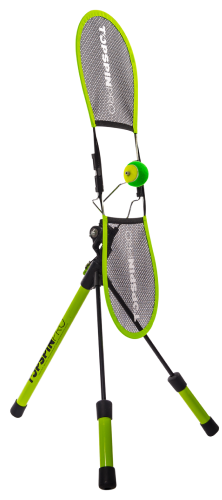
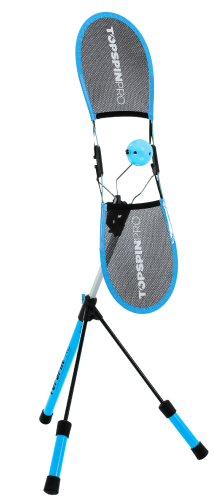
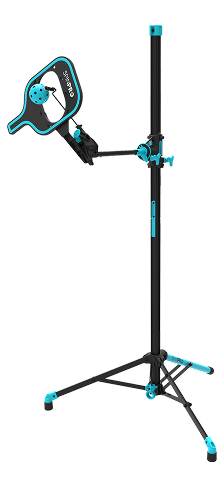
Some of the best technical improvements can happen at home. It gives you a chance to slow things down, remove distractions, and focus on your form. You can use training aids like TopspinPro to zone in on certain improvements like contact point, spacing, and swing shape. You can use a video or a mirror to really fine-tune that technique.
Footwork and Fitness
Many people prefer to work on their fitness away from their tennis peers so being at home gives you that perfect opportunity to train in private. You can work on all aspects of tennis fitness like footwork, strength and conditioning, flexibility and endurance without any added pressure.
Tactics
It’s not quite as easy to implement tactical practice at home in the same way you can on a court, but there are a number of ways you can fit it in:
- Pro Footage - Watching re-runs of your favorite players is a great way to learn from the best.
- YouTube Tutorials - There are a whole selection of videos with analysis and tutorials to help you learn things that you can implement into your game. Here's an example video:

- Your Own Footage - Rewatch any footage of yourself playing to gain any insights.
- Visualization Reps - Mentally rehearse common situations such as attacking a short ball and approaching the net or returning against different serve types. You can also use shadow swings to help your visualization.
- Podcasts - Many podcasts now give tactical breakdowns and analysis that is beneficial.
- Match Prep - Take time to analyse your own game and learn about your strengths and weaknesses. It helps to have a play list you can refer to in certain situations. It can be something as simple as knowing your most solid serve and direction to rely on in a pressure point.
For a full guide to other ways to practice at home check out our article "How To Practice At Home"
At Home Equipment List
Here are the only things you really need to practice pretty much everything at home!
- A wall or garage door - For inside practice during bad weather you can use foam balls to avoid any damage.
- Tennis Racket and Foam balls
- Resistance bands, dumbbells or any strength equipment
- Yoga mat
- TopspinPro
- Computer or tablet (access to YouTube)
- Tripod or phone stand (for filming)
- Note pad and pen
Bad Weather At-Home Workouts
With a little creativity and the right focus, you can build tennis-specific strength, mobility, balance, and endurance right from home. Below are some simple, effective examples of at-home workouts that support your on-court performance no matter the weather!
Technique
BALL SKILLS
Racket drills are a great way to work on your technique and racket control at home. They help with hand-eye coordination and also arm conditioning. Here’s some examples you can do:
CONTROL DRILLS
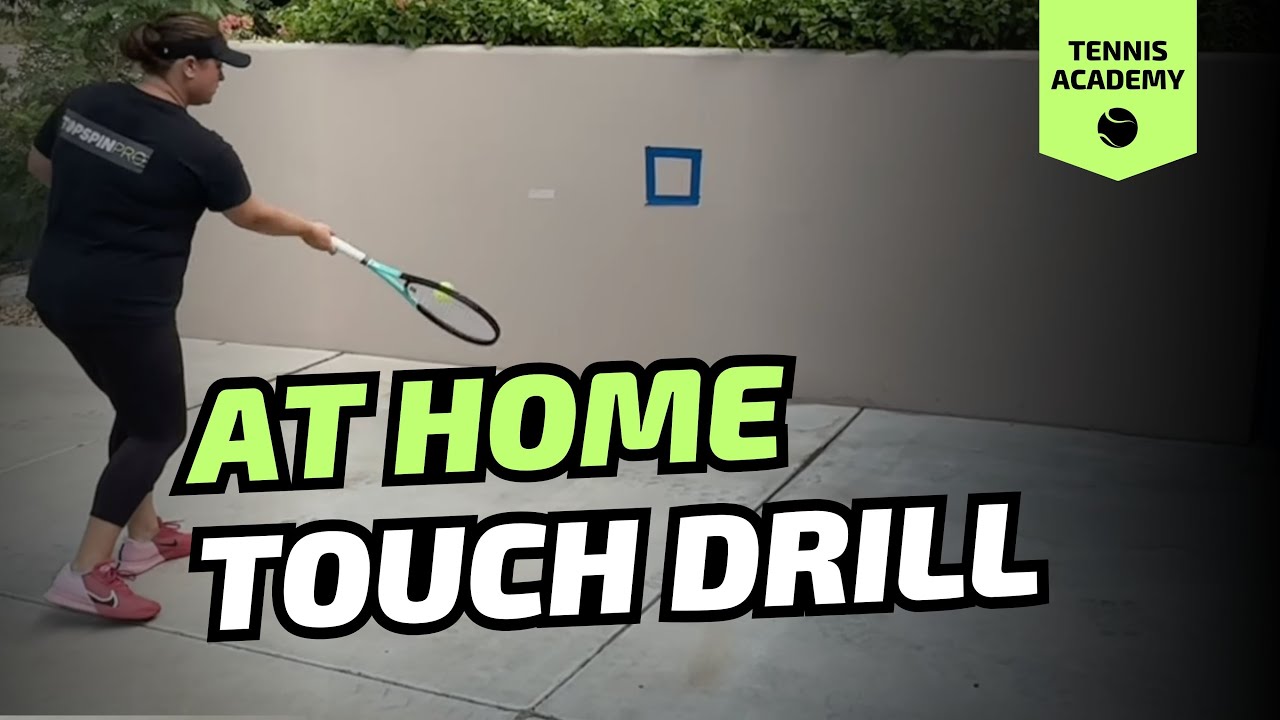
Ball control drills are the kind of exercises most people skip when on the tennis court so being at home gives you the chance to add some in. Here's an example. Tip: Use a foam ball to practice on an inside wall!
CONTACT POINT
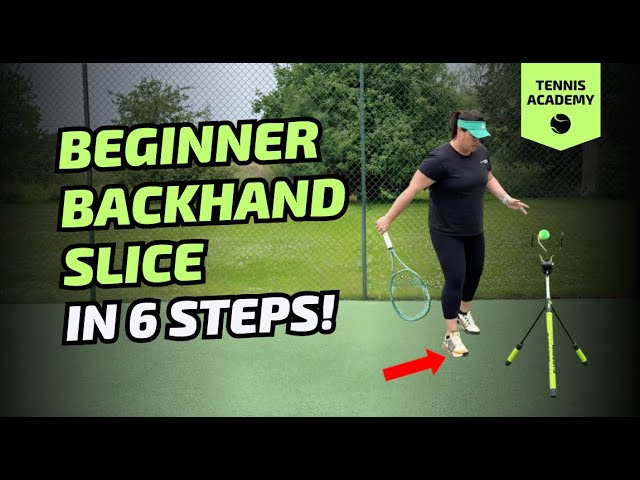
Try breaking down your contact point on the TopspinPro or with shadow swings. Here’s an example video with the backhand slice:
SWING SHAPE
You can take the time to break down your swing shape and focus on parts of the swing that need improving. Here's an example of the kick serve:
![TopspinPro | The Kick Serve Explained & 7 simple progressions to follow [RIGHT-HANDED]](https://i.ytimg.com/vi/80xbUq_y700/maxresdefault.jpg)
REPETITIONS
The sheer number of reps you do determines how well you master the game. See our article "How Many Reps To Master A Tennis Shot" for more in-depth info. So being at home is the perfect way to hit a ton more reps with a training aid, on the wall or just with shadow swings. Take the extra time to build up that muscle memory. You can also find out more about "How To Improve Tennis Fast"to learn some of the best ways to improve.
TOPSPINPRO BEGINNER COURSES
If you need a little more guidance for at home technique practice why not try one of our courses: TopspinPro Online Courses. Check them out for some in depth help with developing your shots:
Footwork and Fitness
Pretty much any fitness and workout routines at home will benefit your tennis in some way. YouTube is so easy for selecting quick workouts that you can do for all areas of fitness. Check out our footwork playlist for some examples on the TopspinPro. Here's an example you can do with a partner:

Tactics
GAME ANALYSIS
Number one tip here is to buy a planning book or note book. It's the best way to keep track of everything including your training and also the perfect way to take notes of the important things to look at with your game. Here's some essential questions that every player should know about themselves and that you can add to your notebook:
1. PLAYING IDENTITY & STYLE
- What type of player am I? Baseliner, aggressive, counter puncher?
- Do I prefer to play offense or defense under pressure?
- Which patterns of play do I use most often?
- Do I feel more comfortable taking the ball early or letting it come to me?
- What’s my ideal point structure (short rallies, mid-length, long rallies)?
2. STRENGTHS & WEAKNESSES
- What is my biggest weapon?
- What is my biggest liability?
- Which shot breaks down first under pressure?
- Which shot do I rely on when I’m nervous?
- What part of my game improves fastest when I train it?
3. TACTICS & DECISION-MAKING
- Do I know my 3 highest-percentage patterns on my serve?
- Do I know my 3 highest-percentage patterns on return?
- Do I attack short balls effectively and consistently?
- Do I change direction at smart times?
- Do I have a clear plan for left-handers, pushers, and big hitters?
4. MENTAL GAME
- What situations trigger nerves or tightness for me?
- What helps me reset when I lose focus?
- Do I play better when fired up or when calm?
- Do I get emotionally affected by opponents’ behaviour?
- Do I have a plan for momentum swings?
5. PHYSICAL PROFILE
- What is my physical limitation in a third set?
- How is my footwork compared to players at my level?
- Where does my endurance rank on a scale of 1–10?
- Do I recover quickly between points?
- What movement patterns feel hardest for me (backwards, lateral, diagonal)?
6. TECHNICAL AWARENESS
- Can I describe my contact point for each shot?
- Do I know my ideal spin/height window for rally balls?
- Do I understand my grip strengths and weaknesses?
- Where do my errors typically go (long, net, wide)?
- Do I adjust technique consciously or instinctively?
7. MATCH TENDENCIES
- Do I start matches slowly or quickly?
- What happens to my level after being broken?
- What’s my behavior after I hit an unforced error?
- Do I stay emotionally balanced?
- Do I win more when I serve first or receive first?
- What do opponents usually say about my game?
8. GOALS & IDENTITY
- What is my long-term goal and why do I actually want it?
- What habits do I need to become the player I imagine?
- Do my daily actions match the player I want to be?
- What motivates me more, winning or improving?
- What player would I be if I had 10% more confidence?
Once you know the answers to a lot of these questions your on and off court training can really take shape.
Conclusion
Bad weather doesn’t have to pause your progress. In many ways, it can actually accelerate it. When you step away from the court and train with intention at home, you remove distractions, sharpen your technique, strengthen your body, and deepen your understanding of your own game. These are the foundations that make you a better tennis player long-term, not just a better hitter on a sunny day.
Whether you’re breaking down your contact point, building endurance in your living room, studying match footage, or mapping out your tactical identity, every bit of work you do now shows up later when it counts. With creativity, consistency, and a clear plan, you can use these bad-weather days to return to the court more confident, more prepared, and more skilled than when you left it.
A little rain might disrupt your schedule…
but it doesn’t have to disrupt your growth.
Enjoyed this article?
Be sure to sign up for our newsletter and we'll keep you up to date about new posts