

Why the Topspin Forehand Matters
What Is Topspin?
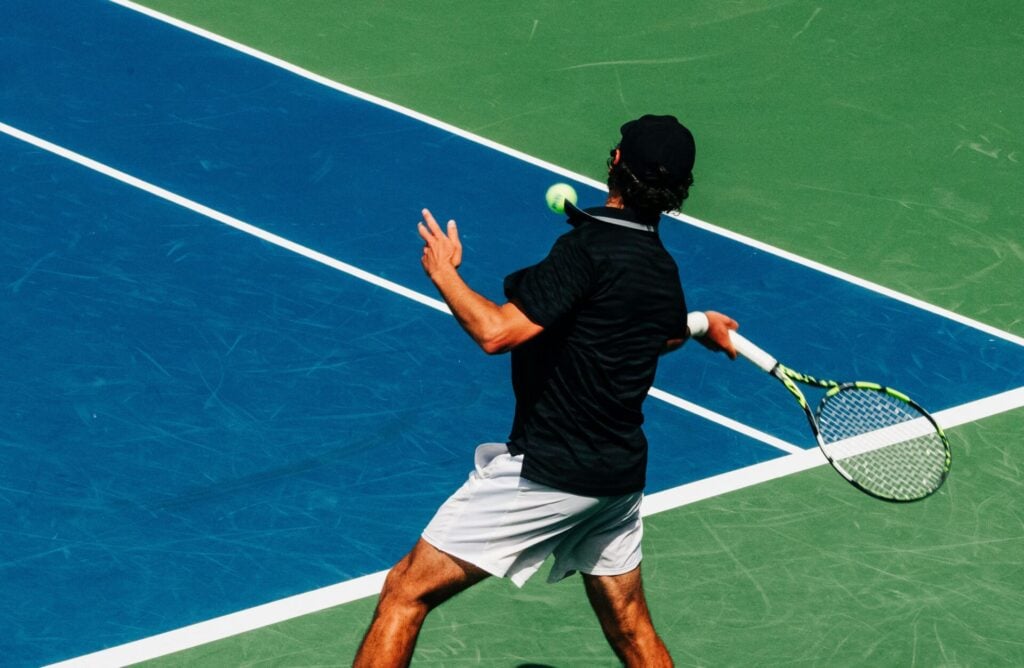
The term “topspin” is actually a bit misleading. It sounds like you should hit the top of the ball, but in tennis, that would drive it straight into the ground. Instead, topspin is created by rolling your strings up the back of the ball with a low-to-high swing, causing it to rotate forward. In many ways, “forward spin” would have been a more accurate name and probably would have saved generations of players a lot of confusion!
What Does Topspin Do To The Ball?
Now here’s where it gets interesting, and the science kicks in! That forward rotation triggers something called the Magnus Effect, which is a downward force created by the interaction between the spinning ball and the air around it. The forward rotation causes it to drop downward. In plain terms, the ball dips. And it dips fast.
What Are The Benefits Of Topspin?
The resulting dip caused by topspin is so effective that over 90% of groundstrokes at every level of the game are hit with it. Here are some of the benefits:
1. Hit Higher Over The Net – Topspin makes the ball dip, allowing you to hit higher over the net while still landing it in. This gives you more margin for error, helps create deep, heavy shots, and makes lobs more effective.
2. Hit More Angles – You can use the dip of topspin to hit wider angles on the court than with flatter shots. Arc the ball out wide and deep or use short acute angles at the front of the court. You can add so much variety to your angles game by using topspin.
3. Hit The Ball Low At The Feet – A low shot to your opponent’s feet is one of the toughest volleys to handle. They’ll often have to lift the ball back, resulting in a weak, short reply—or an error.
4. Hit Harder – Not only can you use more height with topspin, but you can also hit the ball much harder. This is why pro players can keep the ball rallying using extraordinary speeds!
5. Push Your Opponent Back – Topspin doesn’t just create angles, it also adds depth. Its forward rotation makes the ball kick up higher after the bounce, pushing your opponent farther back and making their next shot more difficult.
6. Force Your Opponent To Hit A Higher Ball – Most players prefer contact between hip and chest height. Topspin’s higher bounce forces them out of that comfort zone, making it harder to strike the ball cleanly.
For a more in-depth look at topspin, check out this article “Why You Need Topspin In Tennis”
Choose Your Grip — The Foundation
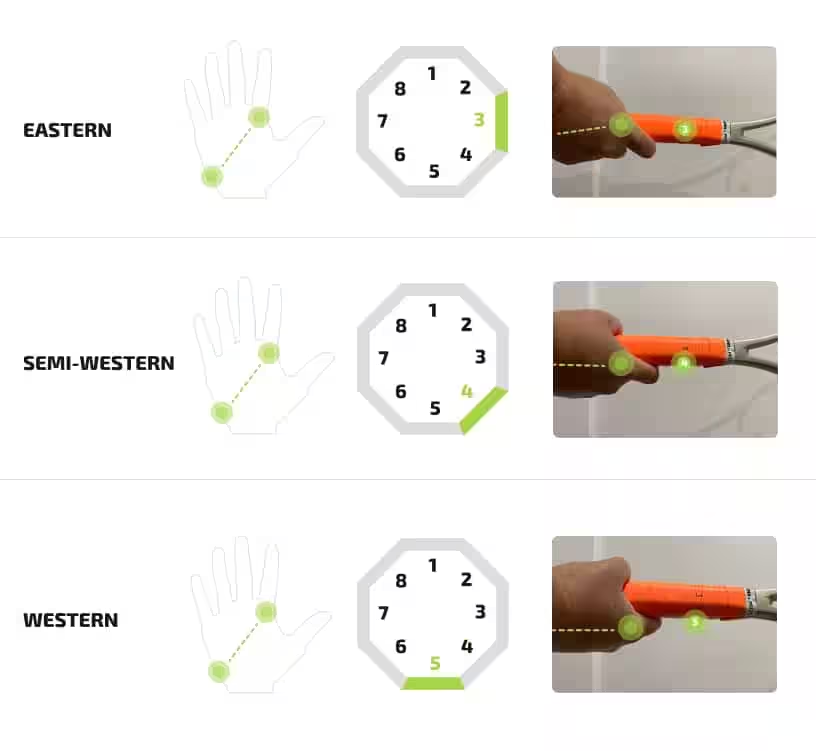
Modern tennis primarily uses three forehand grips: Eastern, Semi-Western, and Western. Before topspin became dominant, many players also used the Continental grip for groundstrokes.
For a deep dive on the forehand grips, read our article “The ‘Big 3’ Forehand Grips and what each one brings to your game”
The Big 3 Grips
- Eastern — less topspin, more power, lower contact point (Federer, Tsitsipas)
- Semi-Western — balanced spin and power, mid-height contact (Djokovic, Nadal)
- Western — heavy topspin, less power, high contact (Khachanov, Sock)
Five Factors That Should Influence Your Grip Choice
- Player height – Taller players tend to favor eastern or semi-western grips to handle lower balls, while shorter players often prefer semi-western or western to deal with higher balls.
- Court surface and bounce height – The courts you grow up on shape your grip. Lower-bouncing surfaces favor more eastern grips, while higher-bouncing courts encourage semi-western or western grips.
- Topspin vs. power preference – While pros can generate heavy topspin with any grip, recreational players will generally find that eastern grips favor power over spin, western grips favor spin over power, and semi-western grips sit in the middle.
- Climate (heat, humidity, altitude) – Heat and altitude create higher, faster bounces, while cold and humidity produce lower, slower ones, subtly influencing which grip feels most comfortable.
- Playing style – Net players often prefer eastern or semi-western grips for easier volley transitions, aggressive baseliners tend toward semi-western, and heavy topspin baseliners often favor western.
Grip Recommendation
For adult players, the right grip is largely a matter of personal preference and what best suits your game. Junior players, however, often develop their grips naturally as they’re influenced by their size, playing surface, and climate. There are, however, some basic guidelines for when you are starting out:
- Beginners: Start with the semi-western. It offers the best blend of power, spin, and reach, and makes finding the correct contact point easier as a beginner.
- Intermediates: Adjust your grip to your style and surface. Make small grip shifts to unlock specific shots.
The Setup — Stance, Unit Turn, and Backswing
Movement Preparation
Ready Position
The ready position is where every shot begins and ends. A poor ready position leads to slower reactions and late contact.
A good ready position is similar to defending in basketball. Stay on your toes with your weight forward, knees slightly bent, heels off the ground, and ready to move in any direction. Hold the racket comfortably in front of your body, with your non-hitting hand on the throat or both hands on the grip.
Split Step
The split step is a small hop taken as your opponent contacts the ball. It loads your legs, shifts your weight onto the balls of your feet, and helps you react quickly rather than move from a standstill.
Timing is crucial and split at the moment your opponent makes contact, not before or after. Too early and you’ll lose the loaded position. Too late, and you’ll react slowly.
Footwork
Your footwork is the foundation of a good shot. You can have the best technique in the world but if you are either not ready to react or have inefficient footwork to the ball, then it doesn’t matter how good that technique is.
Moving To The Shot
There are two main types of movement in tennis:
- Closing down the space (moving to the ball)
- Creating space (moving away from the ball)
You can also close down or create space in all directions. For example, creating space to hit an inside-out forehand requires you to move sideways and forward or sideways and backward to get into the right position.
Stances
Watch the pros, and you’ll see they constantly adjust their stance based on the shot. Sticking to one stance for every ball, as was traditionally taught, limits your movement and makes it harder to handle balls outside your ideal hitting zone.
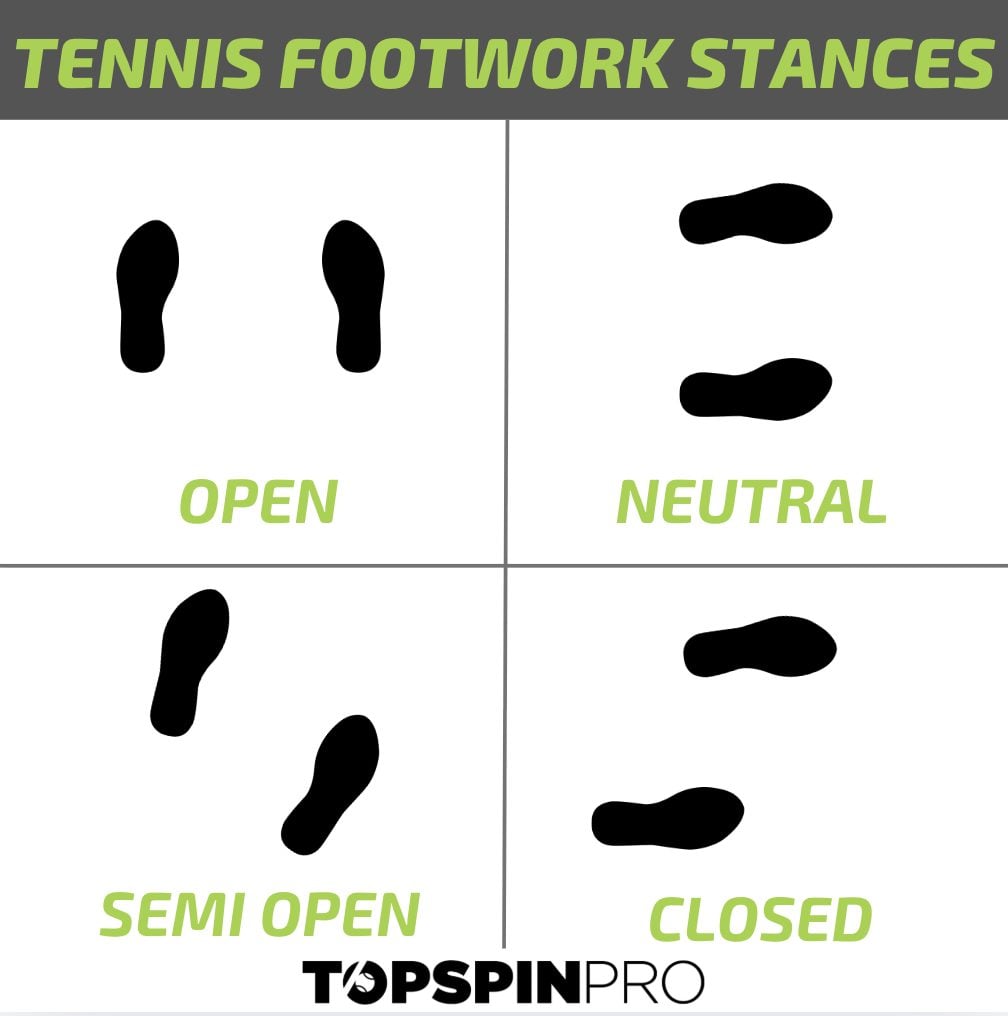
Beginners should start with a neutral or semi-open stance, as these make it easier to rotate, stay balanced, and build consistency.
At first, aim for a stable base at contact. As your game improves, you’ll learn to move through the shot using more dynamic stances, generating greater power, topspin, and quicker recovery. Eventually, you can add the open stance and other advanced footwork patterns to handle balls from anywhere on the court.
Striking The Ball
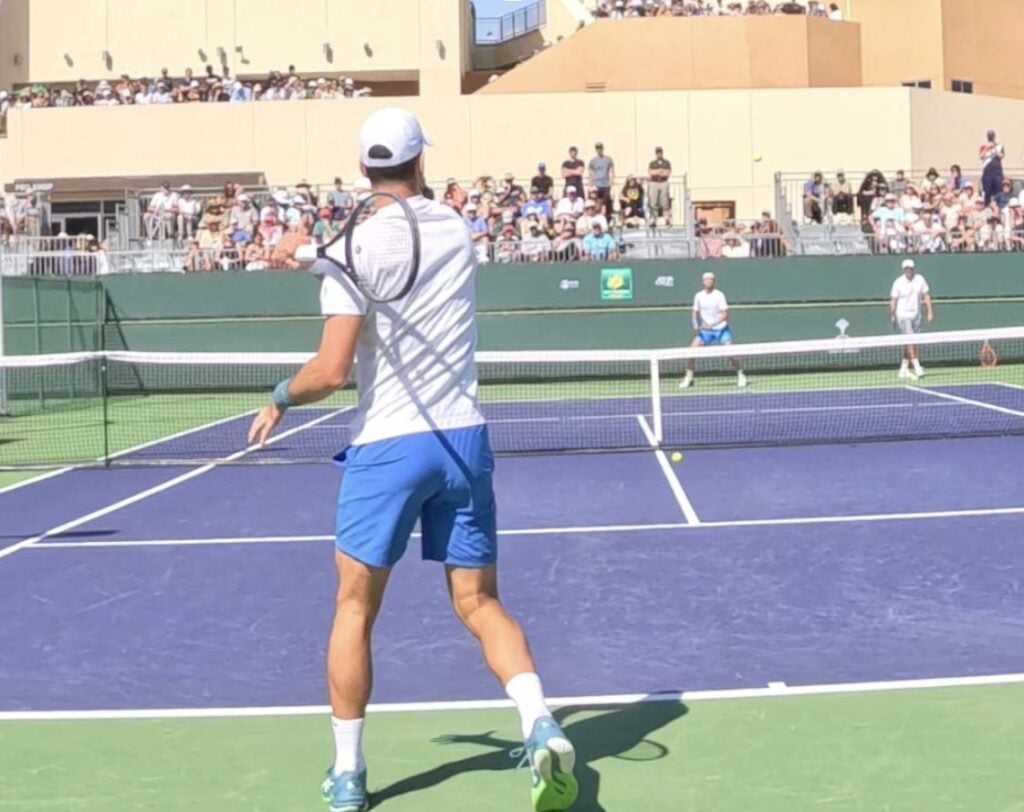
When starting out and using the semi-open or neutral stance to hit your forehand, you should look to step toward the ball with your non-dominant leg (opposite to your hitting hand) as you strike. This will help a little with your weight transfer and ensure the contact point is out in front. You can see in the images of Novak above that, even when the ball is coming right to him, he’s taking a small step to reach the contact out in front.
The Technique
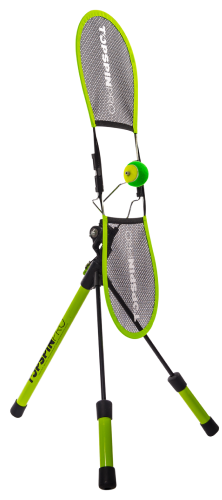
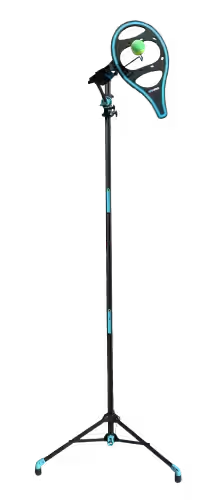
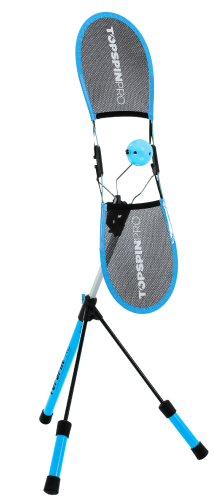
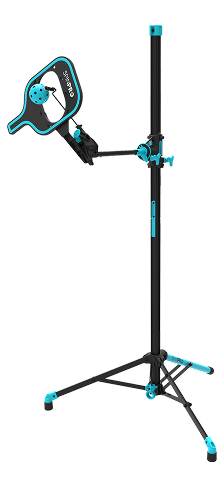
There are several components to the swing. When first learning the swing, these can be overwhelming, so the key is starting out slow and simple. You can use your TopspinPro or SpinPro to practice each phase and slowly blend them together. What we are ultimately looking for is a smooth swing with a good use of the Kinetic chain (transferring the power from the ground up and through the racket in a smooth and efficient way).
Let’s look at each phase of the swing:
1. The Unit Turn
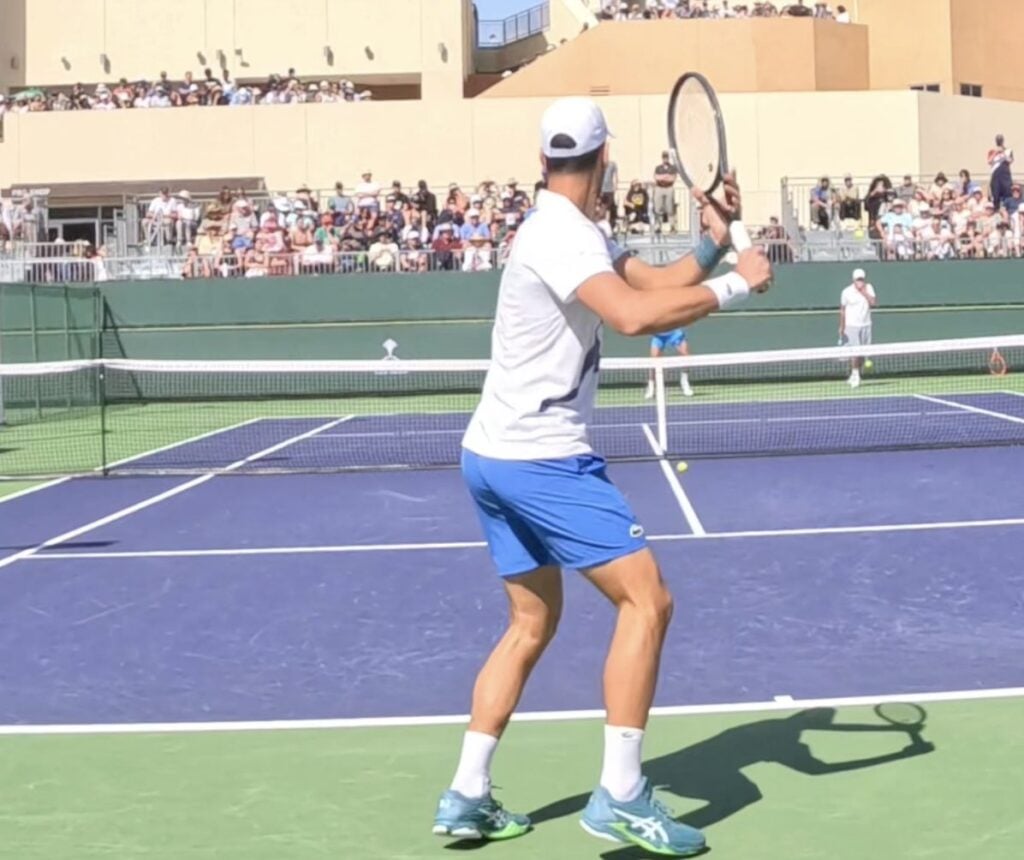
Look at the image of Novak below. The first move on the forehand after the ready position is an initial unit turn. “Unit turn” means turning the body and racket together as one. Just by turning your shoulders to the side from your ready position, you will naturally bring your racket and hips with you.
2. The Backswing
Again, look at the image of Novak above. You can see he is in his unit turn position (chest and hips turned to the side of the court), but he has also begun the first phase of the backswing, which is a high take back with the racket around head height and the strings pushed to the outside of the court. At the same time, he is taking his last adjusting steps before beginning the forward swing.
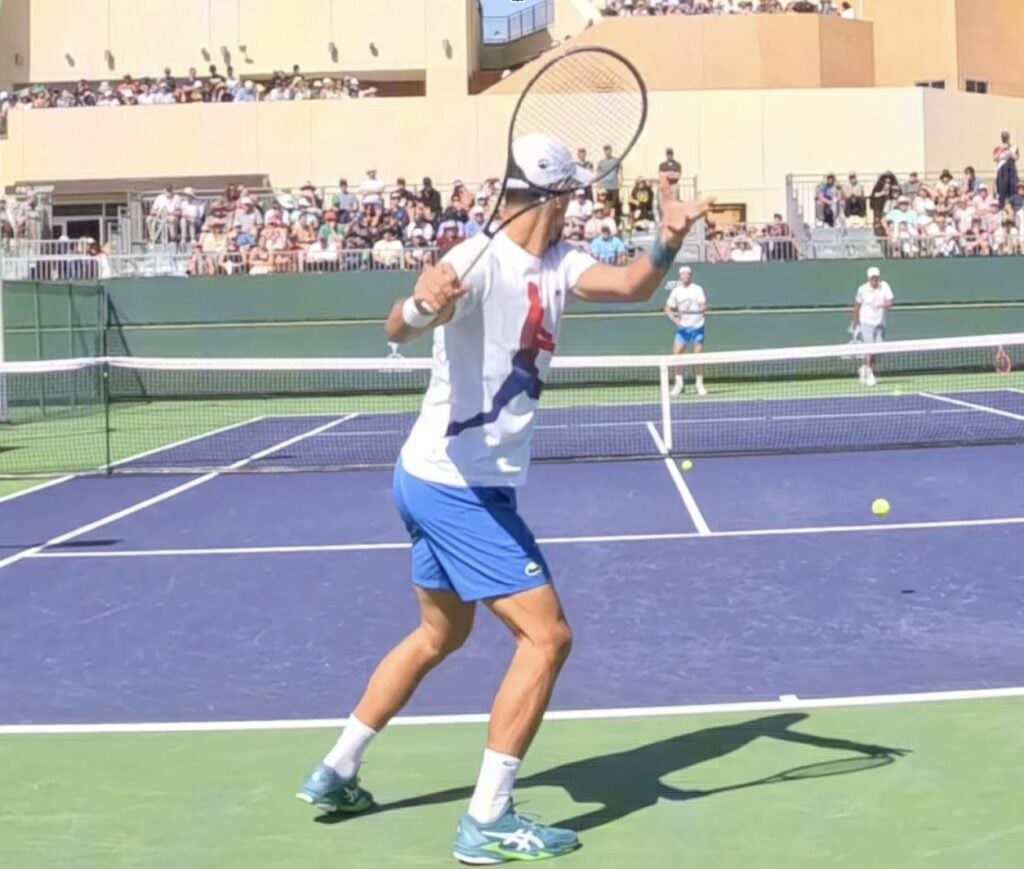
This is the first and top phase of what we call the loop backswing. This is a high-to-low-to-high swing shape that looks like a letter “C” from the side. In modern tennis, the loop backswing is used to help with both power and topspin, as well as to allow you to deal with any height of incoming ball.
After the initial backswing, you then want to pull your racket back a little further (see image above) before moving into the drop phase. If you push your strings towards the back as Novak is doing in the image below, it will help you keep a closed racket face into the drop.
3. The Drop
Next, relax and let your arm and racket drop naturally so that the strings point toward the ground (see image below). This is the last phase before you begin the forward swing. At this point, you want to keep your arm and wrist nice and loose. The looser you keep it, the faster you will be able to swing your racket forward to the contact point.
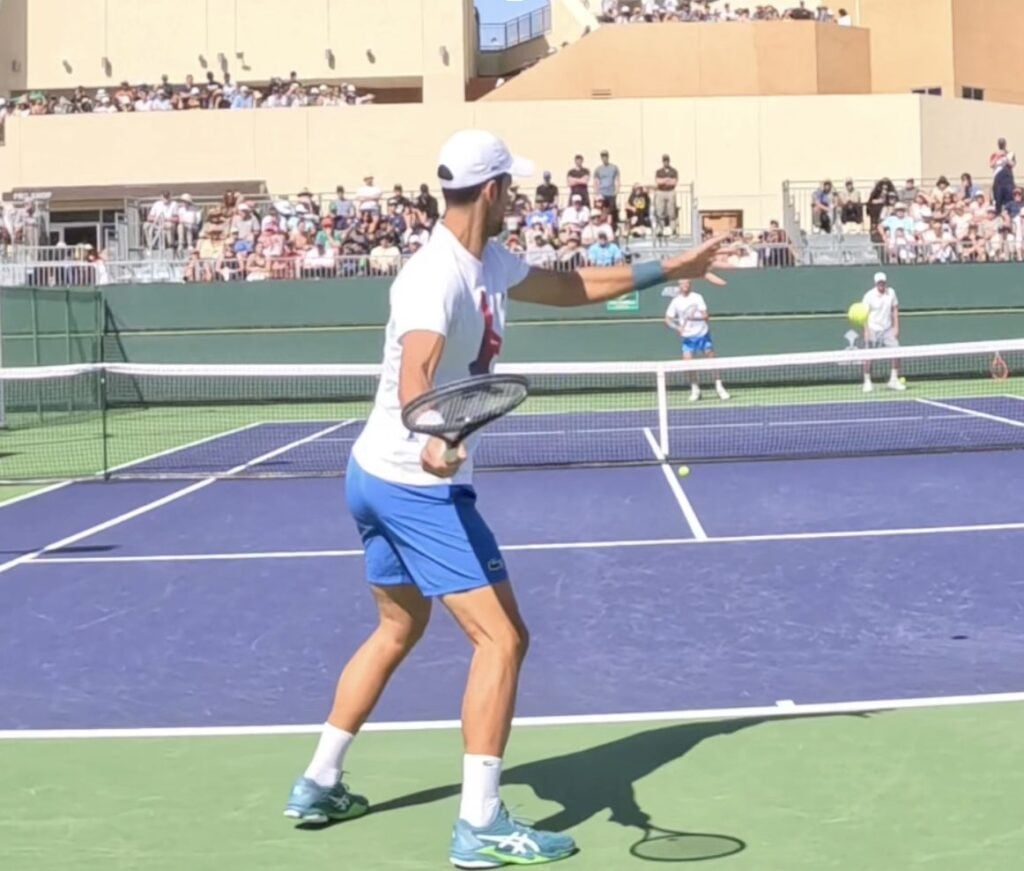
4. The Forward Swing
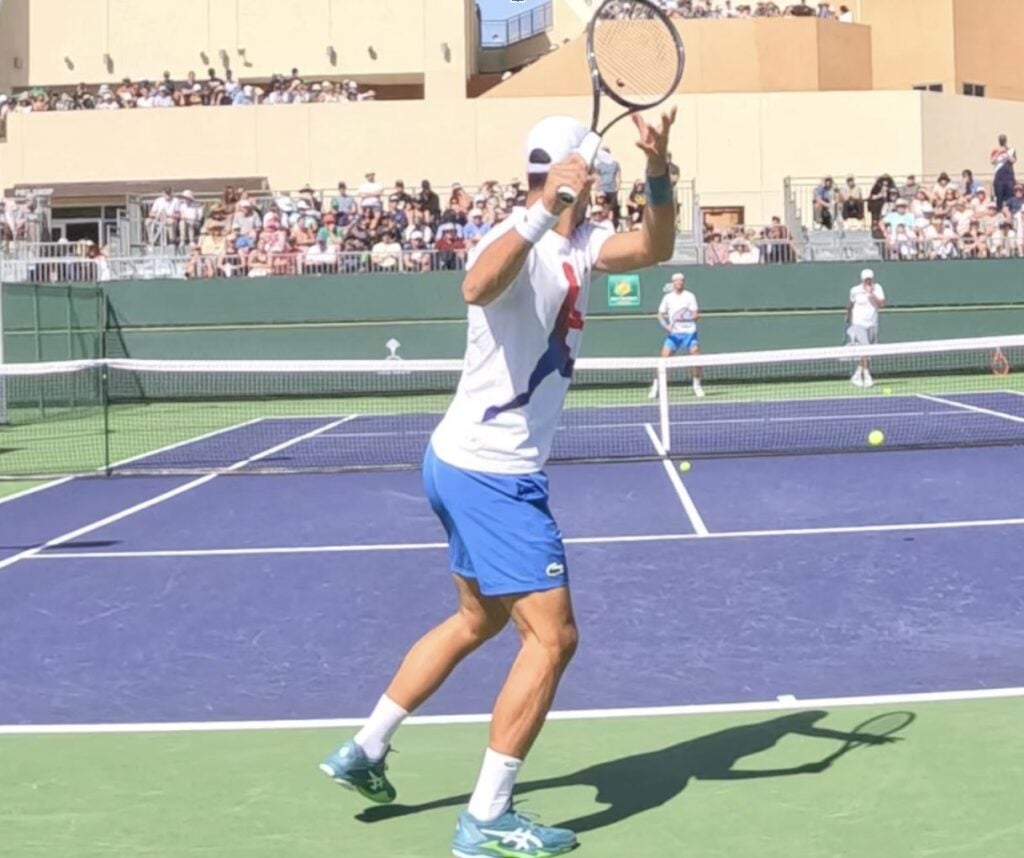
Racket Lag – Racket lag is a topic that is often talked about and attempted to be taught by many coaches. Lag, however, isn’t a conscious movement you need to make. It happens naturally (if you are relaxed) when you start the forward swing phase. You can see in Novak’s images below that the hips have begun to rotate through. This, in turn, drags the arm forward and momentarily leaves the racket behind (racket lag). Think of it as a unit turn in the opposite direction. His body is beginning to coil back towards the target, generating power by using all the major muscle groups.
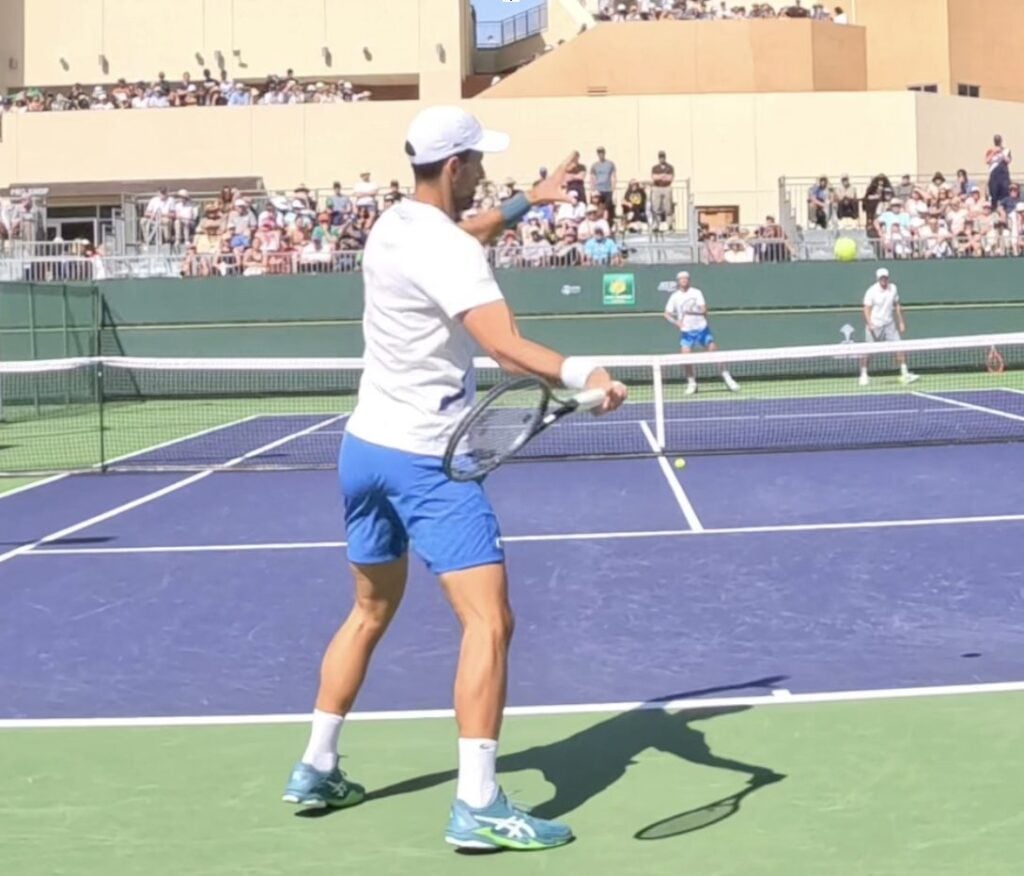
The Acceleration – Now comes the fastest part of the swing, where all of those major muscle groups are engaged, and your body is rotating through back to facing the court and towards your contact point. Your racket will leave the lag position and then catch up to the rest of the body. You can see Novak’s arm is still turning through with his chest and hips.
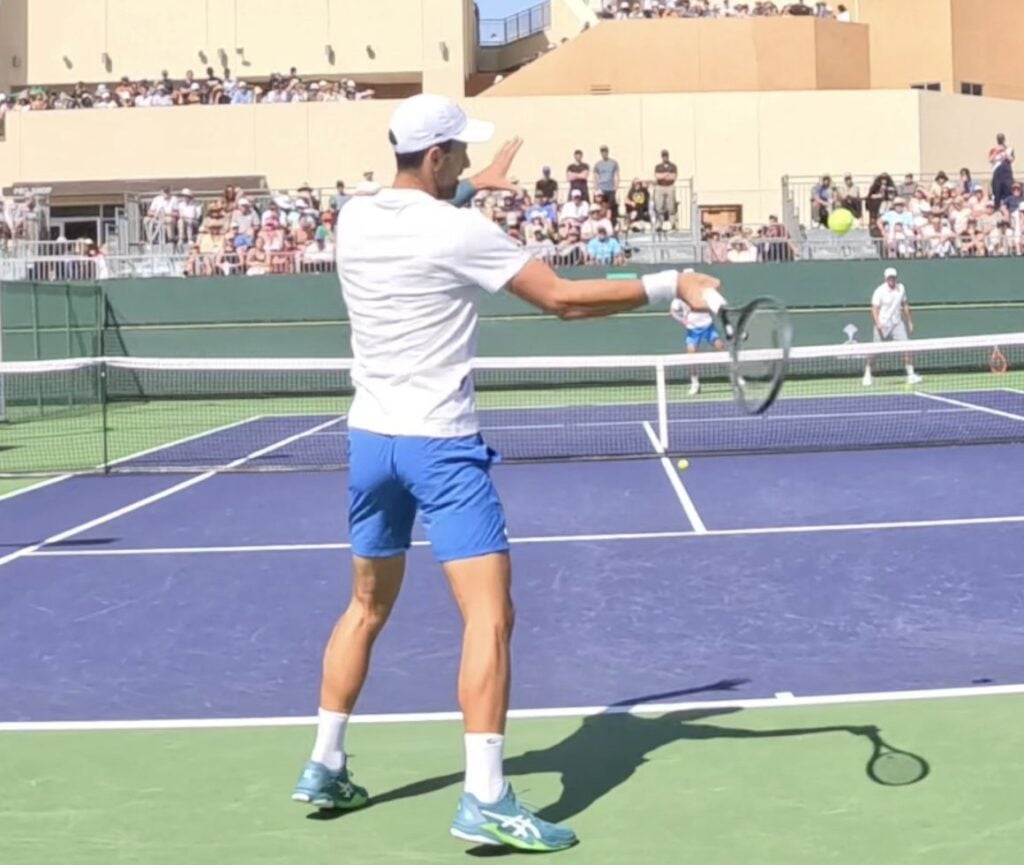
5. The Contact
The contact point is the most important part of any stroke. Even with imperfect technique, a good contact point can produce a solid shot, while poor contact makes everything else less effective.
Because every ball bounces differently, your contact point must constantly adapt. The loop backswing helps you adjust to both low and high balls. At contact, your hips and chest should face the target, with the ball struck out in front of your body, ideally ahead of your front foot. This “power zone” maximizes power and topspin, with the racket accelerating up the back of the ball through contact.
6. The Windscreen Wiper
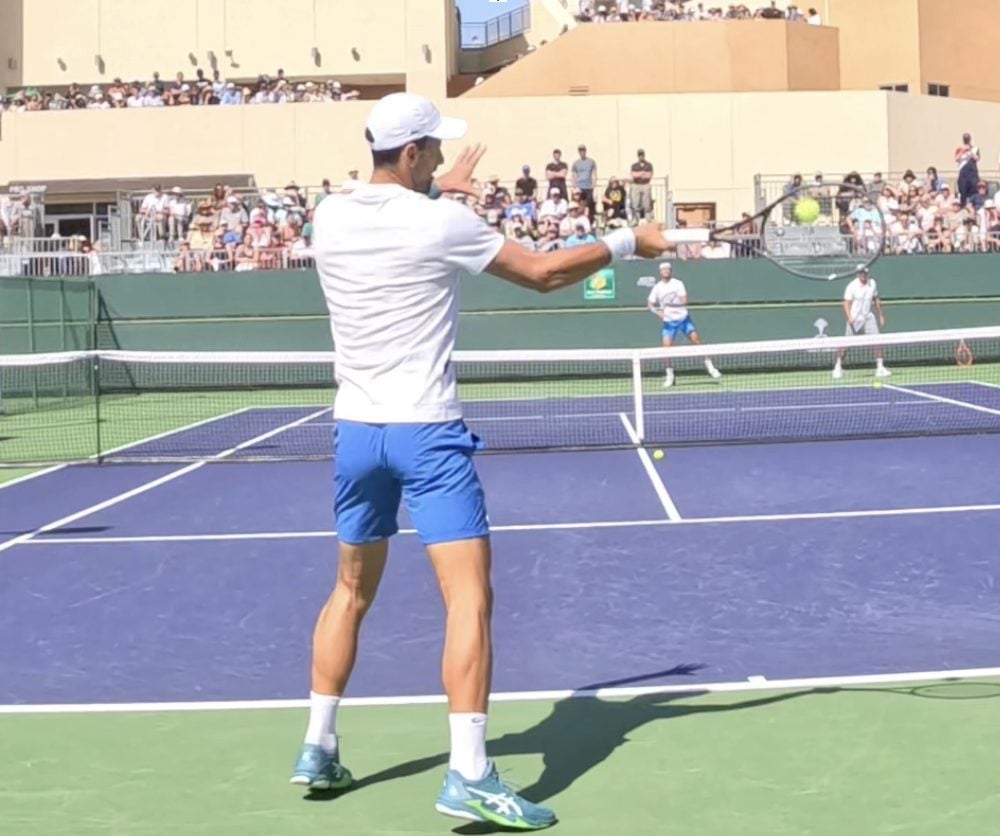
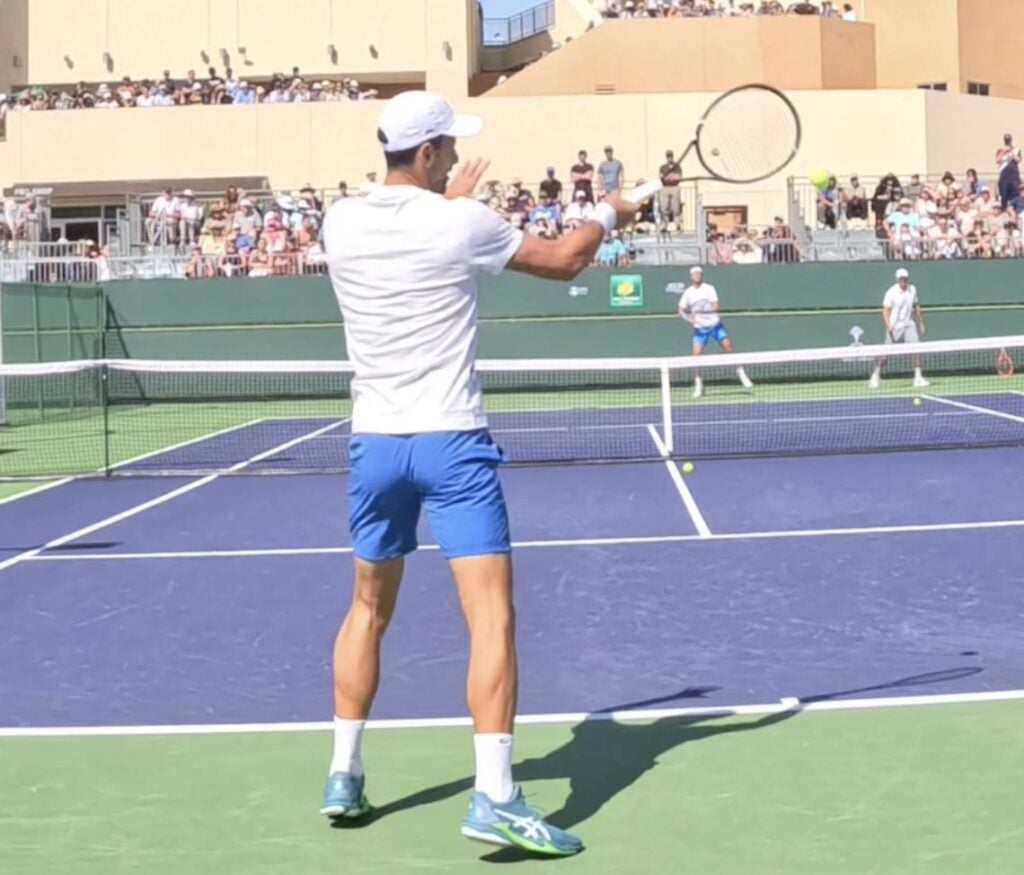
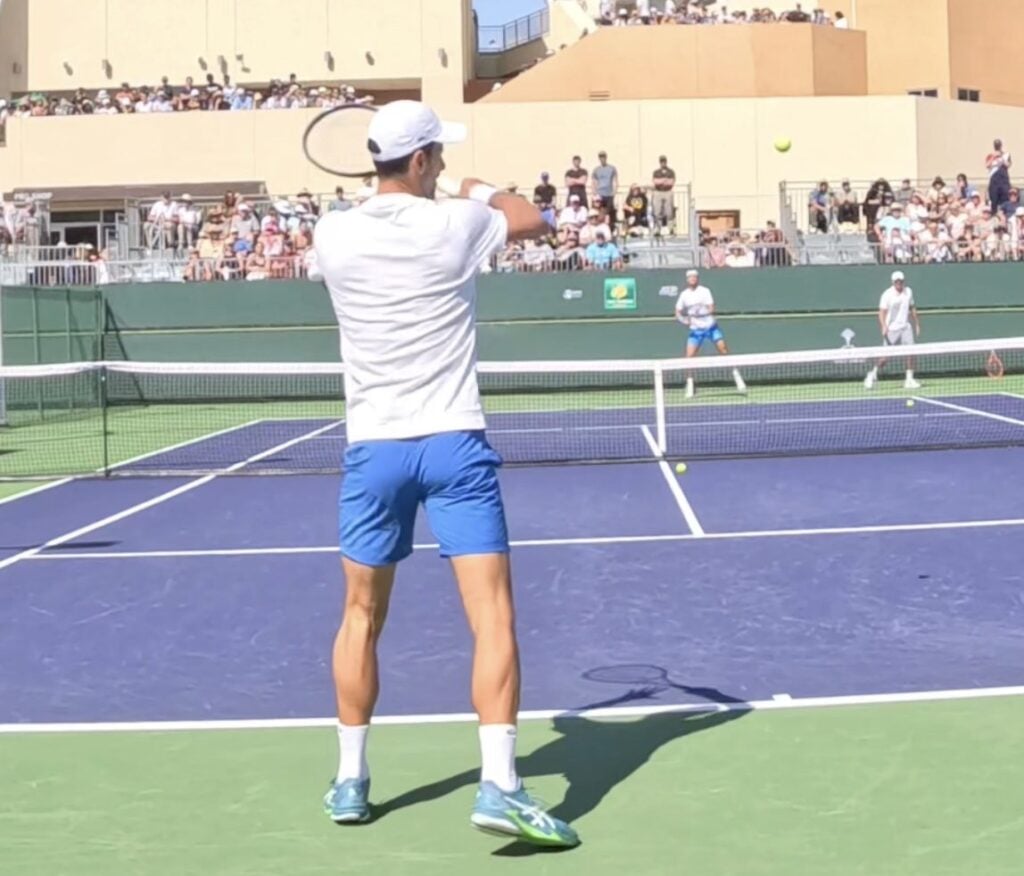
As we said above, it’s in the split second at contact where the strings touch the ball that topspin is generated. But, to be able to get the action right, you need to be moving your racket through the next phase, the windshield wiper. This is where pronation (rotation of the forearm) begins. Pronation of the forearm allows you to fire your racket up the back of the ball by rotating the racket up and across the face of the ball.
One of the biggest myths is that the wrist creates topspin. The wrist should be fairly stable throughout the windshield wiper part of the swing, with most of the motion coming from the pronation of the lower arm.
The name of the windshield wiper comes from what the racket head does in space after contact. It sweeps across from low to high and then across the body, like a wiper on a screen or like you are drawing a rainbow. That sweeping arc is only possible if the forearm is pronating through the shot. (see the two images of Novak below).
7. The Finish
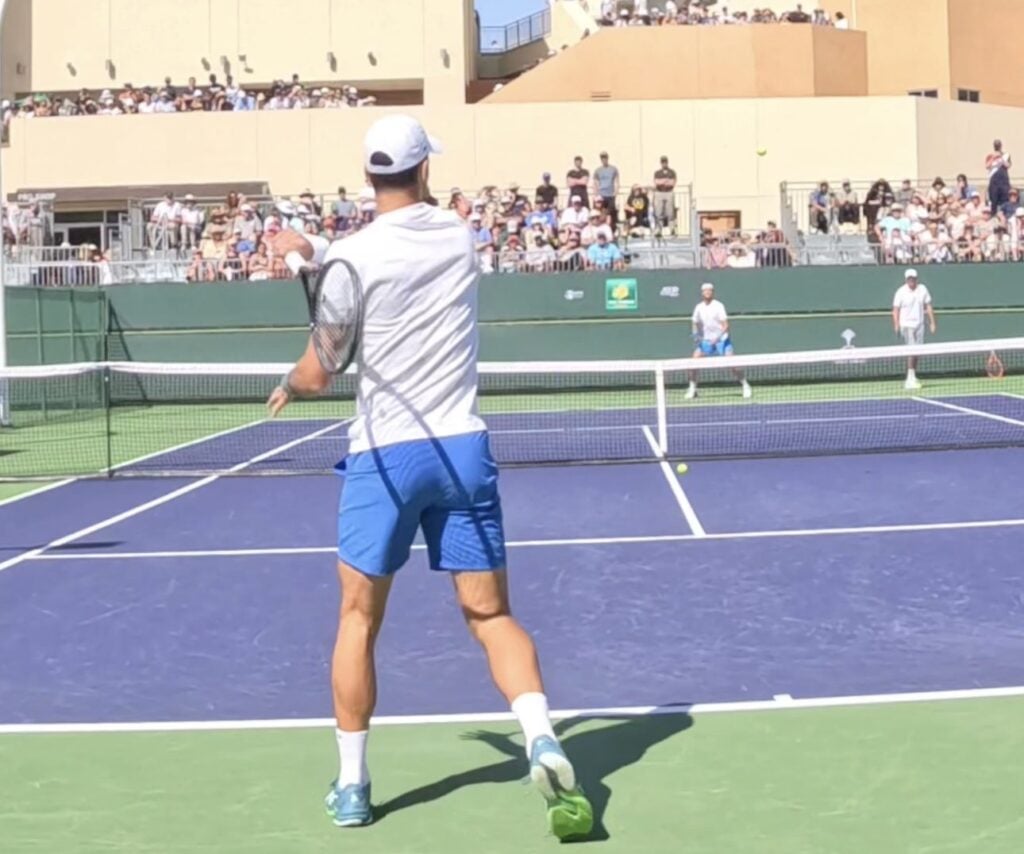
The finish position is a part of the swing that many players neglect, but it’s crucial for maximizing your power and topspin as well as helping to prevent injuries. Once you have begun the acceleration of your swing, the weight of the racket head should naturally drag your arm across your body as far as it can go. If you stop before this point, you actually have to decelerate the swing. This requires twice the energy (contracting your muscles not only for the forward swing but also for the deceleration!) and puts a lot of extra strain on your arm, adding tension that reduces power.
You can see in the image of Novak below that he has his finish across the side of his body. For beginner and intermediate players, you can finish over your opposite shoulder for consistency.
What is the Kinetic Chain & Why is it Important?
Have you ever wondered how a relatively small player can hit the ball with so much power? The secret is the kinetic chain — the way your body links together to generate and transfer energy.
Power comes from the kinetic chain in this sequence:
Ground → Legs → Hips → Torso → Shoulder → Arm → Racket
Each link adds energy, ultimately transferring force from the ground into the ball. The legs start the movement, followed by the hips, core, shoulder, forearm, and finally the racket head.
If any link breaks — such as poor hip rotation or relying only on the arm — you lose much of your potential power. That’s why good footwork and positioning are essential: they allow you to load the body properly before the swing even begins.
Common Mistakes and How to Fix Them
Beginner-Intermediate Mistakes
1. Expecting Instant Success
Tennis is one of the most difficult sports you can play. It takes years of practice and countless hours of repetition to master the game.
In fact, check out our article about how many reps it really takes to master a shot!
For the fastest progress, you need to be specific about what you are practicing and then progress that skill from the foundation up. This means isolating the skill. The TopspinPro is great for this.
Once you have become consistent with the correct biomechanics, you can advance to practicing with a moving ball. Next, add in a little more pressure with practice points before finally reaching the point where you can compete with that skill.
For an in-depth guide on how to progress fast, check out: How To Improve Tennis Fast
2. Standing Too Far Up The Court
This is a very common beginner mistake. Many players panic and rush, but you need space and time to hit a good forehand. If you are rushing towards the ball as it bounces, you are going to get too close to it or contact the ball way too high.
Stay back and give yourself space to hit the ball at a more comfortable height.
3. Backswing Too Big
It’s tempting to take a bigger backswing to try to gain more power, but the key is engaging that kinetic chain. If everything is working smoothly together, you can have a more compact swing, resulting in a better contact point, more power, and control – all with less effort! Having too large a swing usually means you will be late on the ball and lose control.
4. Muscling The Ball
We all love to hit power on our groundstrokes, but that doesn’t mean you should force it. If you tense up and try to add that power with your arm, you ironically will lose speed. Focus on staying relaxed and letting the racket fire through your body.
5. Exaggerating the Topspin Path
Topspin should develop naturally through a proper windshield wiper action and an upward racket path at contact. Avoid forcing it by flicking the wrist or swinging too steeply, as this can reduce power and increase the risk of injury. Trust the swing shape and stay relaxed.
6. Short Follow Through
A long, relaxed follow-through is essential. Many players cut their swing short, creating tension and reducing power. Your swing should feel smooth and effortless; let the racket do the work rather than forcing the shot.
7. Poor Footwork
Ironically, as players improve, they often become lazier with their footwork. Staying light on your toes requires constant focus, and once your technique is solid, missed shots are often caused by poor footwork rather than poor stroke mechanics.
8. Not Understanding Tactics
Once your forehand is technically sound, it’s easy to stop practicing and just play points. But developing the shot is only half the battle; you also need to know when and how to use it. At the intermediate level, poor shot selection and decision-making are among the biggest causes of unforced errors.
Conclusion
Developing a great topspin forehand isn’t about copying a professional’s swing or trying to hit the ball as hard as possible. It’s about building strong fundamentals, understanding why each part of the technique matters, and practicing them in the right order.
Start by choosing a grip that suits your game, learn to move efficiently to the ball, and focus on making clean contact out in front. From there, develop a smooth, relaxed swing that uses the kinetic chain to generate effortless power and topspin. Remember, topspin isn’t created by flicking the wrist or forcing the racket upward; it’s the result of good biomechanics, proper timing, and thousands of quality repetitions.
Most importantly, be patient. Every great forehand is built one repetition at a time. Isolate the fundamentals, practice them consistently, then gradually introduce movement, pressure, and match play until they become second nature.
Whether your goal is to rally more consistently, hit with greater power, or dominate from the baseline, a reliable topspin forehand is one of the most valuable weapons you can develop. Master it, and you’ll not only make fewer errors, but you’ll also gain the confidence to control points, dictate play, and enjoy the game at a whole new level.
FAQs
-
What is topspin really, and why does the name confuse people?
Topspin is not made by hitting the top of the ball. It’s created by rolling your strings up the back of the ball with a low-to-high swing, which makes the ball rotate forward — “forward spin” would probably have been a better name.
-
Why is a topspin forehand such a valuable shot?
Topspin makes the ball dip fast, so you can hit higher over the net and still land it in. That gives you more margin, lets you hit harder, create angles, push your opponent back, and force them to play uncomfortable higher balls.
-
Which forehand grip should I start with?
Beginners should usually start with the semi-western grip because it offers the best blend of power, spin, and reach. As you improve, you can make small grip shifts to suit your style, surface, and the kind of shots you want to unlock.
-
What matters most when learning the topspin forehand technique?
Start slow and simple: ready position, split step, good footwork, unit turn, loop backswing, relaxed drop, contact out in front, windshield wiper, and a full finish. The goal is a smooth swing that uses the kinetic chain, transferring power from the ground up and through the racket efficiently.
-
What are the biggest mistakes players make when trying to add topspin?
Many players force it by flicking the wrist, swinging too steeply, muscling the ball, or cutting the follow-through short. Trust the swing shape, stay relaxed, let the racket do the work, and remember that every great forehand is built one repetition at a time.
Enjoyed this article?
Be sure to sign up for our newsletter and we'll keep you up to date about new posts