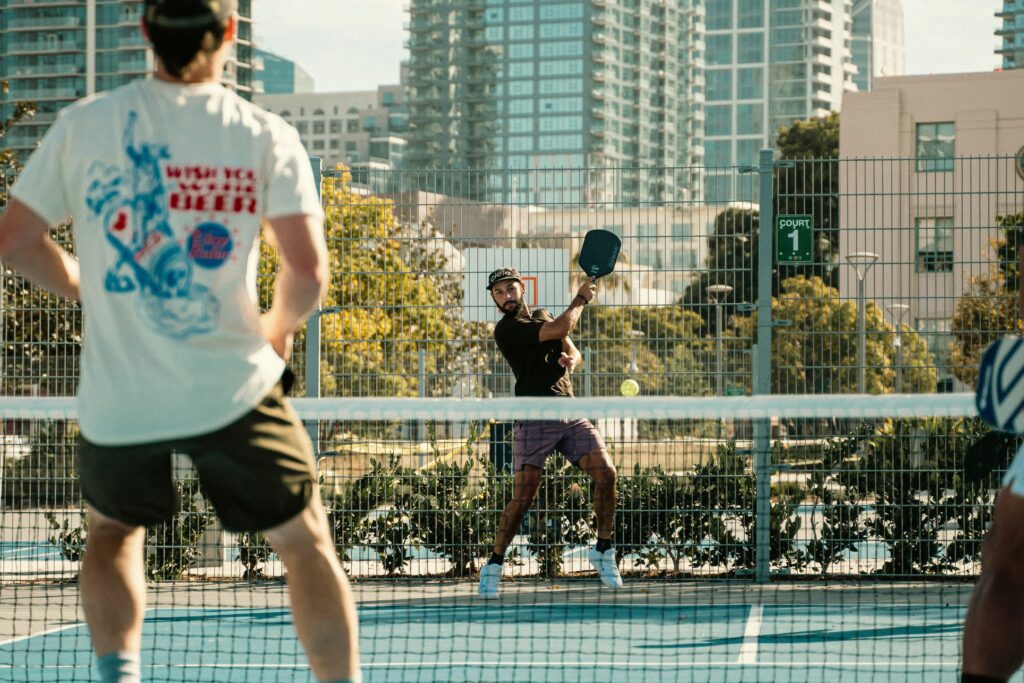

Most pickleball players are obsessed with power, it’s what makes the game so exciting. Those fast exchanges at the net, aggressive serves or drives. It’s so satisfying to hit the ball with speed. Even though power isn’t the most important game winning factor, you aren’t taken seriously, even at lower recreational level, unless you can speed up that little plastic ball!
If natural power isn’t your strength, or you feel like you’re losing explosiveness late in sessions, this is where smart training makes the difference. Your body has to be up to the demands of the game.
In this guide, we talk about how to build real, usable strength that translates directly to the court while also protecting your joints and improving your long-term durability. Because strength isn’t just about hitting harder. It’s about staying powerful, stable, and injury-free over time.
Why Strength Matters in Pickleball
The physical demands of pickleball are unique. No two racket sports require exactly the same combination of strength, speed, and control.
Pickleball is played on a smaller court, but that doesn’t make it less demanding. It requires constant split-step readiness, rapid changes of direction, and short bursts of explosive movement. You’re accelerating into the ball, then immediately decelerating to your recovery position and often within just a few steps. Both acceleration and deceleration are central to the game. That means your body must be strong enough not only to move quickly, but to absorb force efficiently and stabilize under pressure.
Leg strength allows you to push off explosively and control lateral movement. Core strength keeps you balanced during dinks, drives, and fast exchanges at the kitchen. Without that foundation, you’re relying purely on reaction, and over time, that increases fatigue and injury risk. To perform consistently, and stay durable, your strength training needs to reflect the true physical demands of pickleball.
Strength vs. Muscle
One of the biggest misconceptions in pickleball and in fact most sports, especially among recreational players, is that strength training automatically means “bulking up.” It doesn’t! Strength and muscle size are not the same thing. Let’s take a look at the difference:
Strength
Strength is neurological. It’s largely about how efficiently your nervous system recruits muscle fibers and coordinates movement. When you get stronger you’re teaching your body how to use the muscle you already have more effectively.
Your brain sends signals to your muscles to contract. The stronger and more trained you are, the more motor units (groups of muscle fibers) your nervous system can recruit, and the faster it can recruit them. That improved communication between brain and body is what allows you to produce more force.
When you train for strength, you’re improving:
- Coordination between muscles
- Rate of force production
- Stability under load
In simple terms, you’re teaching your body to produce force more efficiently, not necessarily to grow much larger muscles. Strength training improves how effectively your nervous system communicates with your muscles. It enhances coordination, timing, and recruitment of muscle fibers, allowing you to generate more force without needing more size.
That’s why many smaller athletes can demonstrate incredible strength. Think of elite rock climbers or competitive cyclists. They’re often very light and lean, yet they can produce enormous force relative to their body weight. Their performance comes from neural efficiency, tendon strength, and precise coordination, not bulk.
In racket sports, this also matters. Pickleball isn’t about how big your muscles are. It’s about how quickly and efficiently you can apply force, pushing off laterally, stabilizing through a lunge, or reacting explosively at the kitchen.
Muscle
Most elite sports require strength but some benefit from larger muscle size. Muscle growth is driven by high training volumes with moderate to high loads and progressive overload over time. That type of training is more suited to sports where large body mass matters such as American football, rugby and weightlifting.
When you train for strength properly, you’re upgrading your system, not just building muscle.
Check out the video below for an example:

Strength Training Enhances Mobility, Not Reduces It
Staying injury free is one of the most important aspects to you maintaining your long term pickleball enjoyment. Another common myth in the sports world is that strength training makes you stiff, when in fact the opposite is true.
Properly tailored training helps improve joint stability, muscle and tendon length and increases the usable range of motion. Strength at end ranges is what protects you on court. Think of lunging wide and having the proper leg strength and stability to spring back and recover. Flexibility without strength is instability.
How To Get Started
If you’ve been avoiding strength training because you don’t know where to start or don’t want to bulk up, you’re missing one of the most powerful tools for improving your pickleball performance.
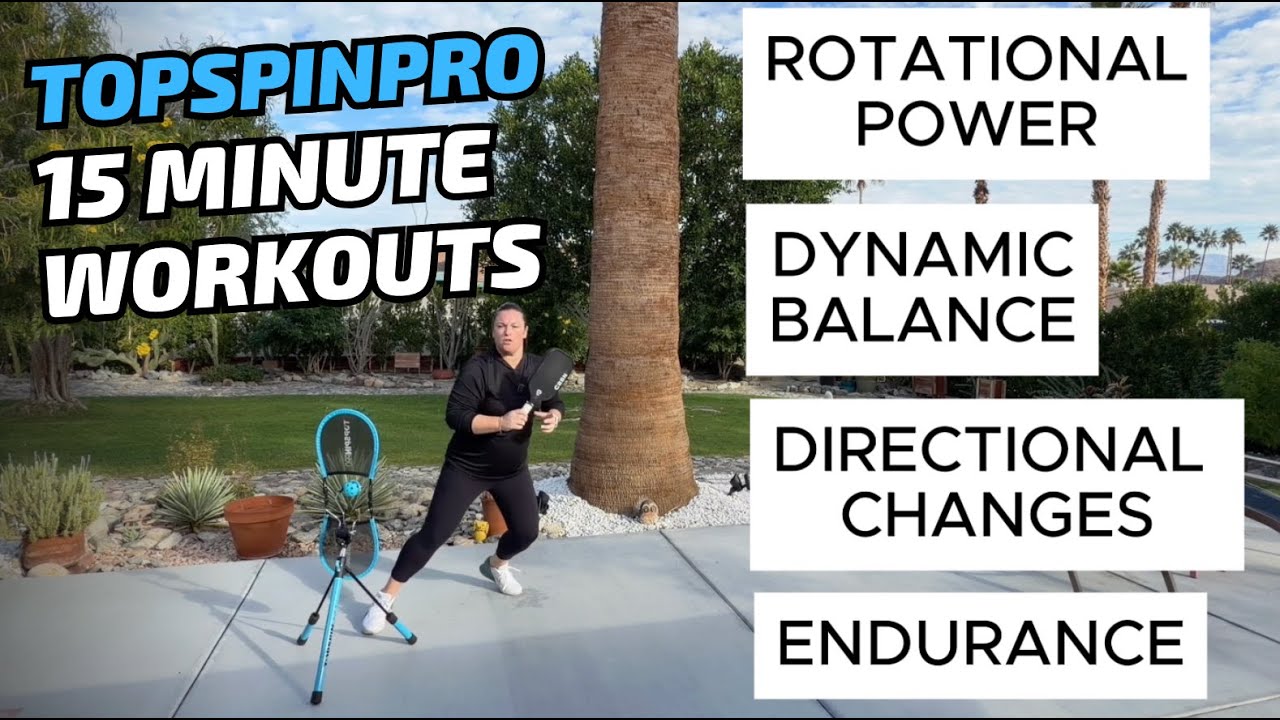
You don’t need bodybuilding workouts, you need real pickleball specific strength training. That can sometimes seem a little overwhelming, which is why we have put together our 7-Day 15 Minute Pickleball Specific Fitness Course. The course includes 7 days with mixed workouts where you work on all aspects of pickleball fitness such as:
- Cardio
- Strength
- Balance
- Footwork
As well as the 7 day program we have additional longer videos for cardio, upper body strength, lower body strength, core strength and footwork.
Take a look at the video below for more information or head via this link: 7 Day Pickleball Fitness Course
Conclusion: Train With Intention, Play With Power
Pickleball may look simple on the surface, but the physical demands are anything but. Quick accelerations, controlled decelerations, explosive hand battles, and repeated lateral movement all place significant stress on the body.
If you want more power, more stability, and more consistency deep into long sessions, strength training isn’t optional, it’s essential. The goal is to become more efficient and more explosive.
Strength training allows your technique to show up under pressure and fatigue. If you’re serious about improving your pickleball performance and extending your longevity in the sport, structured strength work should be part of your weekly routine.
Enjoyed this article?
Be sure to sign up for our newsletter and we'll keep you up to date about new posts