
Stay in the loop!
Want to be updated when we publish? Be sure to sign up for our newsletter. No spam, we promise!
Realistic Positioning
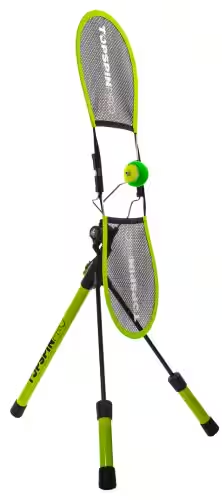
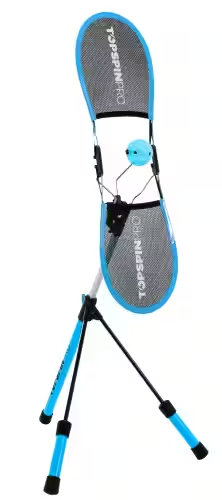
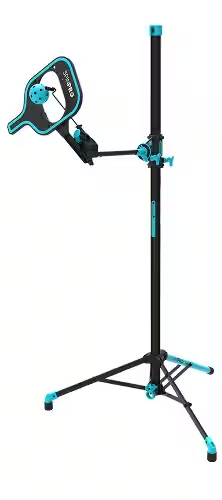
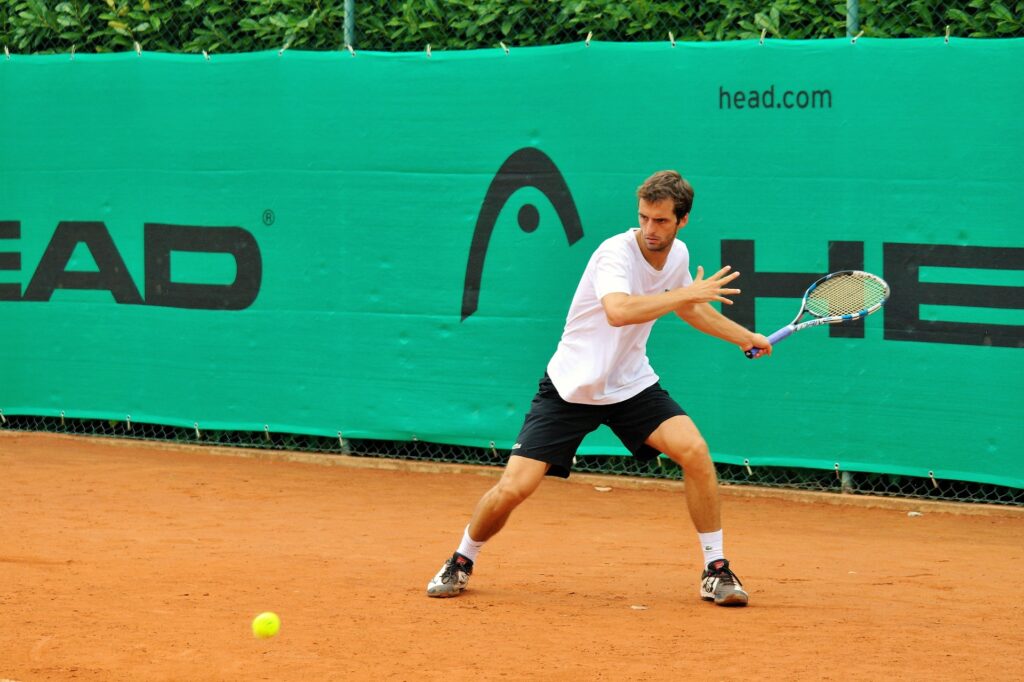
Before we share our tennis forehand drills, it’s important to think about structuring and making your practice realistic. You should consider the context of the shot you are working on and position yourself accordingly. Many tennis players end up playing from the center of the baseline much of the time, when in reality, how often do you hit the ball from there in a game? Practice from a tactically relevant position as often as possible. Also, if you use a TopspinPro, position it according to the type of shot, you want to practice, such as a short ball or return of serve. Here’s Tamas Bogyo explaining how to position your TopspinPro:

Tennis Forehand Drills
Easy Topspin Forehand Drill
It doesn’t matter how long you have been playing tennis. This is one of the best tennis forehand drills to help with creating the correct biomechanics for the topspin forehand, which includes racket lag, a closed racket face, and a loose grip. Having the correct biomechanics will naturally help you get more topspin. A tennis court is not essential for this drill, you can try this anywhere. You simply need a tennis ball, a racket, and, ideally, something soft to kneel on.

Building Muscle Memory Drill
This tennis forehand drill is as simple as it gets for training with your TopspinPro on the court. Alternating between the device and a self-dropped feed is a great way to reinforce your topspin forehand muscle memory. Quickly switching between the two immediately allows you to progress much faster than simply practicing one or the other. You are reinforcing your muscle memory by hitting on the TopspinPro followed by a regular forehand that you can visually assess. You can check whether the ball is landing at the correct depth or traveling where you intended and further hone your skills. This is great for your swing shape, contact point, and ball control. Ideally, for this drill, you would use a two-tone junior ball because the topspin is easier to see. Also, aim the ball at different areas of the court to improve your placement.
Depth Control Drill
Depth is one of the most effective ways to force an error from your opponent or trigger a weak return. Controlling the height of the ball is typically the way you dictate the depth. But to consistently clear the net with a safe margin and land the ball at the back of the court, you need topspin. The following drill is a great way to focus on getting decent height over the net while at the same time maximizing your topspin to force the ball to dip back down before the baseline.

Forehand Footwork Drill
Here, Ryan Reidy from 2minutetennis.net coaches you through some helpful forehand footwork drills. When we hit our forehands, we most often move sideways, forward, or backward. Ryan gives us the best footwork pattern for each direction, as well as discussing the split step.

Forehand Control Drill
It’s one thing playing tennis in practice and another in a real game. Once you have an opponent in front of you, it can tighten up your swing, and suddenly you start missing your shots! But the more you practice racket head control and direction in structured practice, the easier it will be in a live game! Here Ryan talks us through the racket catch and some extra footwork to help with your control: closed stance, open stance, and mogul stance.

Forehand High Ball Drill
One of the hardest shots to hit as a tennis player is the high forehand. A high ball bounce is tough to manage for anybody. It’s one of those essential skills that you can’t ignore. With the amount of topspin players use these days, you are bound to get a bunch of high-bounce shots from your opponent when playing in a match. Here are some tips from Coach Ryan Reidy to focus on the high forehands.

Forehand Rally Ball Drill
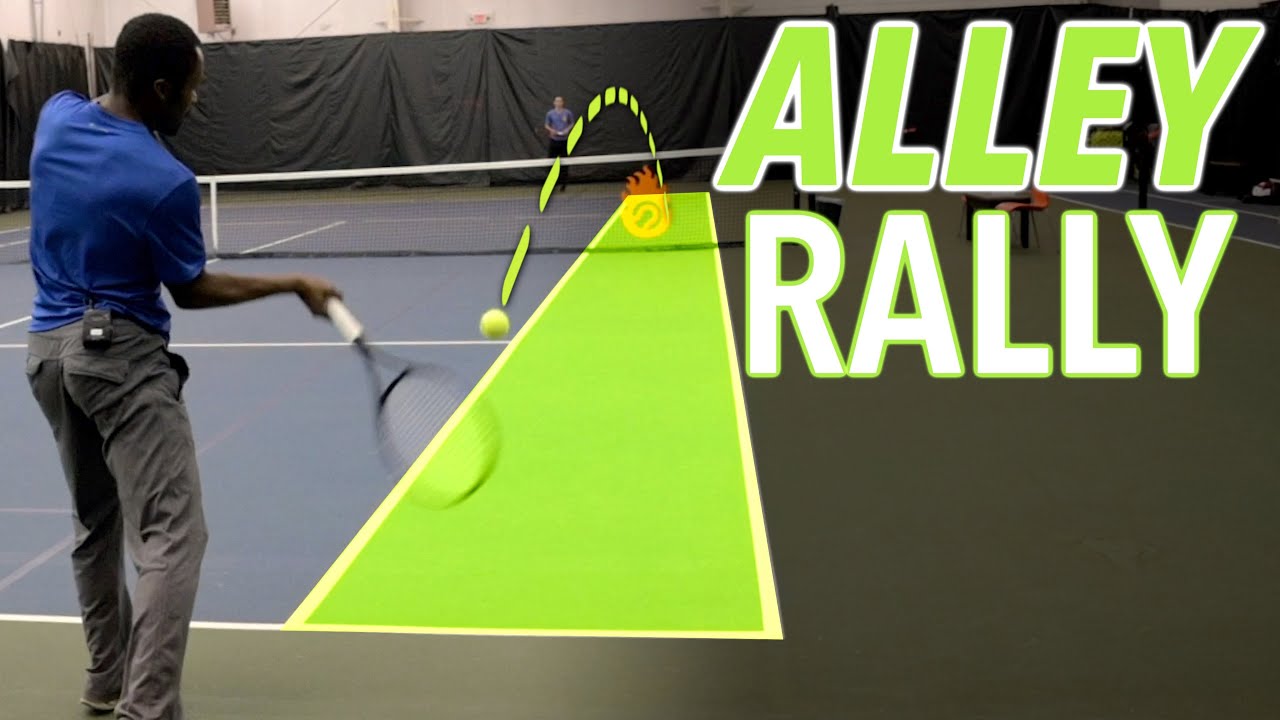
Now you can put the previous drill and others into practice with an incoming ball. It’s important to practice your forehand technique under increasing pressure situations. So moving from static ball or drop feed ball drills, where you are reinforcing technique, to more difficult feeds or rally balls is crucial for your development. The following drill is a great one to work on with a partner or coach to reinforce your forehand stroke and build up your consistency and placement. You can even make it easier by starting at the service line and hit mini tennis style to begin with.
Summary – Plan Your Tennis Forehand Drills
The topspin forehand is a difficult stroke but with the right drills that follow a methodical approach, you can make some big improvements. The sequence above starts with a static ball or drop feed ball drill where you are reinforcing technique then moves to more difficult feeds and ultimately putting it all into practice with rally balls. Once you’ve mastered one drill you can move to the next. Equally, if you have specific things you want to work on, for example, depth, then head to that specific drill. Take charge of your tennis development!
We would love to hear if you tried any of the tennis forehand drills above. Let us know in the comments below.
FAQs
-
Why should I practise my forehand from different court positions?
Practice from a tactically relevant position as often as possible. Many players hit from the center of the baseline in practice, but in a real game you’ll often be dealing with short balls, returns of serve, and other specific situations.
-
What is the easiest drill for building a better topspin forehand?
The easy topspin forehand drill is one of the best places to start because it helps create the correct biomechanics: racket lag, a closed racket face, and a loose grip. You don’t even need a tennis court—just a tennis ball, a racket, and ideally something soft to kneel on.
-
How can I build topspin forehand muscle memory faster?
Alternate between the TopspinPro and a self-dropped feed. Quickly switching between the two reinforces your swing shape, contact point, and ball control, while letting you visually assess whether the ball is landing at the right depth and going where you intended.
-
What should I focus on if my forehands are landing too short or going long?
Depth control comes from controlling the height of the ball and using enough topspin to make it dip back down before the baseline. Aim to clear the net with a safe margin while still landing the ball deep at the back of the court.
-
How should I progress my forehand drills into more realistic practice?
Start with static ball or drop feed drills to reinforce technique, then move to more difficult feeds and finally rally balls. Once you’ve mastered one drill, move to the next—or head straight to a specific area like depth, control, footwork, or high balls if that’s what you need to work on.
Links Related to This Article
Enjoyed this article?
Be sure to sign up for our newsletter and we'll keep you up to date about new posts
3 comments
Hi Zoe,
I love the 3 in 1 drill touted as “the best forehand topspin drill of all time”
I agree and I think the instructor (British accent, a lefty) in the video is brilliant!
Who is the instructor in the video?
I think he’s the best.
Thanks,
Conrad Corbett
Hi Conrad,
Thanks for your comment. This is Phil (from South Africa). He is the inventor of the TopspinPro. You can find more of his videos on our YouTube Channel here: youtube.com/c/topspinpro
Thanks!
Zoë
Conrad,
Thanks for your generous words. I copied it from a brilliant English coach called Andy McGrath from Modern Tennis International and added my own tweaks. Like you, I was totally blown away by how simple yet effective that drill is. It’s my “go to” when all else fails!
Are you also a lefty?
Phil