

The tennis volley, though less used than it once was, is still a pivotal shot in both singles and doubles. The ability to finish off quick points at the net often dictates the flow of a match and showcases a player’s touch, attacking confidence, and tactical ability.
In this guide, we will help you understand how each part of the volley works together, from your ready position and footwork to the contact point and finish. You’ll also discover the most common mistakes players make and practical ways to avoid them.
What Is A Volley?
A volley is a shot played before the ball bounces. Although theoretically it can be executed from anywhere on the court, it is most effective when played closer to the net. From this position, you can create sharper angles, take time away from your opponent, and direct the ball into areas that are difficult to reach from further back. Let’s look closer at other benefits of the volley.
What Are The Benefits Of A Volley?
By striking the ball before it bounces, you put extra pressure on your opponent. There are a number of ways in which choosing to volley can be an advantage:
- Take control of the net – Moving forward to volley puts you in an attacking position, providing more angles and forcing your opponent to react under pressure. It’s an intimidating sight to see your opponent come forward towards you, and many players miss their next shot because they panic.
- Reduce your opponent’s reaction time – Because you strike the ball before it bounces, and you are almost half a court closer to them, it gives them less time to react in between shots.
- Create sharper angles – From the net, you can direct the ball away from your opponent and into areas that are difficult to defend. Angles open up that aren’t available further back.
- Use your opponent’s pace – A volley requires very little backswing. With a stable racket and good timing, you can efficiently redirect the incoming pace.
- Add variety to your game – Developing a confident volley makes you less predictable and gives you more ways to attack in singles and doubles.
- Capitalize on a strong shot – If you his a great serve or shot that puts your opponent under pressure with pace, depth, or direction, it often pays to come swiftly into the net and keep pressuring them.
Types Of Volley
1. Punch Volley
The punch volley is generally the first volley we learn, is the most commonly used, and the main volley technique we will discuss in this article. It’s simple, short action allows us to execute the shot swiftly and accurately. It is an aggressive shot, punched with pace and precision.
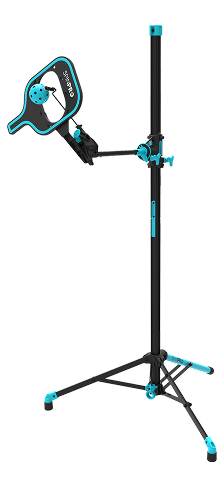
Here’s how you can learn the punch volley on the SpinPro:

2. Drop Volley
The drop volley is a touch shot that drops the ball over the net and short in the court. It is often used to catch opponents off guard who are deep at the back of the court. A drop volley is generally hit from a lower ball, as it is easier to drop the ball by gently lifting it up and over the net, with a small arc shape.
3. Stop Volley
The stop volley is a variation of the drop volley, designed to deaden the ball upon impact and surprise the opponent. It tends to be hit from a mid-height or higher ball. Like the drop volley, the objective is to have it land short and close to the net, but now you are simply just taking the pace off rather than lifting it back up and over. To execute a stop volley, meet the ball early and soften the hand and wrist at contact to absorb the pace.
4. Drive Volley
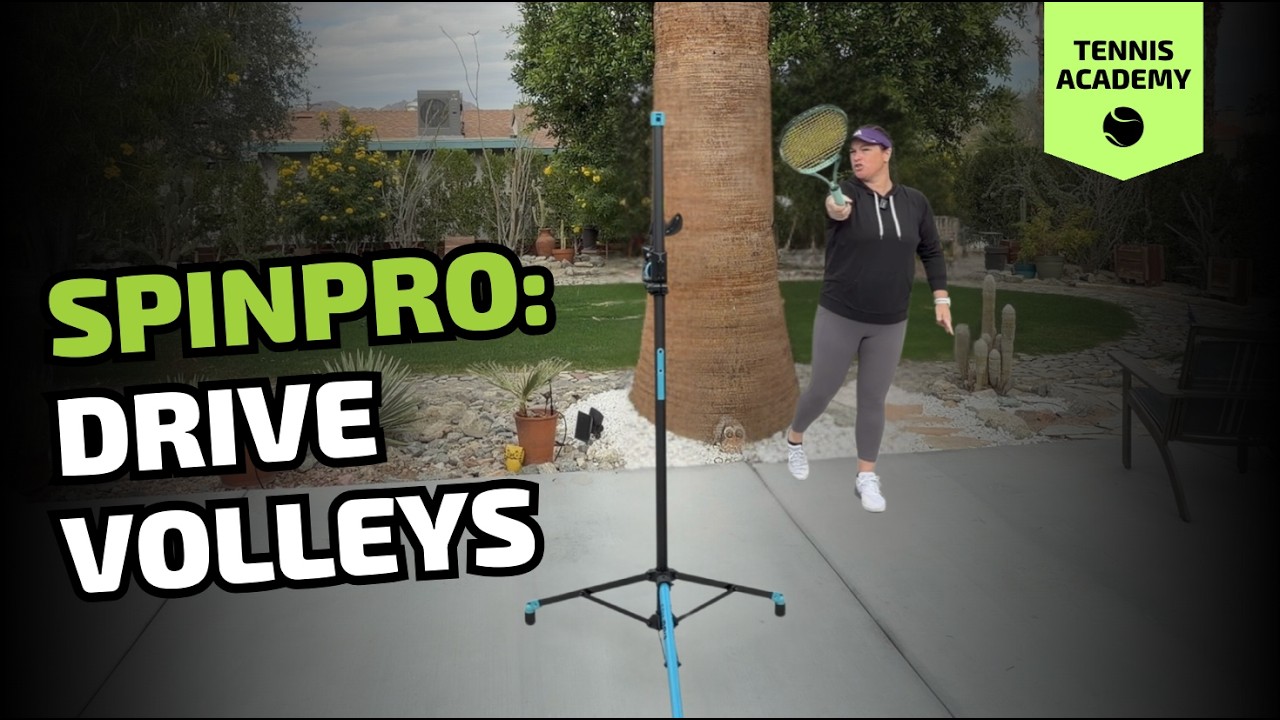
The drive volley is an aggressive shot that puts pressure on your opponent with pace, depth, and spin. Timing is easier if the backswing is shorter. The key to a good drive volley is achieving a good contact point in front and a long follow-through to help add speed and spin.
5. Block Volley
The block volley is a reactionary shot used when the ball arrives quickly. It can often be a defensive volley or a more neutral shot vs an attacking type of volley. Focus on getting the racket on the ball quickly. It doesn’t have to be a pretty volley; it’s more about effectiveness. Simply hold your strings to the ball and block it with a firm wrist and racket face, redirecting it back over the net with minimal backswing or follow-through.
6. Lob Volley
The lob volley is a technique for lofting the ball high over an opponent at the net, often as a defensive or tactical maneuver. When executed effectively, it is one of the most fun and rewarding volleys. To execute a lob volley, use an open racket face and a gentle upward swing with firm contact to lift the ball high, aiming to clear the opponent and land the ball deep in the court.
7. Half Volley
The half-volley is a challenging shot played immediately after the ball bounces. It is typically hit when a player is approaching the net and their opponent has played the ball down at their feet. So it is more of a reaction groundstroke hit with more of a punch or block volley technique. To execute a half volley, anticipate the bounce and make contact with the ball just after it rebounds off the court, using a compact swing and controlled touch to direct it accurately over the net. Guide the racket in the direction of the ball’s target area. Visualize that you are pushing the ball up and back into the court.
The Volley Grip
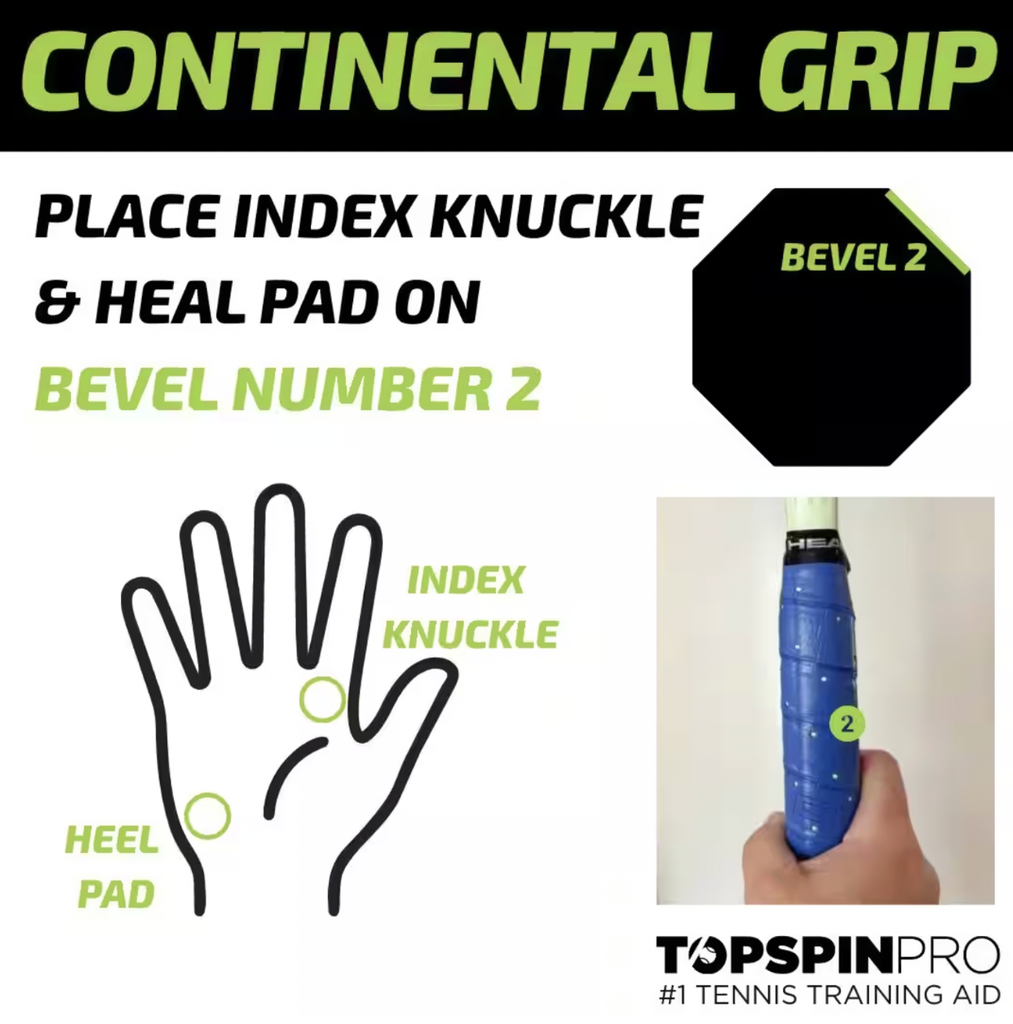
Most types of volley require the continental grip or slight variations of it. The drive volley would require your regular groundstroke grip to achieve maximum topspin.
Here’s how to find the continental grip:
To find the continental grip, place the base knuckle of your index finger and the heel pad of your hand on Bevel 2 (reverse this for left-handed players).
The Volley Technique – Shot Preparation & Footwork
Ready Position
The ready position is the foundation of every shot. Returning to it after each stroke helps you react quickly and move efficiently. It also helps you maintain a consistent point of contact by not being behind the ball. A poor ready position can delay your movement and leave you slow.
Stay light on the balls of your feet with your weight slightly forward, your knees flexed, and your heels just off the ground. Keep the racket comfortably in front of your body, supported by your non-dominant hand on the throat or with both hands on the grip.
Split Step
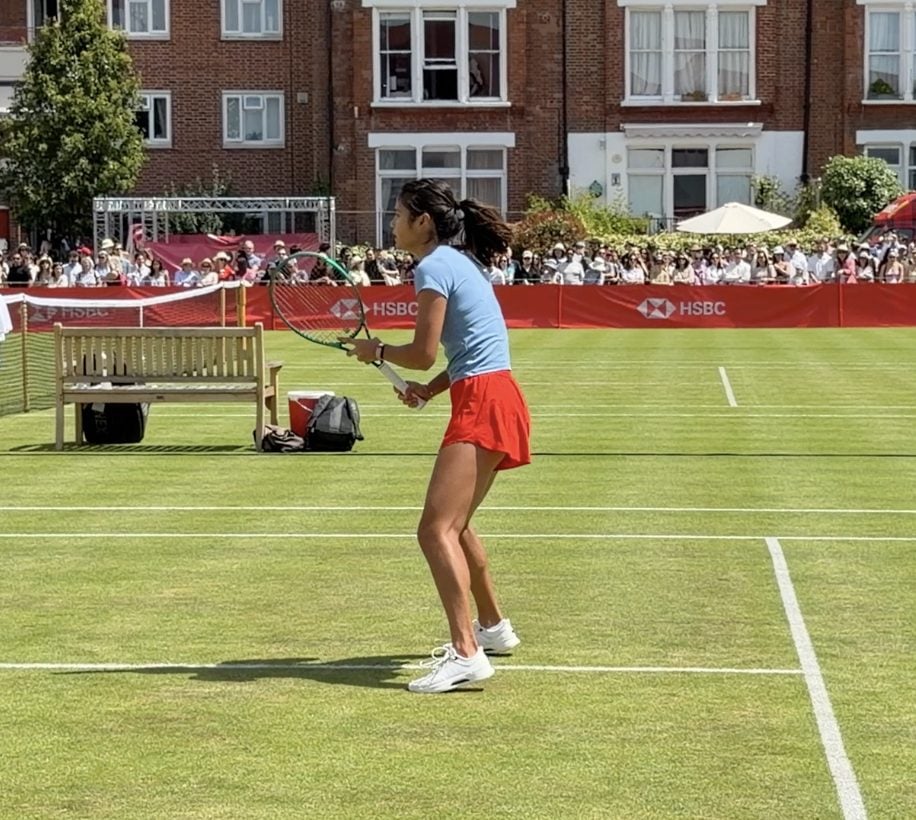
Between each volley, recover to your ready position and prepare with a split step. As your opponent strikes the ball, make a small, controlled hop and land in a balanced, athletic position. Keep your knees relaxed, your weight forward, and land on the balls of your feet so you can push off immediately in any direction.
Timing is more important than the height of the jump. Aim to land as you identify the direction of the incoming ball (forehand or backhand). Landing too early can leave you flat-footed and stationary, while landing too late will delay your first movement towards the ball.
See the image of Emma Raducanu below in her split step position:
Stance
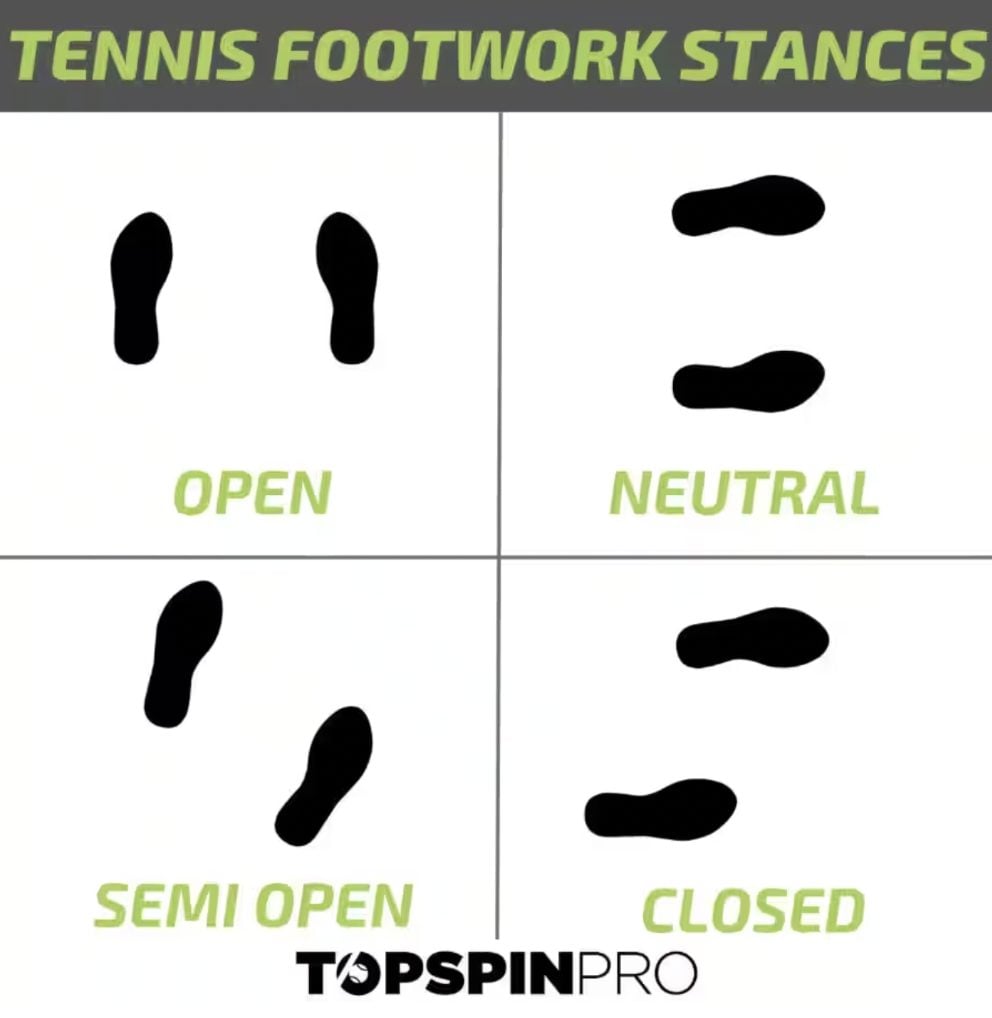
There is no single stance that suits every situation. Skilled players move naturally between neutral, closed, semi-open, and open positions according to the ball’s speed, height, depth, and direction, as well as the time available to react.
Of all the shots in tennis, the volley often requires the most awkward footwork technique. This is because being closer to the net gives you less time to react and little time to prepare. Developing a balanced, adaptable stance as often as possible helps you remain composed, react efficiently, and execute the volley with greater control.
Stepping In At Contact
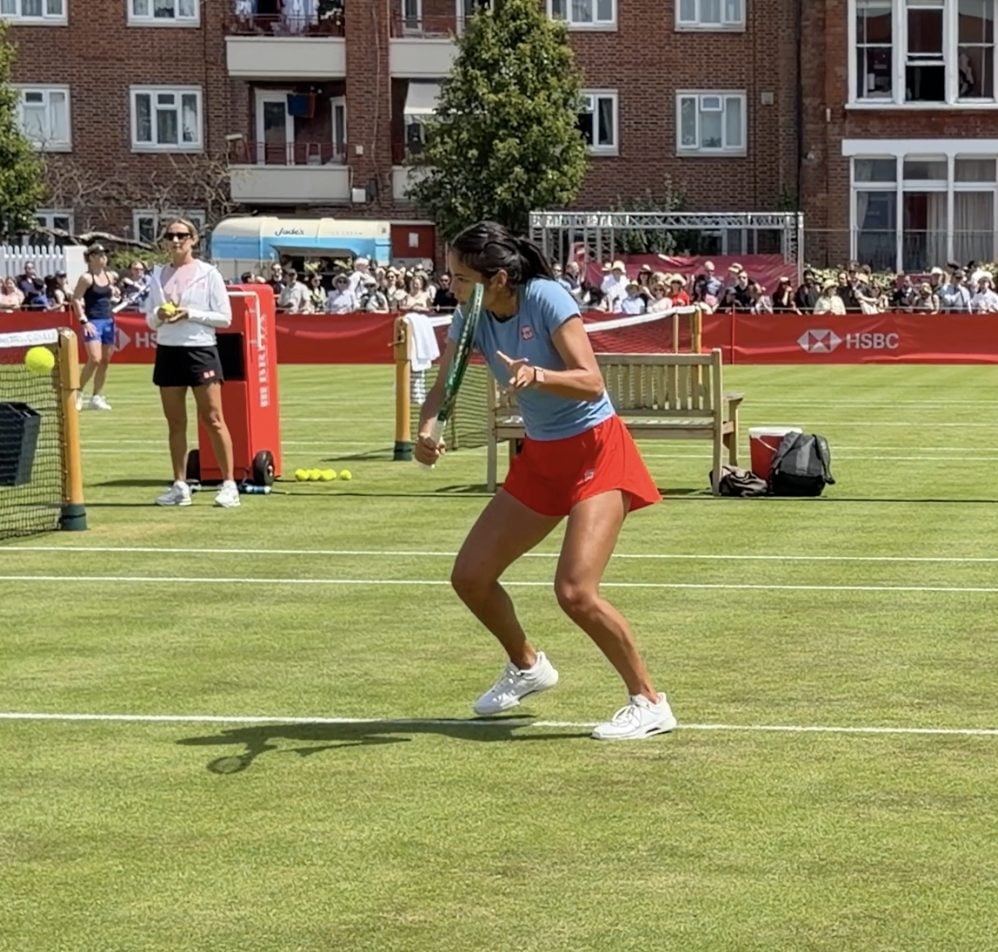
When time and balance allow, it is best to step into the volley. This helps generate pace and a more solid point of contact. Use your outside leg (on the hitting side) to establish balance before stepping toward the shot. See the image of Emma below using her left leg to establish her position and push off for her step into the backhand volley with her right leg.
The Volley Technique – The Action
The volley is the simplest shot in terms of technique and swing length, yet it still involves several connected movements and precise timing to execute well.
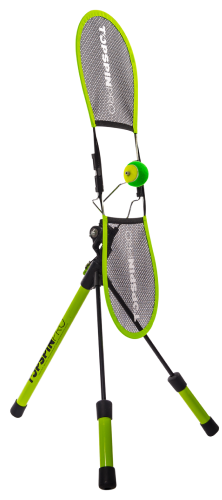
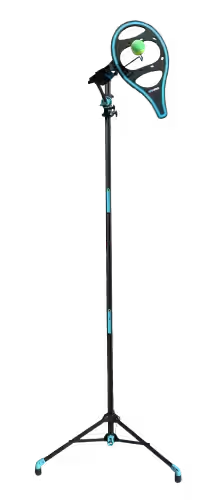
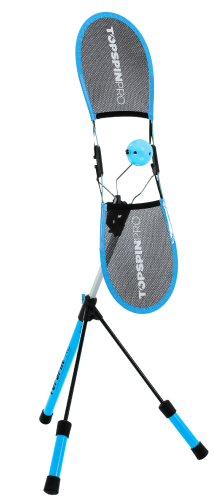
To learn the shot, begin slowly, develop each section individually, and then combine them into one continuous action. A TopspinPro or SpinPro can help you rehearse the swing path without the added difficulty of judging a moving ball.
The eventual goal is a relaxed, coordinated action that uses the kinetic chain effectively (transferring power from the ground up and through the racket in a smooth, efficient way).
Unit Turn
From the ready position, after the split step, the first response to an approaching ball should be a coordinated turn of the upper body with the racket. Turn the shoulders together with the racket as a single unit.
This initial preparation, commonly called the unit turn, places the racket in position without relying on a separate, arm-dominated takeback.
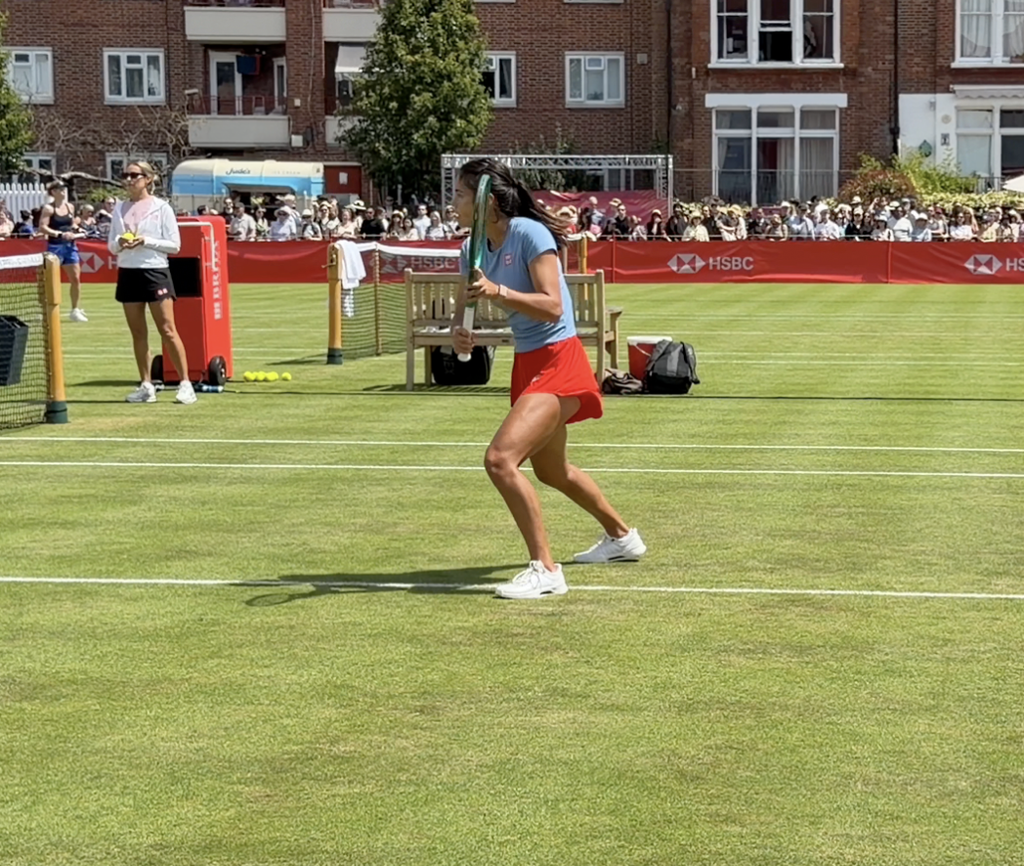
The turn should be shorter than you would use on your groundstrokes, which usually requires a full turn to the side. With the volley, it’s usually somewhere around 45 degrees or a small turn until your chest and hips are pointing towards where you will contact the ball.
Below, you can see Emma has made a small unit turn in preparation for stepping forward for her contact.
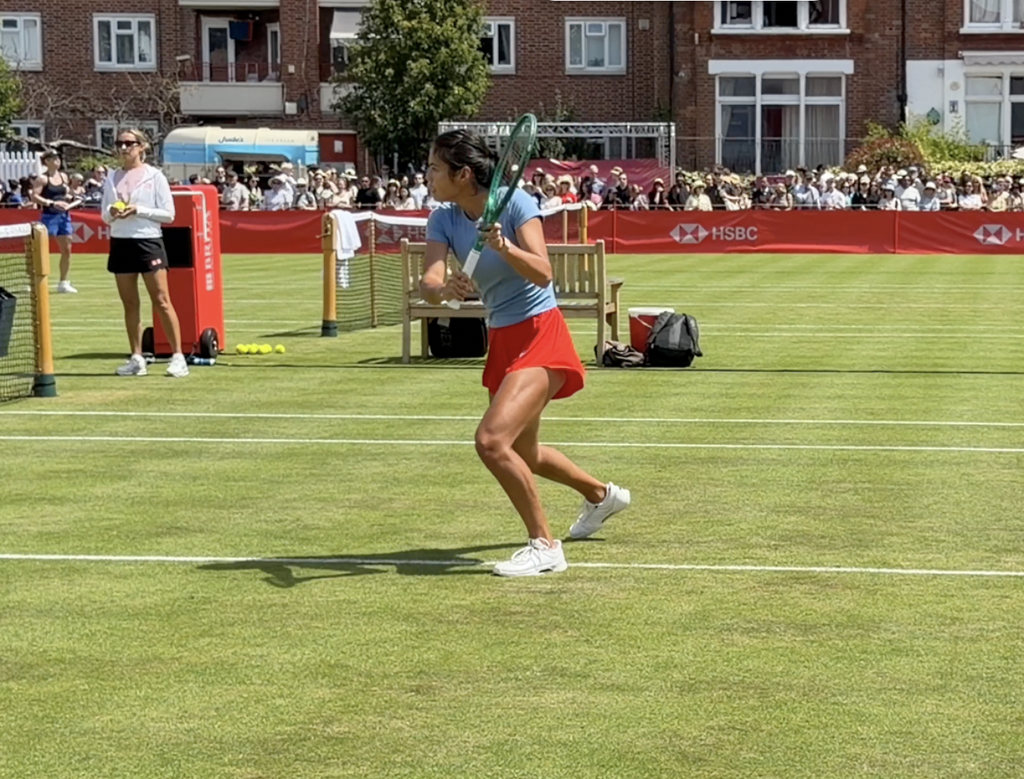
Backswing
There should be little to no backswing on the volley. From the ready position, simply apply your unit turn, and your racket will already be back in position. Then, simply add a little more length on the backswing by pulling your non-dominant arm back. This will help add some pace and momentum to the ball. Try not to take the non-dominant hand past the line of your body (behind). This helps keep it compact and controlled.
Below you can see that Emma’s backswing stays to the side of her body, and her hand doesn’t travel past her back shoulder, even though the racket head travels slightly past.
The Contact
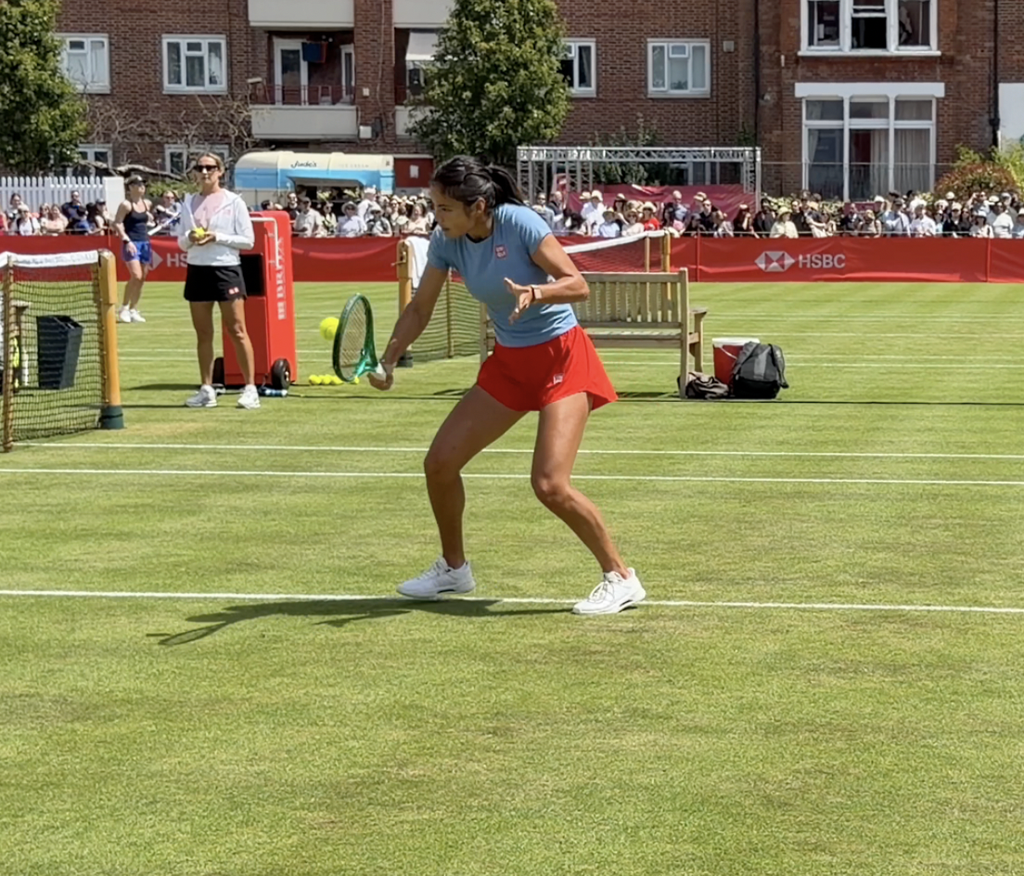
The contact point is the most important part of any stroke. Even with imperfect technique, a good contact point can produce a solid shot, while poor contact makes everything else less effective.
With volleys, every ball travels towards you differently, so your contact point and body position must constantly adapt. The ball should be struck out in front of your body, ideally ahead of your front foot. This puts the ball in the “power zone”, maximizing pace and efficiency and enabling a more consistent contact point.
The Finish
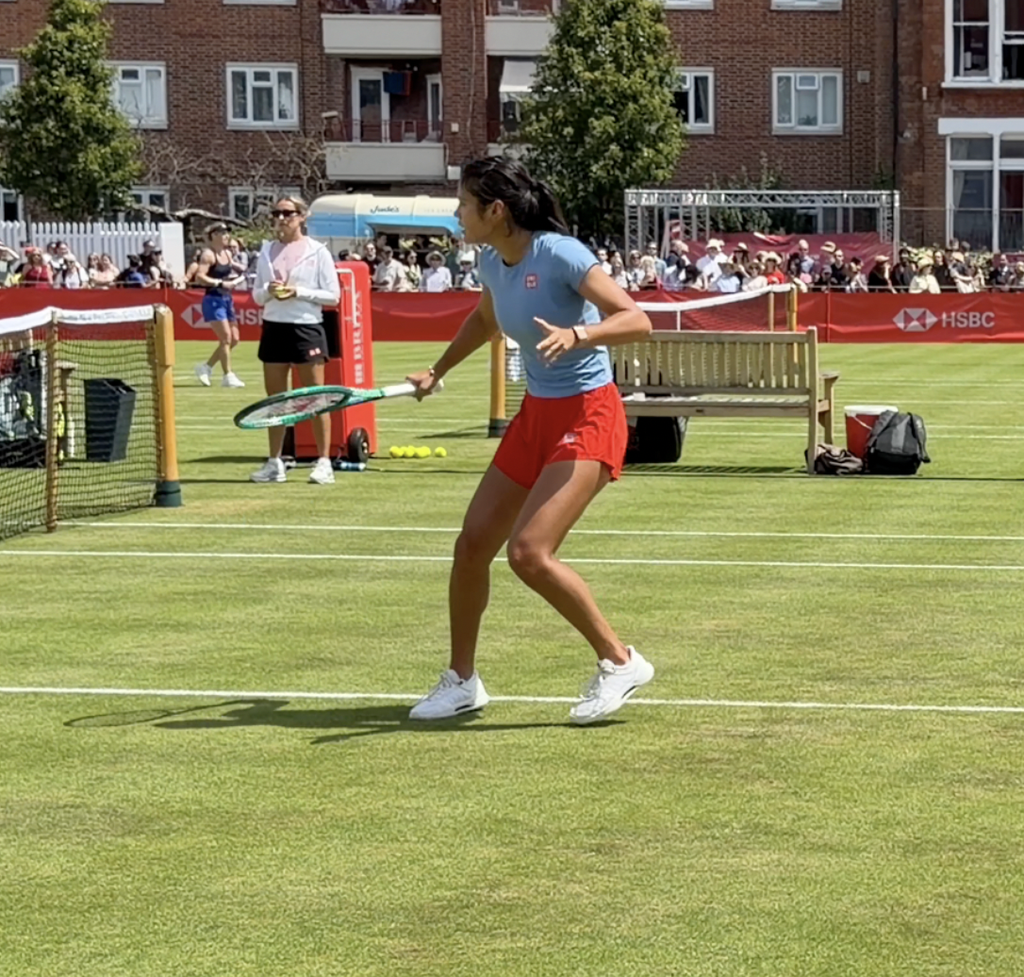
As with the backswing, the volley follow-through is generally short and compact, with the exception of the drive volley. Focus on bringing the racket towards your target and don’t over-rotate. Think of keeping your body in the same position it was at contact, and let the racket just flow a little forward. Don’t let your shoulders open up towards the target.
Common Volley Mistakes
There are several common mistakes with the volley. Usually, most of these come from the player trying too hard and not keeping the technique simple enough. Let’s take a look:
Big Backswing – A large swing makes the volley difficult to control and often results in a late contact. Keep the racket in front and use a short, compact movement. Imagine your racket is a wall and you are just holding it up to let the ball bounce off.
Tight Grip – This is a common mistake with all shots in tennis. Excessive tension reduces touch and control. Maintain a secure but relaxed grip so you can absorb and redirect the ball. However, grip tension should be adjusted depending on what you want to do with the ball. Soft grip absorbs pace, stronger grip sends it back.
Open racket face – A common mistake when adding backspin to the volley is opening the racket face too much. This causes the ball to float higher and sit up in the court, giving your opponent an easier opportunity to attack. Instead, keep the racket face only slightly open and use a compact, controlled movement through the ball.
Static Footwork – Many players panic when up at the net and end up being static because they don’t know where to stand, especially in doubles. Stay on your toes and move with the flow of the point. Attacking, move closer and keep the pressure on. Under attack, move back a few steps to give you a chance to react or cover the lob.
Slow Recovery – When you are at the net, a slow recovery speed will be exposed. Rebalance quickly into your ready position and prepare for the following ball.
Conclusion
The volley may have a shorter, simpler action than many other tennis strokes, but mastering it can completely transform your game. With sound preparation, sharp footwork, and precise timing, you can take time away from your opponent, control the net, and finish points with confidence.
A balanced ready position, well-timed split step, compact unit turn, and contact out in front all work together to create a volley that feels controlled, reliable, and effortless.
Start by keeping the technique simple and resisting the temptation to do too much with the racket. Don’t forget that the TopspinPro or SpinPro can be a great help here. Once the fundamentals feel natural, you can begin developing the touch, placement, and adaptability needed to handle balls at different speeds and heights. Stay patient, keep moving forward, and enjoy the process. Before long, the net will feel less like a danger zone and more like the place where you take charge!
FAQs
-
What is a volley in tennis?
A volley is a shot played before the ball bounces. It can be hit from almost anywhere on the court, but it is most effective close to the net, where you can create sharper angles and take time away from your opponent.
-
Why is moving forward to volley so effective?
Moving forward puts you in an attacking position and gives you more angles. It also forces your opponent to react under pressure, and many players miss because they panic when they see you coming in.
-
What are the main benefits of a good volley?
A confident volley helps you reduce your opponent’s reaction time, use their pace, create sharper angles, and add variety to your game. It also lets you capitalize on a strong serve or shot by coming swiftly into the net and keeping the pressure on.
-
Which volley should I learn first?
The punch volley is generally the first volley to learn and the most commonly used. Its simple, short action makes it easier to execute swiftly and accurately with pace and precision.
-
How is a drop volley different from a stop volley?
A drop volley gently lifts the ball up and over the net, often from a low ball, to catch opponents at the back of the court off guard. A stop volley is more about taking the pace off a mid-height ball by softening the hand and wrist at contact so it lands short and close to the net.
-
When should I use a block volley?
Use a block volley when the ball arrives quickly and you do not have time for much swing. It does not have to be pretty; focus on getting the racket on the ball quickly, holding your strings to the ball, and redirecting it back with a firm wrist and racket face.
-
What grip should I use for volleys?
Most types of volley require the continental grip or slight variations of it. To find it, place the base knuckle of your index finger and the heel pad of your hand on Bevel 2, reversing this for left-handed players.
-
What does a good ready position look like at the net?
Stay light on the balls of your feet with your weight slightly forward, knees flexed, and heels just off the ground. Keep the racket comfortably in front of your body so you can react quickly, move efficiently, and make contact in front.
-
How important is the split step for volleys?
The split step is key between each volley because it helps you recover, rebalance, and push off in any direction. Timing matters more than jump height: aim to land as you identify whether the ball is coming to your forehand or backhand.
-
Should I take a backswing on a volley?
There should be little to no backswing on the volley. Use a compact unit turn, keep the racket in front, and try not to take the grip and throat of the racket past the line of your body.
-
Where should I make contact on a volley?
Meet the ball early and comfortably in front of your body, ideally ahead of your front foot. This “power zone” maximizes power and makes the contact point more efficient, even when the technique is not perfect.
-
What are the most common volley mistakes to avoid?
The big ones are a large backswing, tight grip, too open a racket face, static footwork, late contact, and slow recovery. Most come from trying too hard, so keep the technique simple, stay on your toes, and prepare quickly for the next ball.
Enjoyed this article?
Be sure to sign up for our newsletter and we'll keep you up to date about new posts