
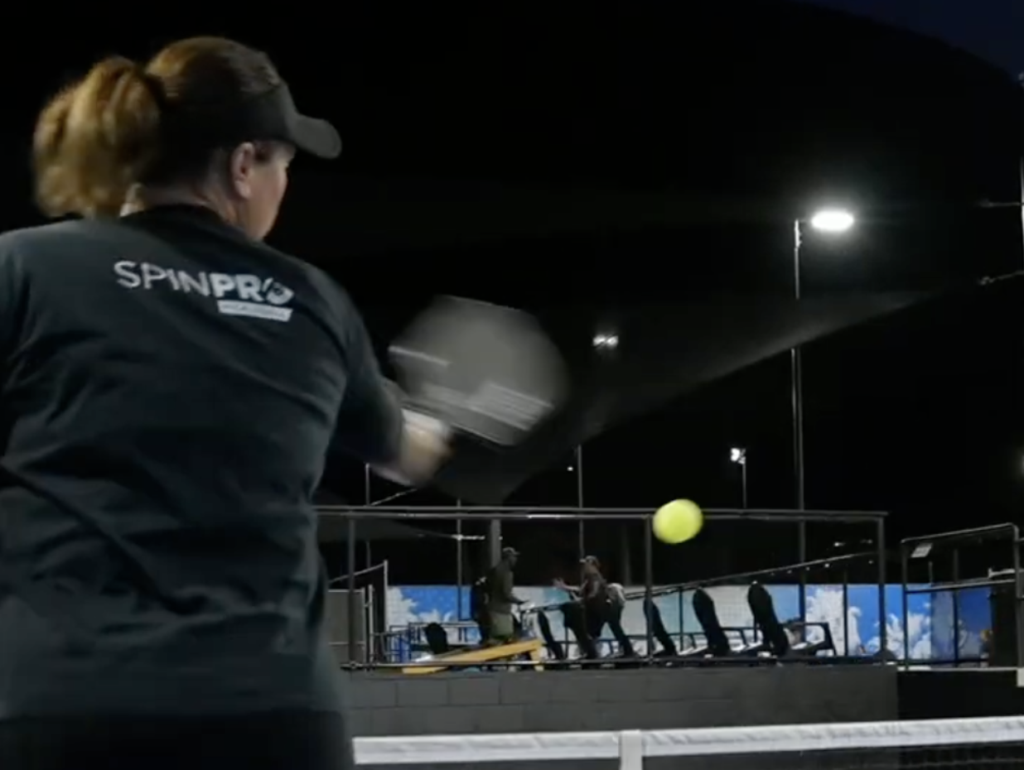

The roll (topspin) volley is one of the most effective attacking shots in pickleball, but it’s also not an easy shot to master. If you’ve ever watched higher-level players at the kitchen, you’ll notice they’re not just blocking volleys. They’re adding spin, controlling the ball, and applying pressure with angles and pace.
That’s exactly what the roll volley allows you to do. It opens up your options compared to a block volley. Let’s look in depth at the technique, tips for when to use it and some common mistakes.
What Is a Roll Volley?
A roll volley, otherwise known as a topspin volley, enables you to add extra dimensions to your game. Unlike a traditional punch volley, the roll volley allows you to bring the ball down into the court more quickly (Magnus Effect). This means you can swing more confidently and aim for tighter targets without overhitting.
Using topspin on your volleys enables you to:
- Hit the ball harder with more control
- Lift the ball up and over the net
- Hit sharper angles
- Dip the ball down at your opponent’s feet.
- Make the bounce awkward for your opponents.
For a more in depth look at topspin check out this article: Pickleball Topspin 101
Why the Roll Volley Is So Effective
Let’s look more in-depth at why the roll volley is such a great addition to your game:
Hitting harder and with more control
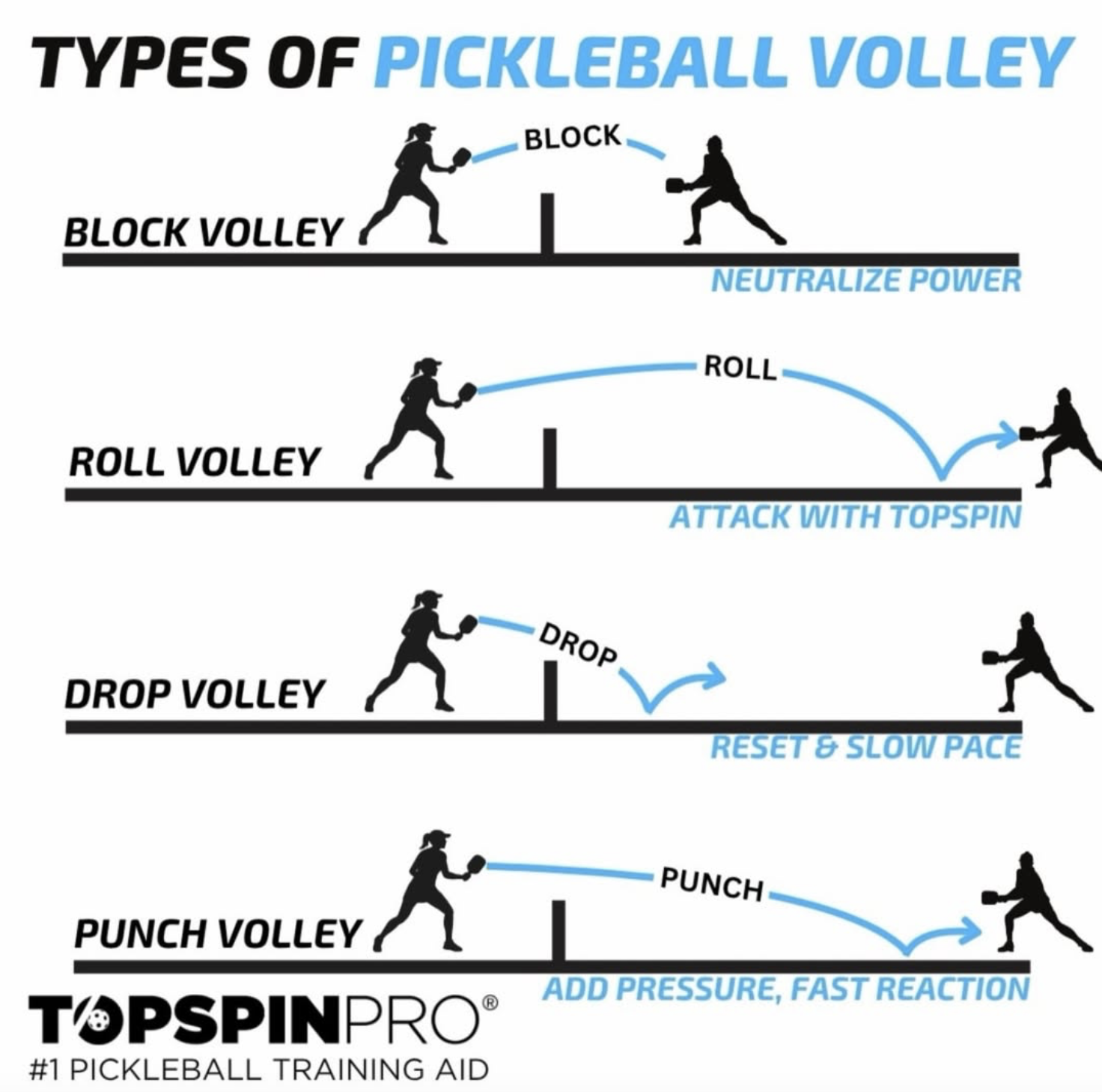
Because the Magnus effect causes the ball to dip sooner than if you hit it flat, it means you can hit the ball both higher and harder and it will still go in. By adding topspin to your volleys you can swing more aggressively which cuts down your opponent’s reaction time and makes the ball harder to return.
Lifting The Ball Up And Over The Net
The resulting dip of the ball from topspin means you can lift the ball up and over the net and control it back into the court. This is especially effective if your opponents are at the back of the court or transition zone. You can roll the ball deep into the court and keep them pushed back. It means you can effectively keep attacking from what would traditionally be a reset volley if blocked.
Hit Sharper Angles
You can still hit sharp attacking angles with a flatter block volley but only from higher balls. Balls below net height have to be reset. By adding topspin you can still attack with angles from lower balls and also hit more aggressive angles on higher balls.
Dip The Ball At Your Opponent’s Feet
One of the main objectives in pickleball is to get your opponents to hit the ball up. A lifted ball is easier for you to attack. One of the best ways to achieve that is to target your opponent’s feet. Topspin enables you to dip that ball right down and zone in on the feet area.
Make The Bounce Awkward
Another way to get your opponents to lift the ball or make errors is by using the topspin bounce to your advantage. Topspin not only dips the flight path, it causes the ball to kick off the court after the bounce. This makes it especially difficult to return if the bounce is close to the body.
When Should You Use a Roll Volley?
There are numerous situations where you can use the roll volley. Some using placement and some with more power. Here are some examples:
Chest/Shoulder Height Ball
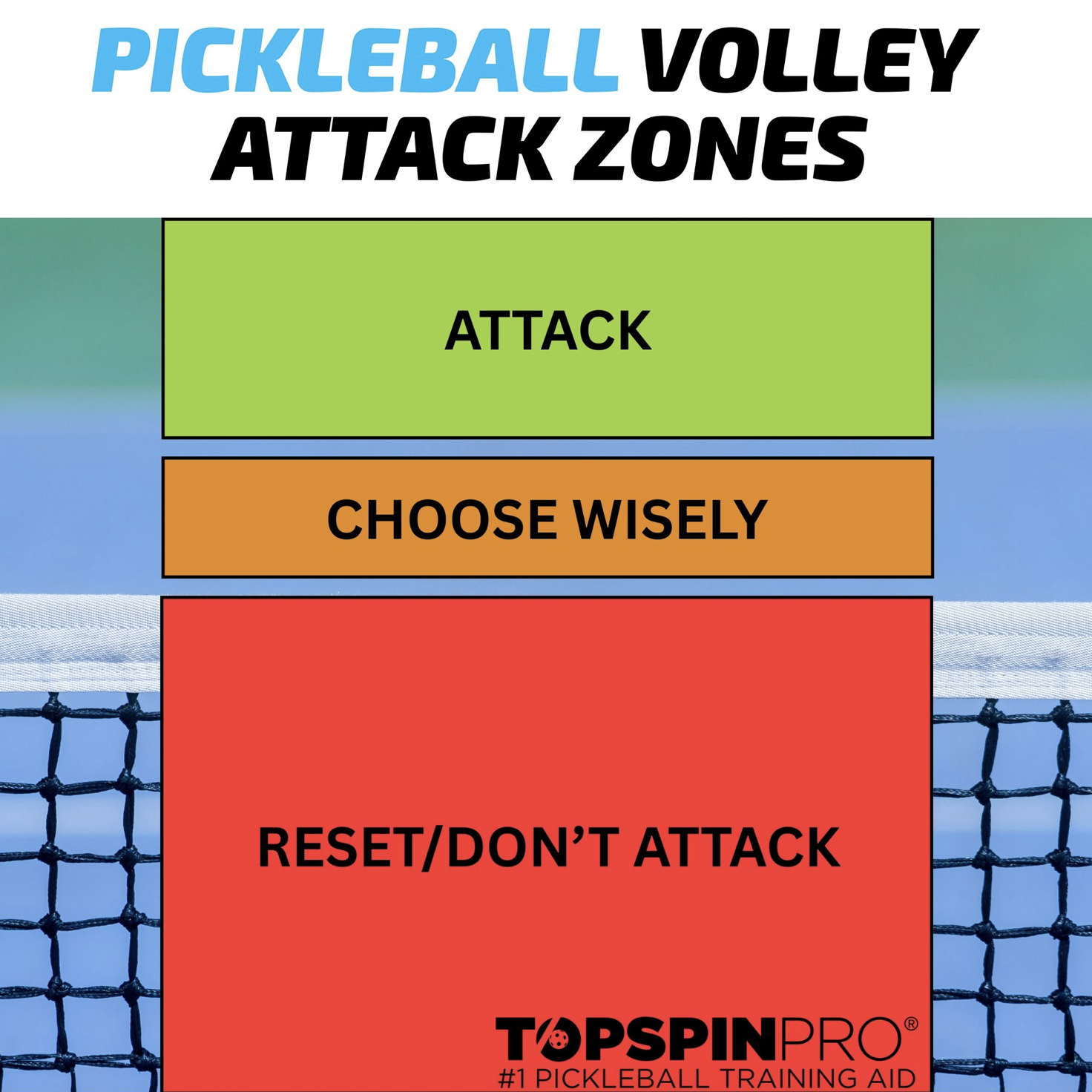
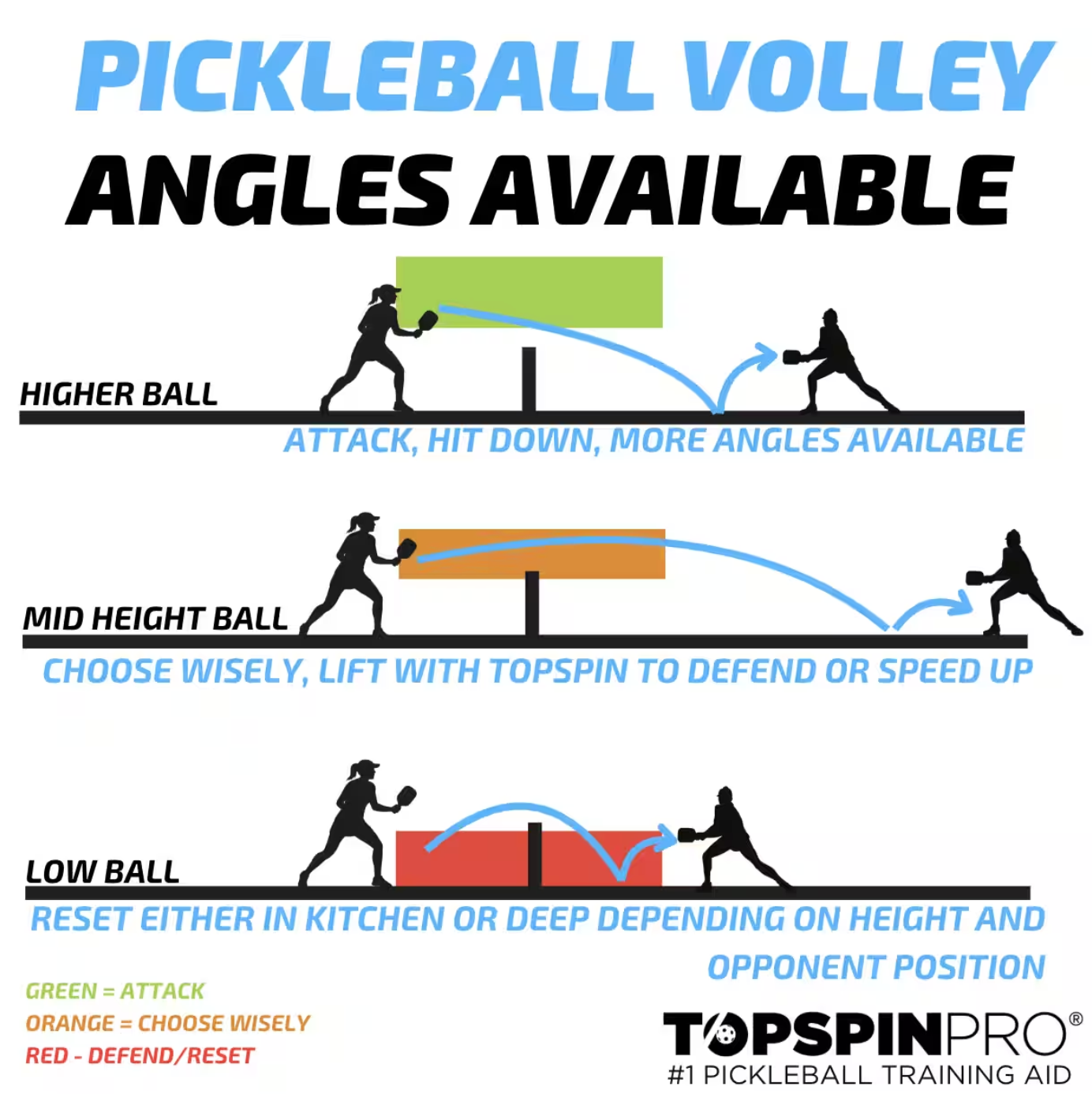
A chest and shoulder height ball is right in the attack zone. You should either be attacking with power or placement:
- Power – If you want to attack the ball with max pace an try to over power your opponent (often the most satisfying feeling) then the ball should be around chest or shoulder height when you strike it. Higher than that should be an overhead and lower than than you should be rolling the ball back with pressure.
- Attacking The Feet – Rolling that ball down into the feet is the second option when the ball is sitting up in the attack zone. Focus on your target and apply max topspin and 80% pace.
Waist Height Ball
A ball that is just above net height or around waist height can still be attacked but you need to choose wisely. The lower the ball is, the more it has to be lifted. Anything high can be hit straight down into the court but these mid height balls often need a little lift to make it back over the net. You can still roll the ball at the feet from here, but generally with less pace. Here are some other options:
- Speed Up – You can use a little topspin to speed up the ball at your opponents and change the tempo. This can often throw them off guard if they aren’t expecting it. This is an option from a mid height ball when all four opponents are at the net.
- Create Spaces – One of the more underused tactics with the topspin volley is to remove a little pace and create spaces between your opponents. By adding spin you can hit tighter angles from mid height balls and move the ball around.
Below Net Height
Anything below net height should not be attacked in the traditional way. From here you can only lift the ball, not hit down. But you have options to keep pressuring your opponents:
- Roll The Ball Deep – Rolling the ball deep off a lower volley is a great way to keep your opponents back or pressure them in the transition zone. This volley commonly occurs after you have returned the ball and are moving up the the net with your opponents still back.
- Rolling Reset – If there are not other available options on the volley then the best thing to do is reset it in the kitchen. But, instead of just blocking it back in, you can add a little topspin and put your opponents under a little more pressure.
How to Hit a Roll Volley
Think of the roll volley as a compact, controlled low to high motion.
Key steps:
1. Contact Point
The roll volley should have either no backswing or a short compact backswing depending on your level. When beginning, go from the contact point. Get the contact point out in front of your body so you can comfortably strike the ball.
2. Swing low to high
This is the most important part. You’re creating topspin by rolling your paddle up the back of the ball.
3. Finish Over Your Opposite Shoulder
By finishing with your paddle on edge (not flat) over your opposite shoulder you will naturally apply topspin to the ball.
4. Stay relaxed
Tension kills topspin and power. Keep your grip pressure moderate so you can control the shot.
5. Aim for control, not power
The goal is to place the ball with spin, not blast it to begin with.
6. Repeat
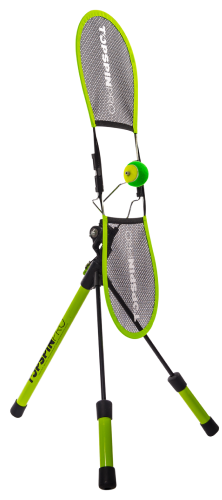
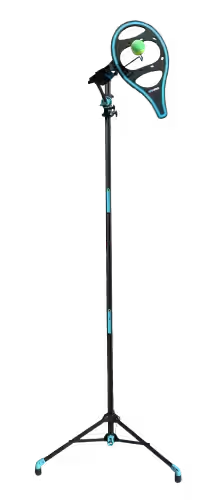
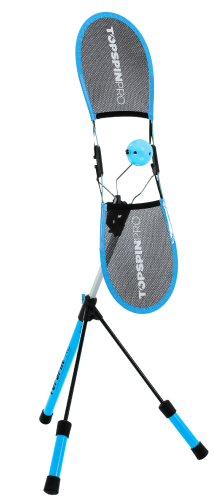
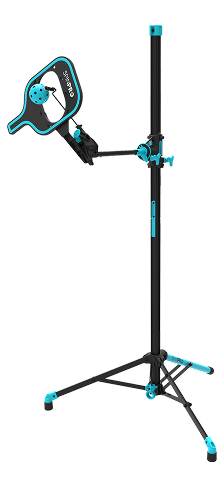
Reps are key when mastering technique. You can get in extra reps on both the TopspinPro and SpinPro from the comfort of your own home!
For an easy way to master the biomechanics of the topspin volley check out this video using the SpinPro:

Common Mistakes
The roll volley takes time to master, not just technically but also learning the right shot selection. Here are some common mistakes we see with the roll volley:
Swinging Large
Once you can hit with both topspin and power it’s all too tempting to whack that ball as often as possible! That can lead to swings that are too large. Not keeping it compact causes you to miss time the ball and also lose control.
Hitting flat
It’s easy to forget to apply that topspin, especially when under pressure. Without it the ball flies long or sits up for your opponents.
Too Much Power
Trying to win the point too quickly leads to errors. Try to be selective about when to attack with power vs placement!
Poor Shot Choice
As we have already said, it’s easy to choose power over placement, it’s so much more fun to hit! But, try to practice your options depending on the height of the ball. There’s no point attacking a low ball with power.
Summary
The roll volley is a key skill for advancing your game from simply keeping the ball in play to actually controlling and winning points at the net.
It’s not about hitting harder, it’s about using spin, control, and smart decision-making.
Once you start to develop this shot, you’ll notice your ability to apply pressure improves immediately. And that’s when your game really starts to level up.
FAQs
-
What is a roll volley in pickleball?
A roll volley, also known as a topspin volley, is a compact volley where you roll the paddle up the back of the ball to create topspin. That spin helps the ball dip back into the court, so you can swing more confidently, hit tighter targets, and apply pressure without overhitting.
-
Why is the roll volley so effective at the kitchen?
It opens up your options compared to a block volley. You can hit harder with more control, lift the ball up and over the net, create sharper angles, dip the ball at your opponent’s feet, and make the bounce awkward after it kicks off the court.
-
When should I use a roll volley instead of a block volley?
Use it when you want to keep attacking rather than simply reset or block the ball back. Chest or shoulder height balls are in the attack zone, waist height balls can be rolled with smart placement or a change of tempo, and below-net balls can still be rolled deep or reset with a little topspin pressure.
-
How do I hit a roll volley with better technique?
Think compact, controlled, low to high. Get the contact point out in front, use little to no backswing, roll your paddle up the back of the ball, finish on edge over your opposite shoulder, and stay relaxed because tension kills topspin and power.
-
What mistakes should I avoid when learning the roll volley?
Don’t let the swing get too large, don’t hit flat under pressure, and don’t try to win the point too quickly with too much power. The roll volley is not just about hitting harder; it’s about spin, control, and smart shot selection depending on the height of the ball.
Enjoyed this article?
Be sure to sign up for our newsletter and we'll keep you up to date about new posts