

What the Slice Backhand Feels Like
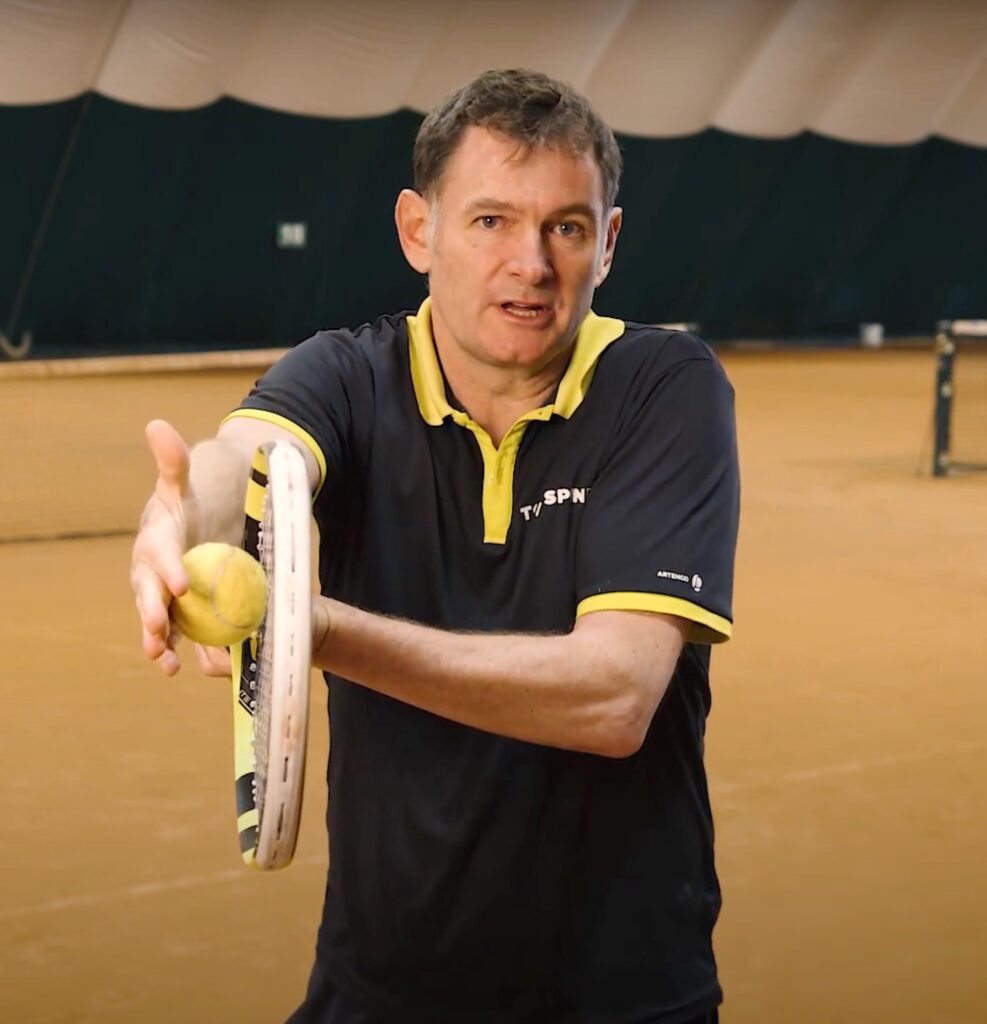
Based on what we see on TV at high speed and how some coaches demonstrate it on court, most of us feel we should be carving down the back of the ball in a straight line. Just like I have illustrated in the image with the green lines.
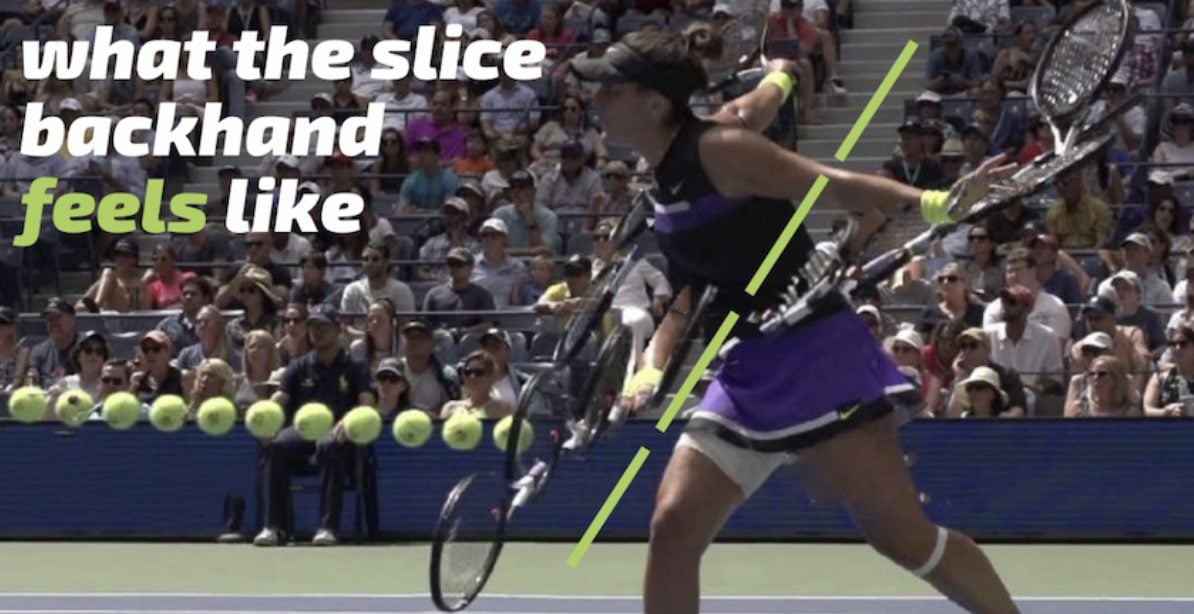
The thing is, if you hit the ball like that, it would simply loop upwards gently into the court. This is because the ball always starts its journey travelling perpendicular to the racket face.
So to get the ball to travel with the right trajectory, we need a steeper face angle at contact – just slightly tilted back from vertical.
What the Slice Backhand Actually Looks Like
Have a look at this image to see what really happens during the slice backhand.
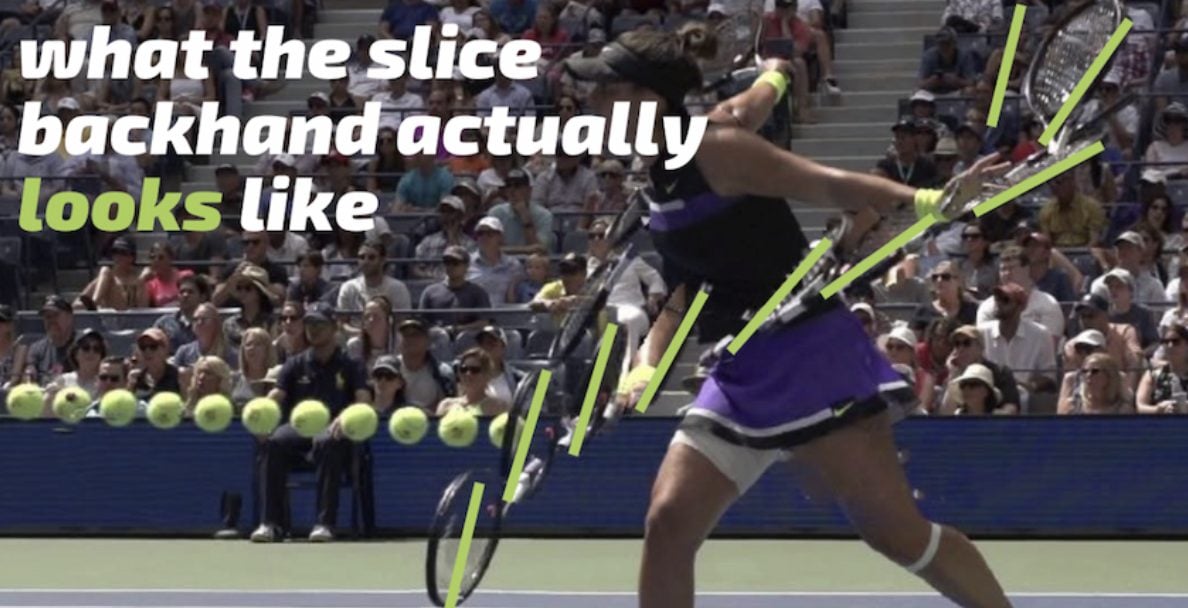
Did you see the racket face position at contact?
Moving beyond that and on to the less examined side of the sliced backhand, what’s even more striking is just how much the racket face angle changes during the swing!
90 degrees before contact, the strings almost point to the sky. But rolling the forearm (supination) through this last arc delivers a near-vertical face and with it, the perfect balance of power and spin as the ball scythes a lethal path to the other side of the court. Beautiful to watch. Extraordinarily difficult to execute.
The Slice Backhand is the Mirror image of the Topspin Forehand
I’m going to come back to this crucial last 90° arc the racket travels through prior to contact, but first a slight tangent. If you flip the image over (see below), you’ll notice the racket face positions EXACTLY mirror those of the topspin forehand! Look out for the corresponding ‘pat the dog’ position when the racket face almost points directly down before the racket arcs around to contact.
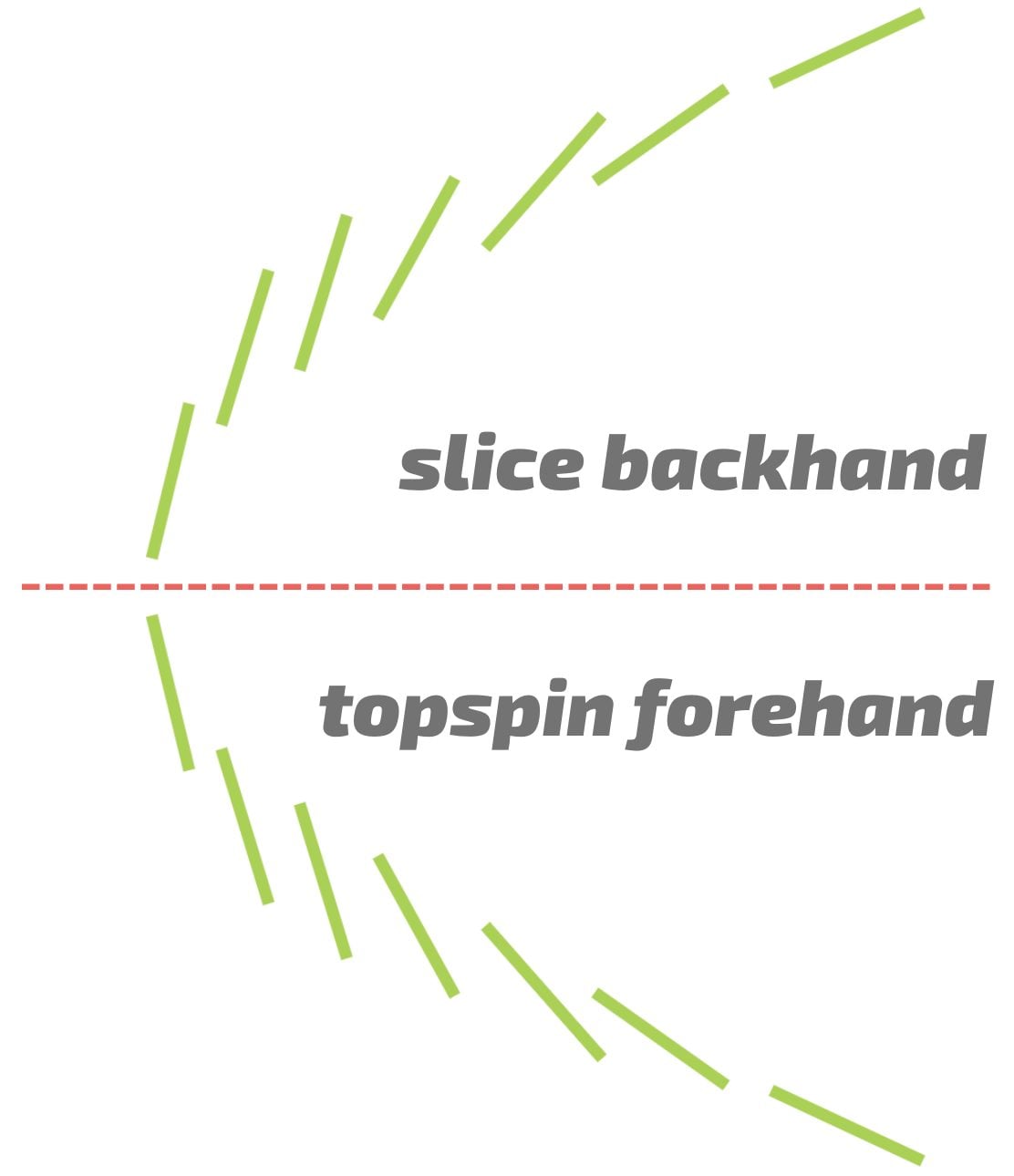
This is no coincidence. The physics needed to deliver both power and spin are identical. (This symmetry is just another reason why I am so in love with this sport!)
Learn from Musetti’s Slice Backhand
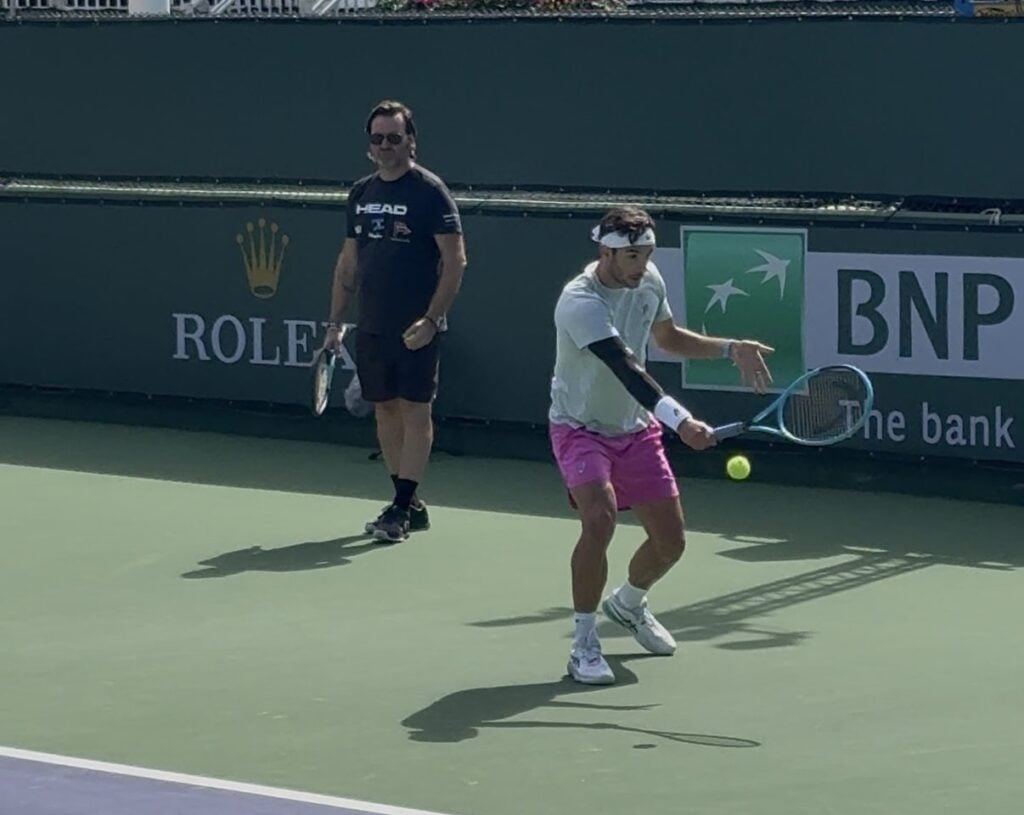
Zoe was recently at Indian Wells and took some great footage of Musetti’s slice backhand. Have a look at the video below and see if you can see the things I have described above:
- open strings pointing upwards 90 degrees before (ie when the racket is point to the back fence
- an almost vertical racket face at contact

I’ll help you out…
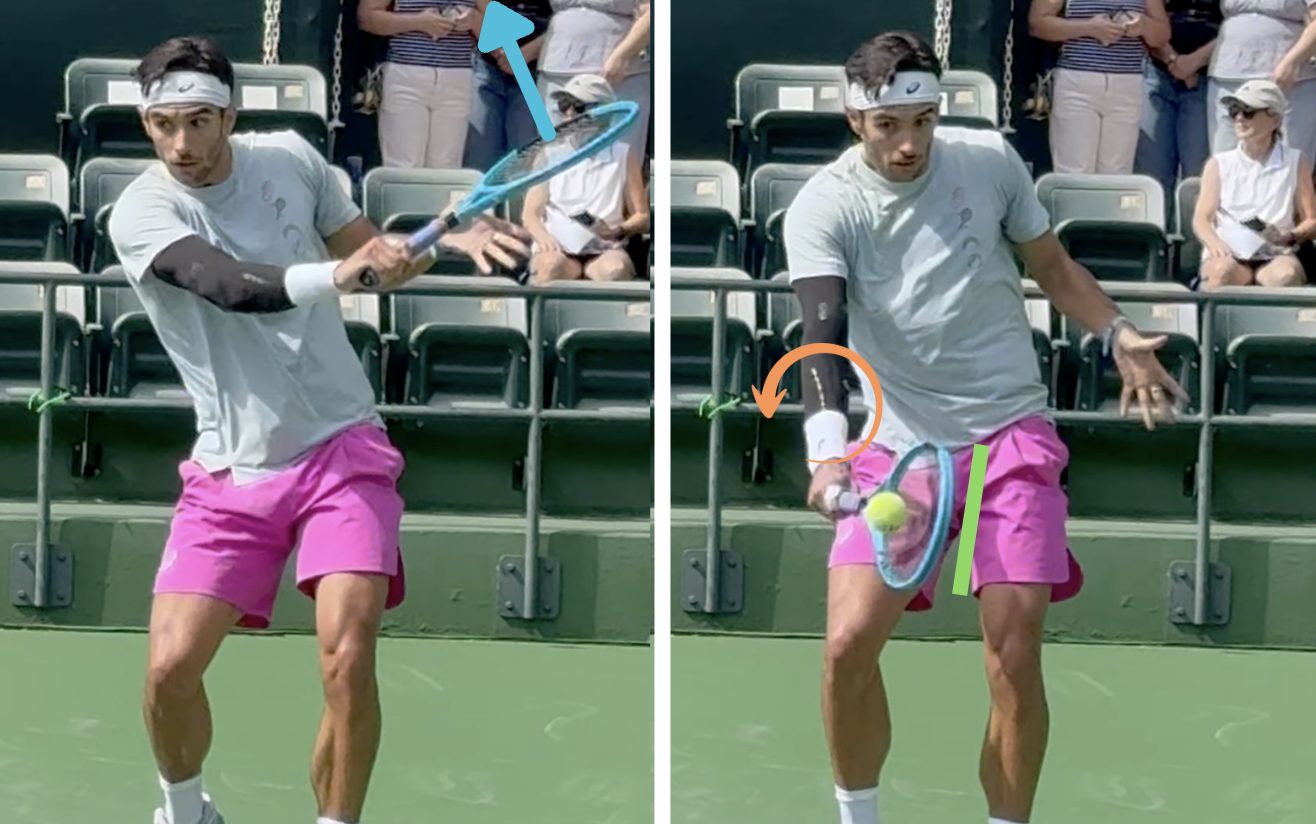
And here’s the interesting counter-intuitive thing that most people miss on the slice backhand:
The forearm has to roll towards the target.
Have a look at the anti-clockwise orange arrow. This supination of the forearm is the only way you get the strings from facing the sky (blue arrow) to facing your opponent at contact. Those who play slice well typically don’t even know they do it. I certainly didn’t. I only spotted it while watching the slow-motion footage of my shot.
Supinate the Forearm for a Penetrating Slice
It feels very unnatural when you actively swing this way without a tennis ball. But it’s essential if you want to add any kind of power to your slice backhand. Without it the ball will simply float upwards with no penetration.
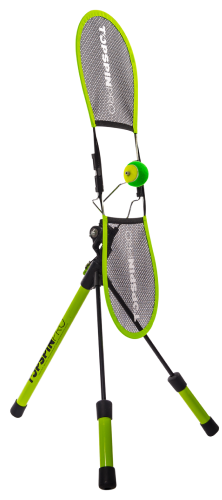
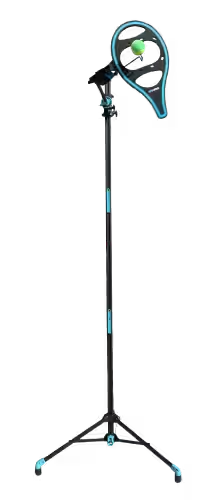
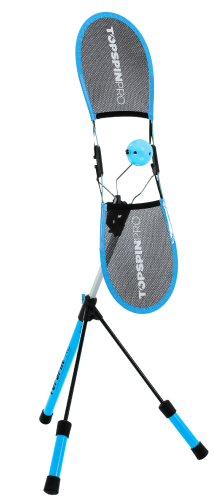
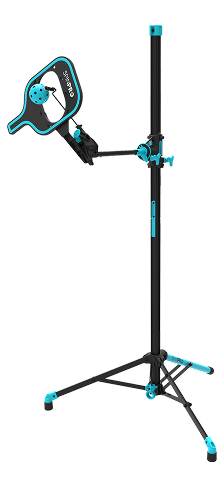
The good news is that you can practice this motion very easily on the Tennis SpinPro. The screen angle on the SpinPro is set at the same angle as the green line in the image because that’s the angle your racket face has to be at contact. One of the progressions you can work on is starting in the position with the racket pointing to the back fence and the strings pointing skyward. And then arcing through 90 degrees to make contact with the racket face angle matching the screen.
I hope you have found this analysis as interesting as I have. We will make sure to publish a video that explains this in more detail and demonstrates how to do it.
PS: For broader look at the slice backhand read this post – The Tennis Backhand Slice: An In-depth Guide.
FAQs
-
Why shouldn’t I try to carve straight down the back of the ball on a slice backhand?
Because if you hit the ball like that, it will simply loop upwards gently into the court. The ball starts its journey travelling perpendicular to the racket face, so you need a steeper face angle at contact — just slightly tilted back from vertical.
-
What should the racket face look like at contact on a good slice backhand?
At contact, the racket face should be almost vertical, with just enough tilt to send the ball on the right trajectory. That face angle gives you the balance of power and spin instead of a floating slice with no penetration.
-
What is the counter-intuitive thing most people miss on the slice backhand?
The forearm has to roll towards the target. This supination is what takes the strings from facing the sky before contact to facing your opponent at contact.
-
Why does supination matter so much for a penetrating slice?
Without that forearm roll, the ball will simply float upwards with no penetration. It may feel very unnatural when you swing without a tennis ball, but it’s essential if you want to add any kind of power to your slice backhand.
-
How is the slice backhand connected to the topspin forehand?
The slice backhand is the mirror image of the topspin forehand. The racket face positions match in reverse, because the physics needed to deliver both power and spin are identical.
Enjoyed this article?
Be sure to sign up for our newsletter and we'll keep you up to date about new posts