
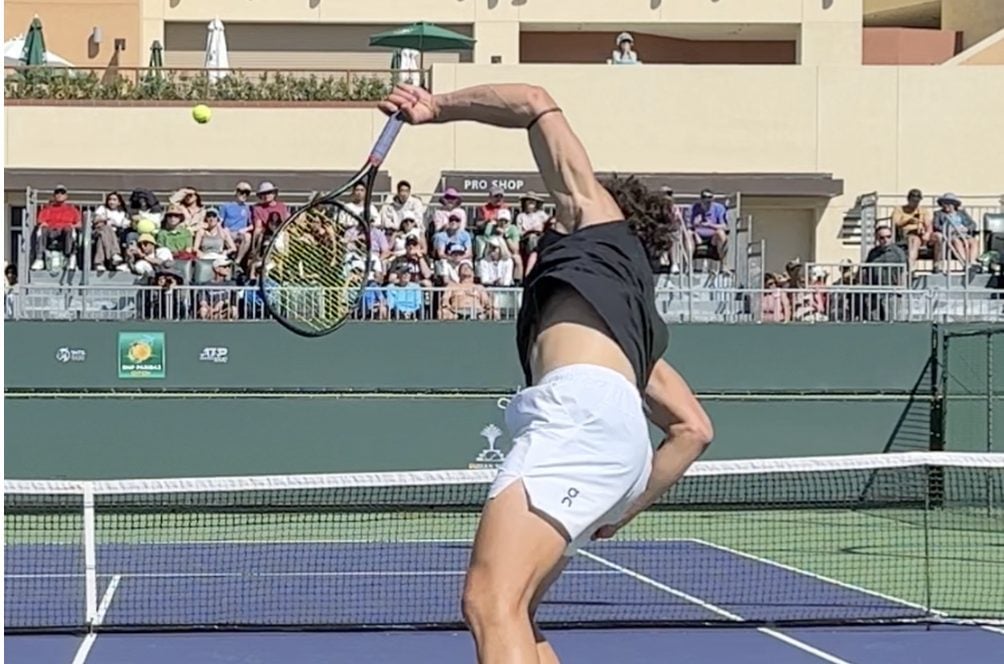

What Is a Kick Serve?
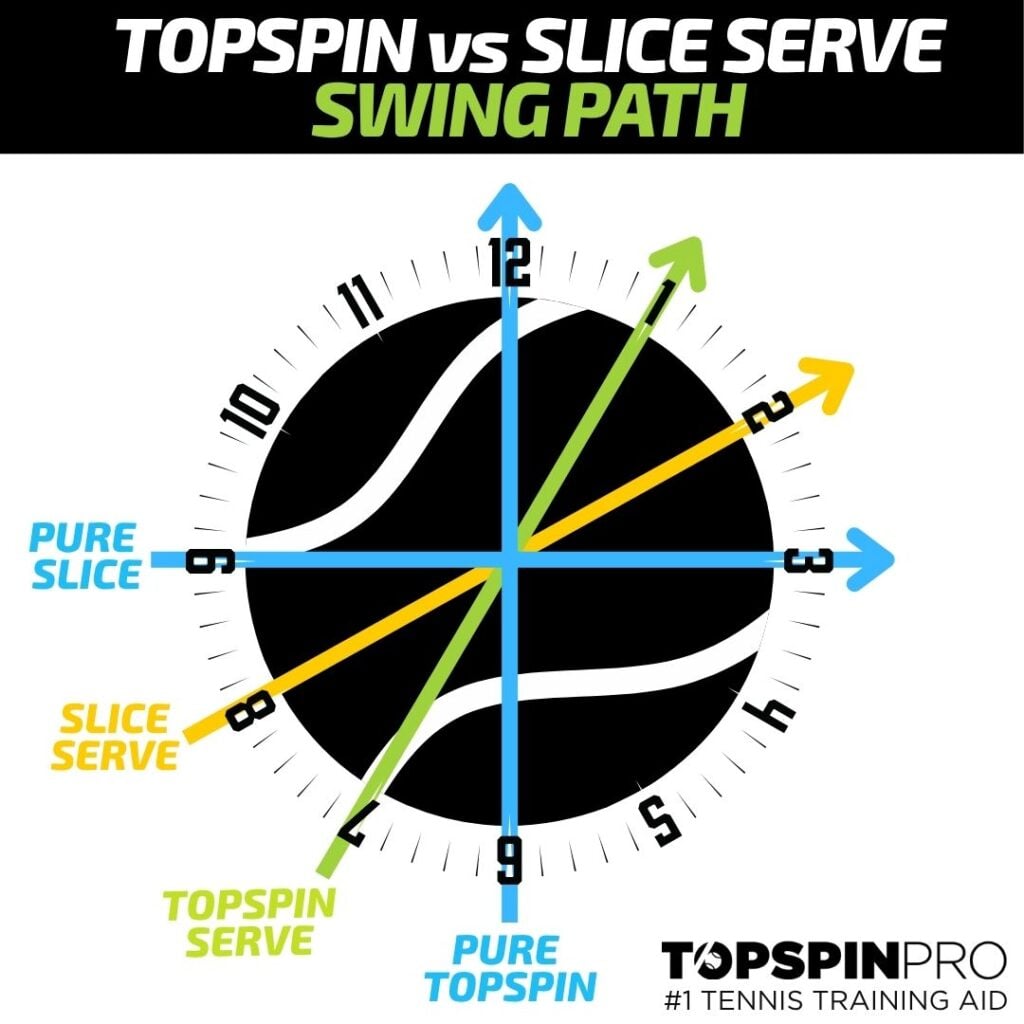
A kick serve is a serve with heavy topspin and a small amount of sidespin. Think of a clock face. A pure topspin shot would be a swing from 6 to 12, pure side spin would be a swing from 9 to 3 (opposite for a lefty). A kick serve swing is usually somewhere from around 7 to 1. It can be slightly outside that range and have more kick or more sidespin.
So why don’t we simply hit pure topspin from 6 o’clock to 12 o’clock on a kick serve? The main reason is the body’s position at contact and the natural swing path of the serve. To swing directly from 6 to 12, the ball would need to be contacted much lower, making it far more difficult to clear the net while still hitting into the service box. It would also place the shoulder and arm in a much less efficient and less comfortable position. Instead, as the body rotates and the racket accelerates upwards and towards the target, the racket naturally travels slightly across the back of the ball. This produces a combination of heavy topspin with a small amount of sidespin, the characteristic spin of a true kick serve. In other words, the slight sidespin isn’t something you should try to create, it’s simply a natural by-product of an efficient serving motion. This is what makes the shot so exciting, but more on this later!
What does a Kick Serve Look Like?
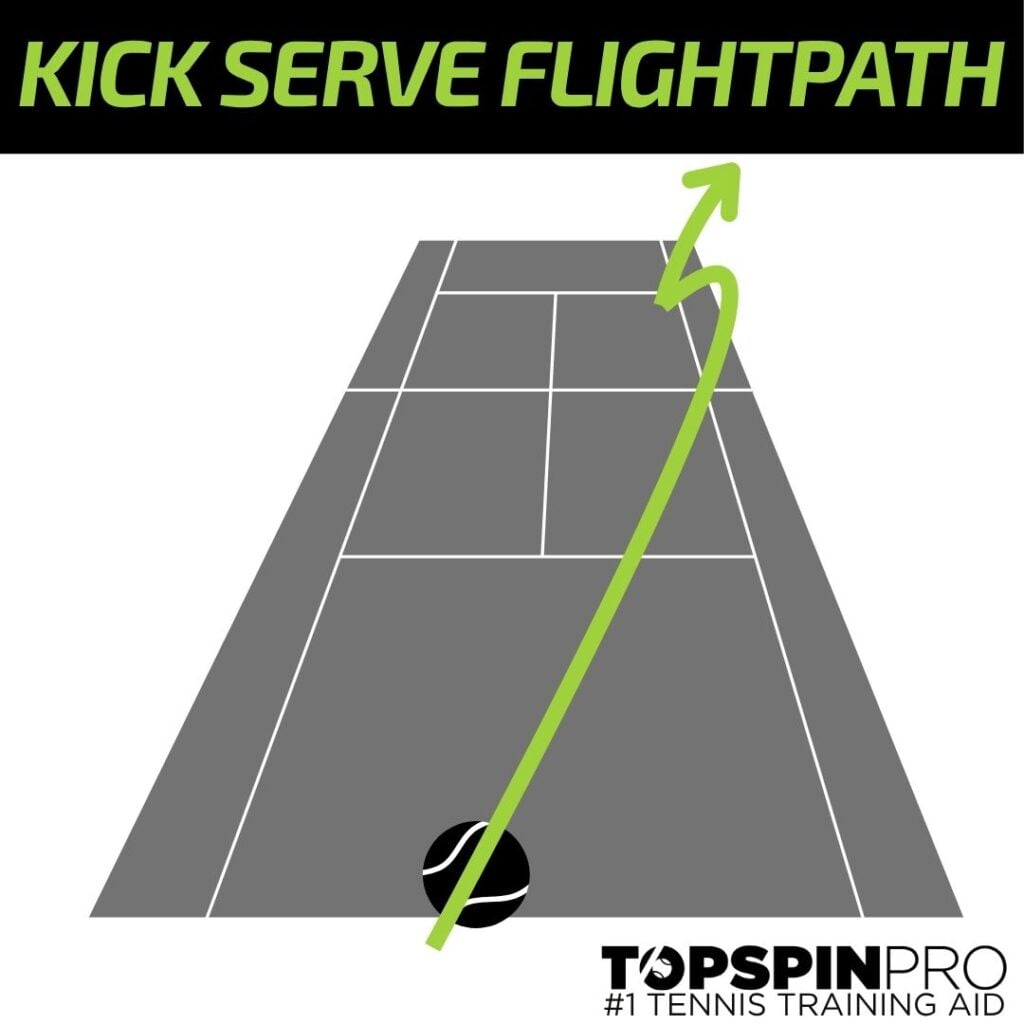
Before we go deeper into the biomechanics of the kick serve and the benefits, it’s important to understand what the kick serve looks like and what the correct flight path should be.
Flight Path:
Unlike a flatter serve that travels quickly through the air, a kick serve:
- Dips sharply into the service box – Topspin causes the ball to dip faster than an equivalent flatter serve. This means you can hit the ball higher over the net for more margin and much faster than you could for the same height flatter serve.
- Bounces much higher than a flat or slice serve – Because of forward rotation of the ball, the ball kicks off after the bounce (just like a heavy topspin forehand) hence the name “kick serve”. The forward spin also pushes the ball further back in the court making it harder to return. Many professional players hit kick serves exceeding 3,000–4,000 RPM, creating tremendous bounce even if the serve isn’t their fastest.
- Kicks sideways after the bounce (right for right hander and left for left hander) – The added sidespin not only causes the ball to kick after the bounce it sends it slightly to the side in the direction of the swing path across the ball. This adds extra difficulty for the returner.
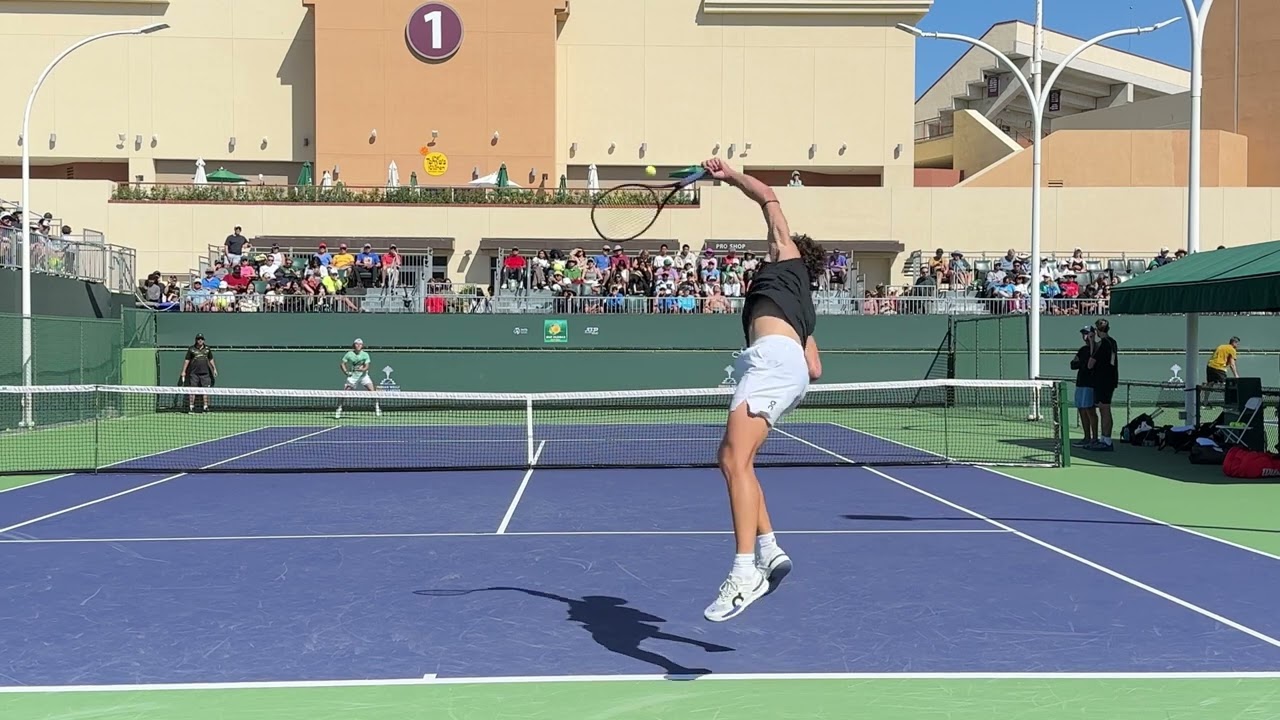
Here are some slow motion shots of the kick serve in action:
What are the Benefits of the Kick Serve?
We’ve already mentioned some of the effects of the kick serve, now let’s look at the benefits:
- Develop a Reliable Second Serve – The extra net clearance you can use with topspin dramatically reduces the chances of hitting the ball into the net. Under pressure, many players tighten up and decelerate on their second serve, causing the ball to fall short. A reliable kick serve gives you the confidence to stay relaxed, swing aggressively, and keep accelerating through the ball, all while maintaining excellent consistency.
- Push Your Opponent Deep – The faster you accelerate up the back of the ball, the more topspin you generate, giving you an even greater margin for error. Using extra net clearance not only reduces the chance of hitting the net, but also creates an attacking advantage. As the spinning ball strikes the court, the topspin makes it rebound higher and jump forward, pushing your opponent deeper behind the baseline and making the return much more difficult.
- Attack The Weaker Shot – Most players struggle to attack a high-bouncing ball, particularly on their weaker side. A well-placed kick serve exploits this weakness, forcing defensive returns and giving you control of the point from the very first shot.
- Open Up The Court – The combination of heavy topspin and a high, kicking bounce makes the wide kick serve an excellent point starter. It pushes your opponent both deep and off the court, opening up large areas for your next shot. This is particularly effective when serving in the direction of your natural swing path, out wide in the ad court for right-handers and the deuce court for left-handers.
The Technique
Step 1: Continental Grip
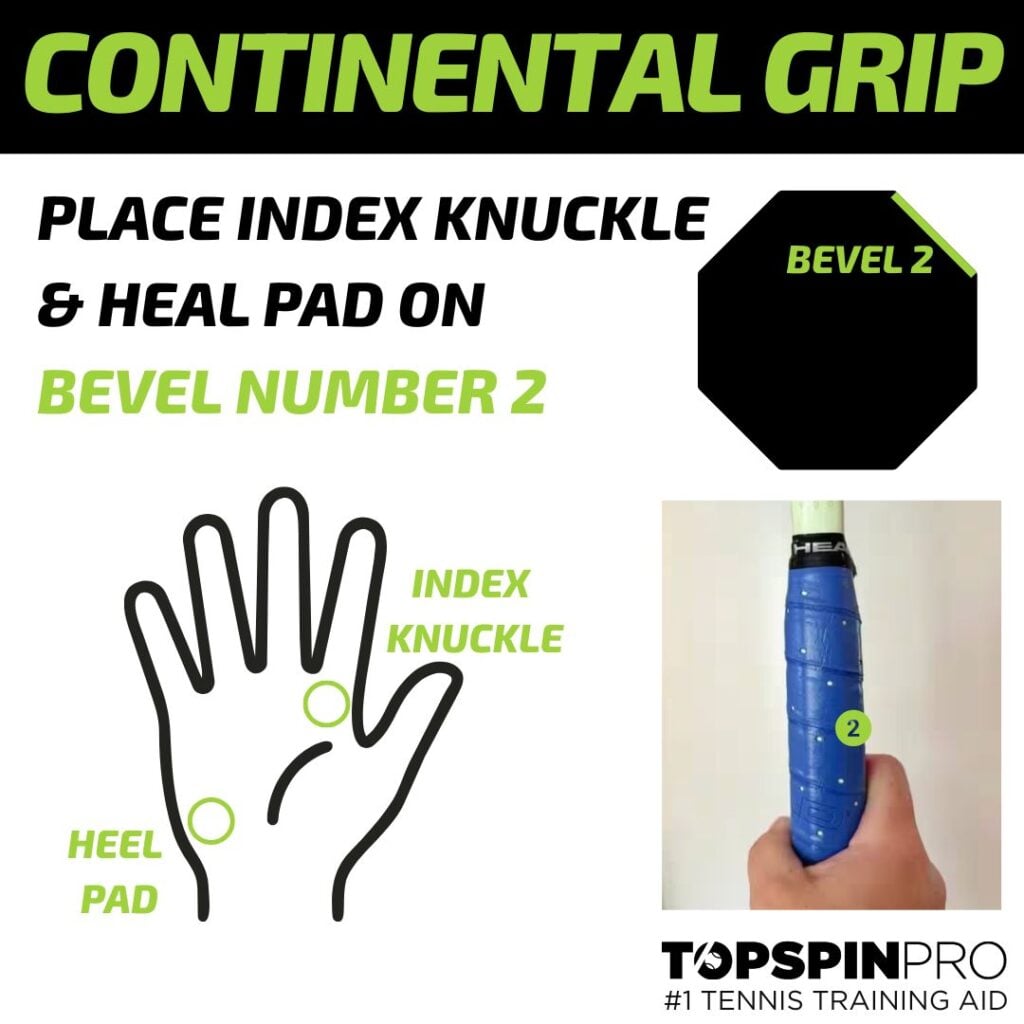
Hitting a successful kick serve starts with using the correct grip. Before learning the kick serve, make sure you’re comfortable hitting a basic (or flat) serve with a continental grip, as it provides the foundation for all advanced serves.
To find the continental grip, place the base knuckle of your index finger and the heel pad of your hand on Bevel 2 (reverse this for left-handed players). As you become more consistent with your kick serve, you can experiment with moving your grip slightly further toward Bevel 1 (towards the right for left-handers). This subtle adjustment can make it easier to swing up the back of the ball, generating more topspin and creating a higher, more aggressive bounce.
The continental grip is essential because it allows you to:
- Properly pronate through contact
- Generate maximum racket-head speed
- Produce heavy topspin efficiently
Step 2: Use the Right Toss
The ball toss is one of the biggest differences between a flat serve and a kick serve. If you place the toss in the correct position, you’ll naturally be forced to swing up the back of the ball, making it much easier to generate topspin.
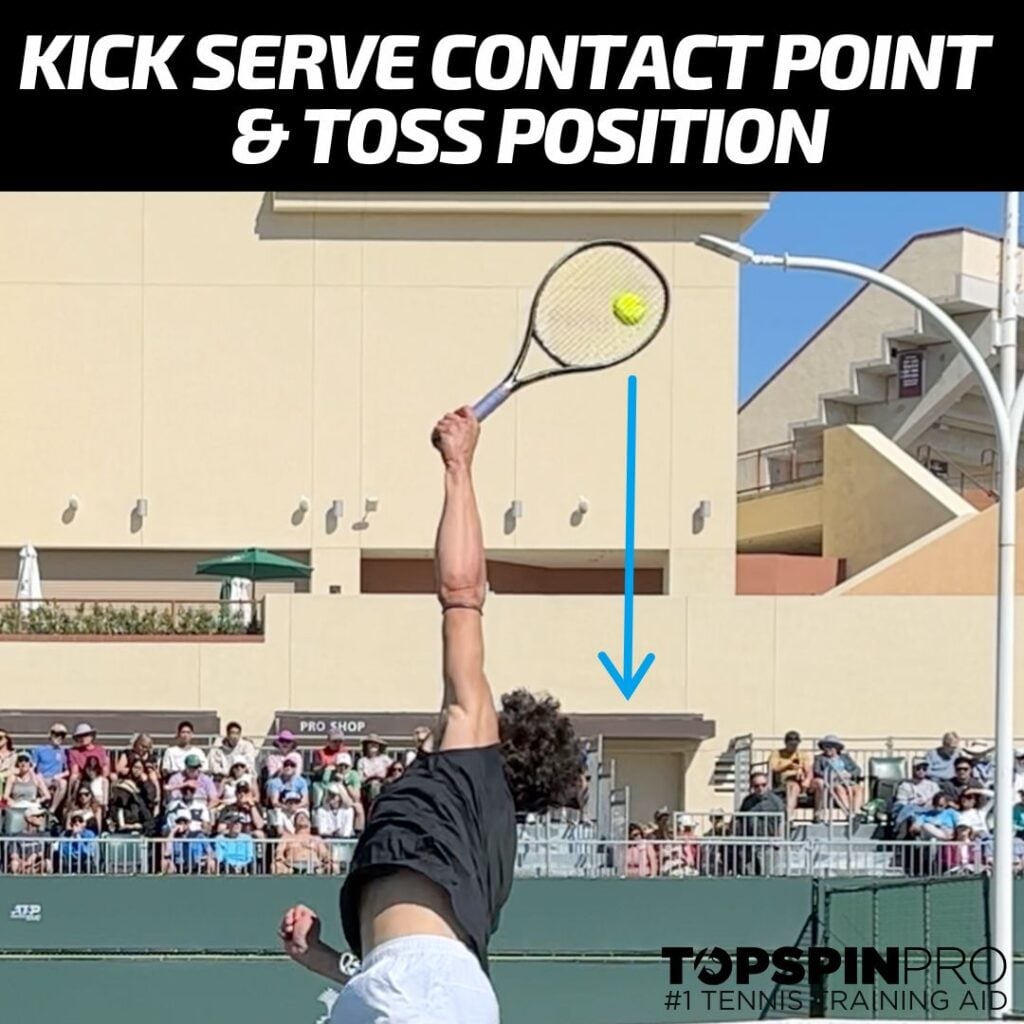
For a heavy kick serve, the ball should be tossed slightly behind your left shoulder (behind your right shoulder for left-handed players). This position allows you to swing up from underneath the ball, creating the classic 7 o’clock to 1 o’clock action that produces heavy topspin. In general, the farther to the left (for right-handers) and slightly behind your body the toss is, the steeper your upward swing path can become, resulting in more topspin and a higher bounce.
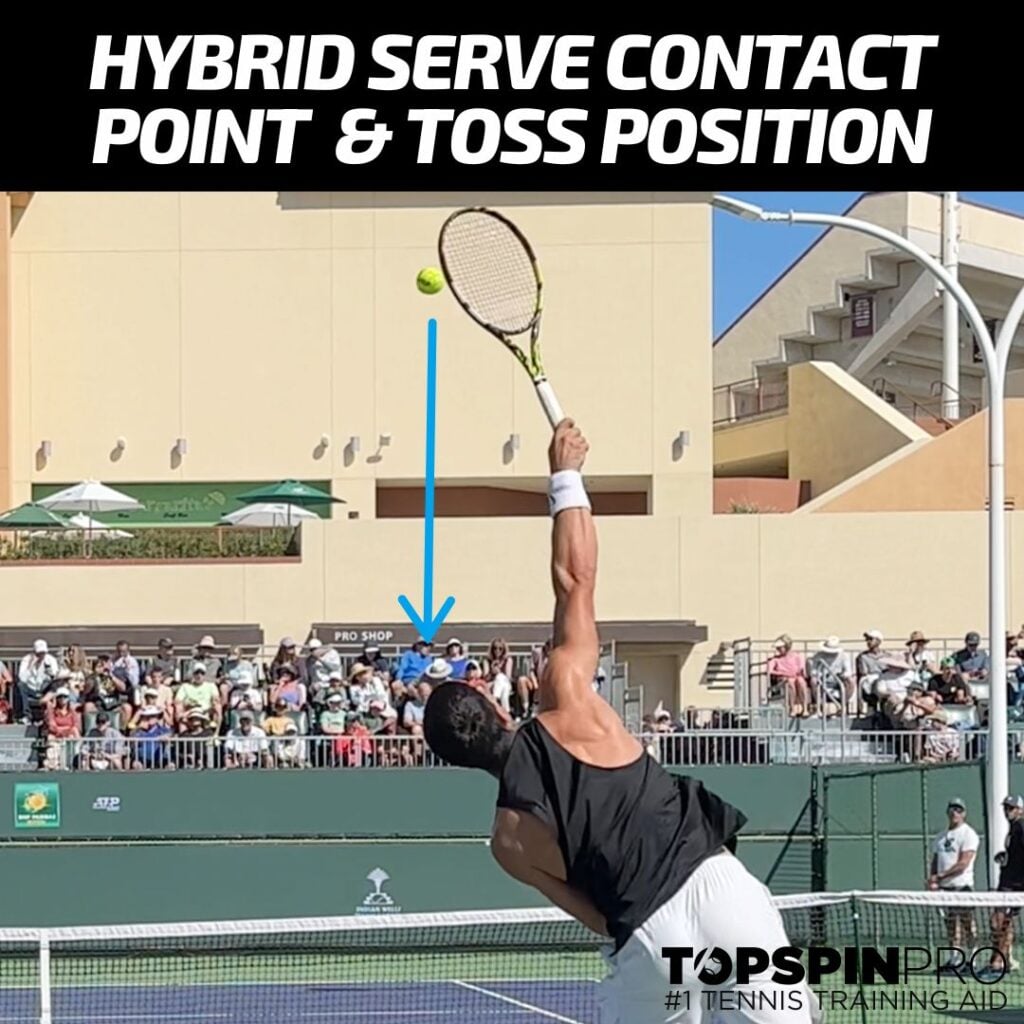
As you become more proficient with the kick serve, you can begin blending topspin with sidespin. To do this, gradually move your toss slightly farther forward and closer to above your head. This allows your body to rotate more through the serve, increasing racket-head speed while adding more slice and pace.
In the examples below (taken from the video above), Ben Shelton demonstrates a heavy kick serve. Notice how his toss is well behind his shoulder and closer to the baseline, encouraging an aggressive upward swing and maximum topspin.
Carlos Alcaraz, on the other hand, hits more of a hybrid kick-slice serve. His toss is positioned more above his head and slightly farther into the court. This allows him to rotate his body more effectively through contact, producing a faster serve with a blend of topspin and slice rather than pure kick.
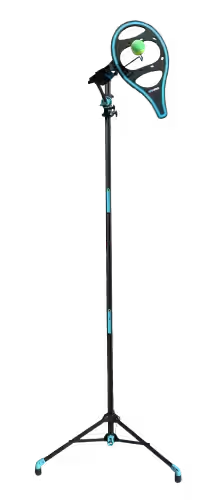
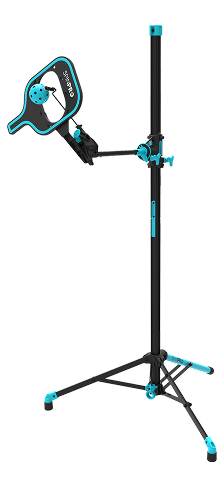
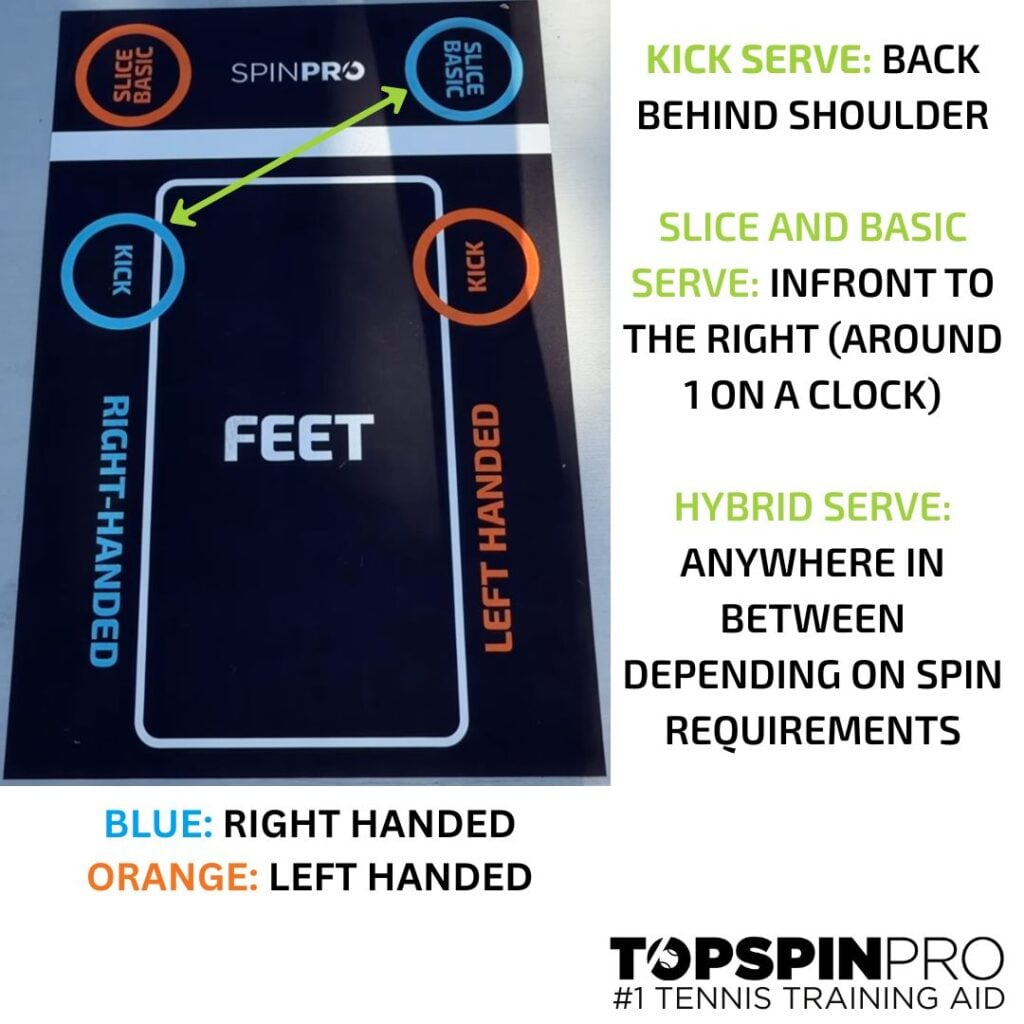
The SpinPro serve mat shows you the best place to have your toss. You can see the position of the kick serve toss position is back behind the baseline and body position vs the basic (flat) and slice serve which is inside the baseline and the opposite side of the body.
Step 3: The Backswing
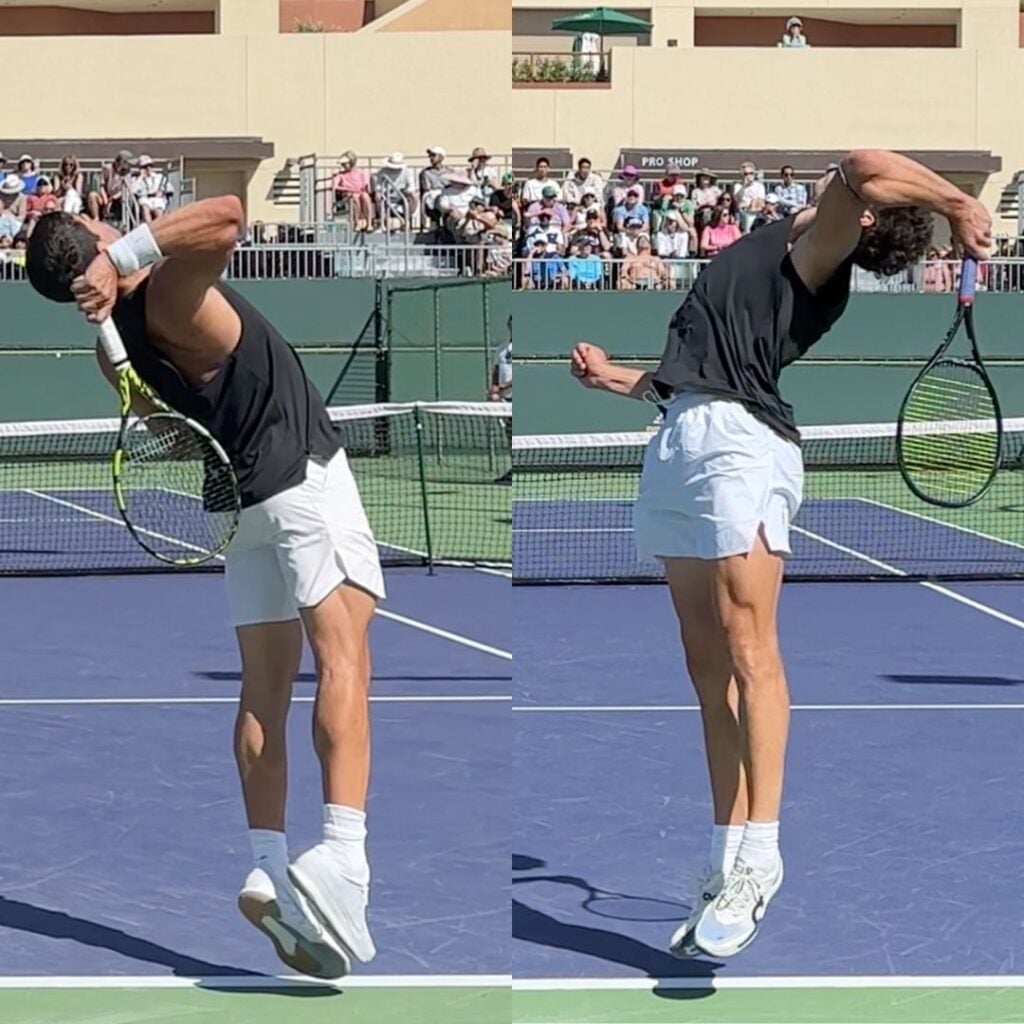
The backswing is a personal thing and even at pro level you will see huge variation in the way they take the racket back. You can see in the image below how the racket position on the backswing at the ball release point is different for Alcaraz and Shelton. Their fundamentals are the same though, hips and shoulders turned away from the court in preparation to uncoil their body through the swing.
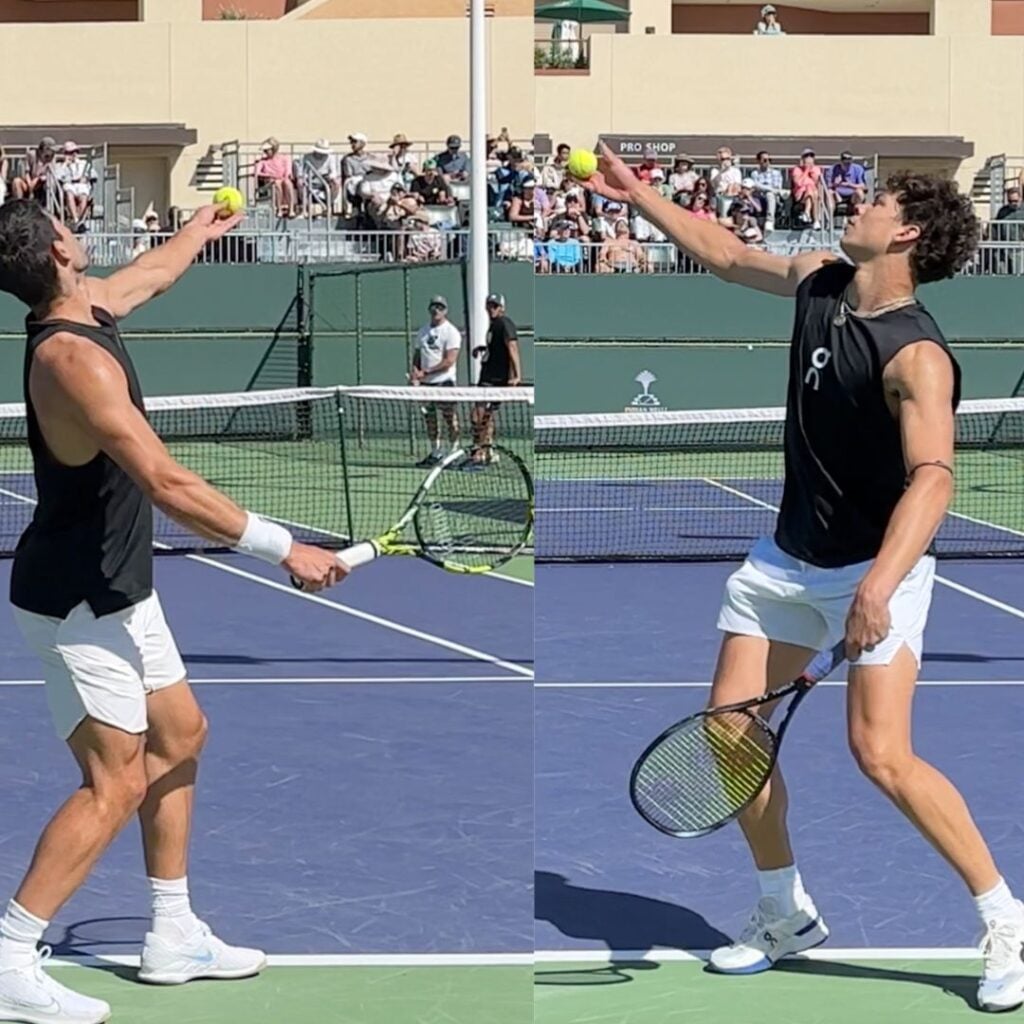
The goal of the backswing is to get the racket up into a position where it can be dropped behind the back before upward acceleration to contact. This fundamental always stays the same no matter what kind of backswing a player has (see below):
Step 4: The Leg Load & Trophy Position
Before the racket drop into acceleration and at the end of the backswing you hit what is classically known as the “trophy position” or the loading phase. This is where you incorporate your leg drive. Leg drive helps massively with topspin in that the more you lift the easier it is to accelerate up the back of the ball. The legs are the engine of the serve.
During your loading phase bend your knees as comfortably as you can go. Some players have bigger leg drive than others. Look at the slight differences with Alcaraz and Shelton. Alcaraz has more of a classic trophy position where as Shelton has a more extreme turn of the chest and hips which helps him apply massive spin and pace to the ball, which is what he is known for.
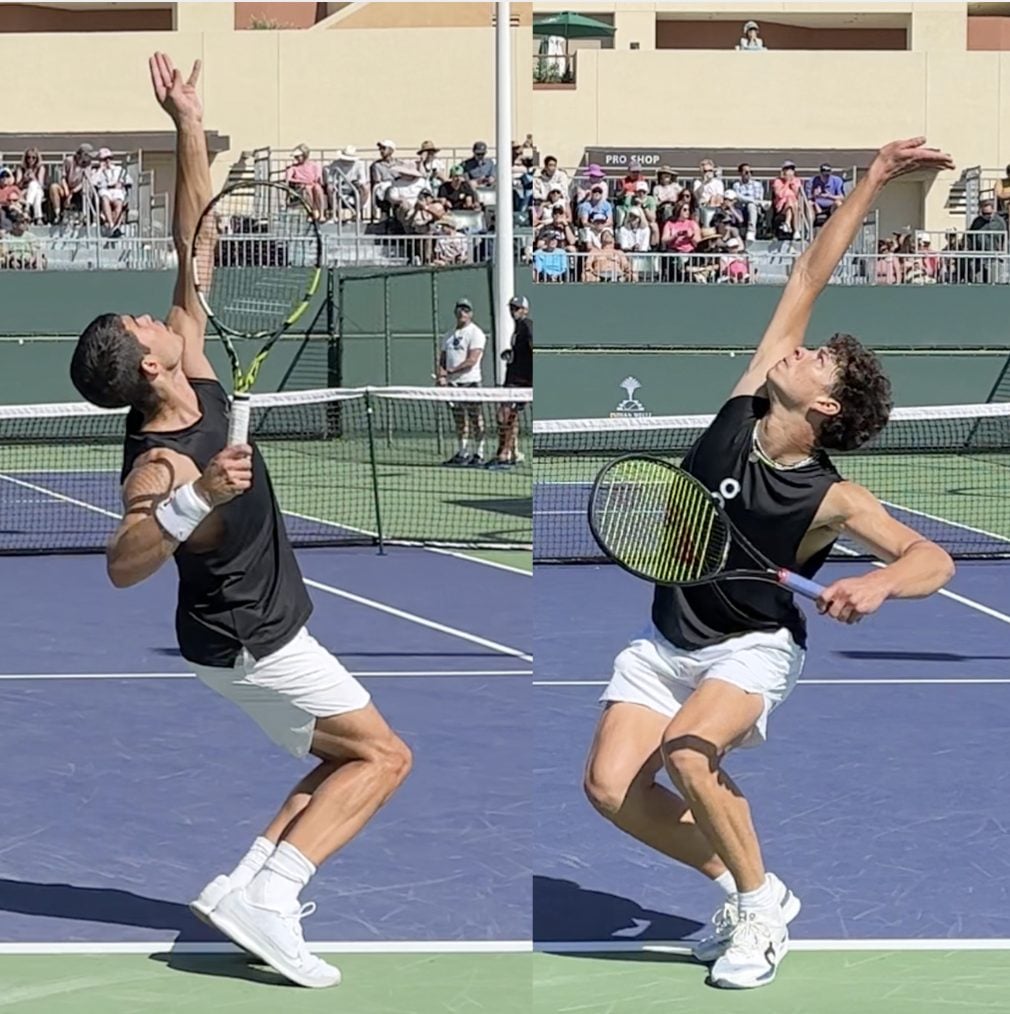
Then, as you explode upwards, your legs help launch your body and racket toward the ball. The more effectively you drive upwards, the easier it becomes to generate topspin.
Step 5: Racket Drop
This is where most players go wrong, either gripping too tightly on the serve, or falling into a “waiter’s tray” position with an open racket face.
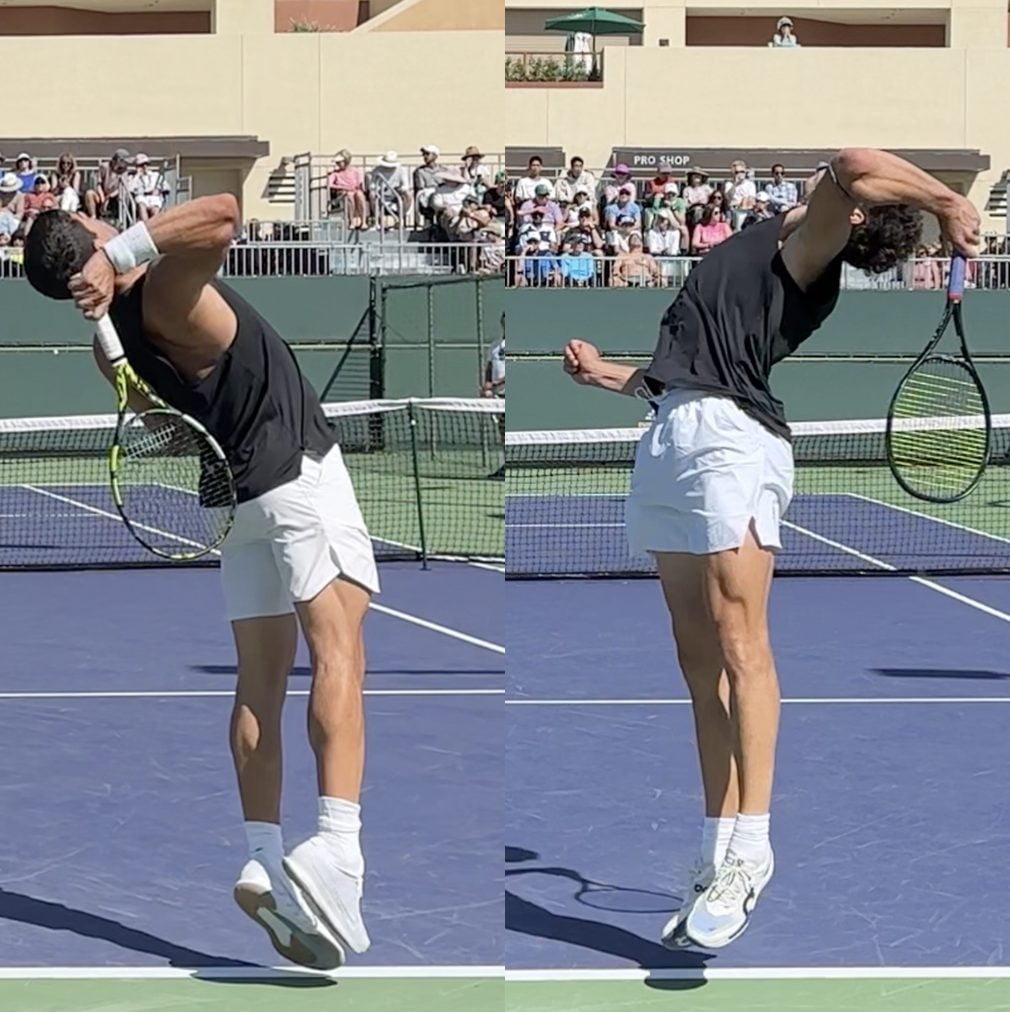
The racket drop phase of the swing is similar to the “racket lag” phase on the forehand. It’s not something you should consciously try to create, it happens naturally when you are relaxed and begin the forward or upward acceleration phase of the swing. Essentially, your racket gets left behind for a brief moment because your body is generating the force, not your arm. So at the end of the backswing your racket should arrive behind your head ready to drop.
You can see in the image below that the legs have powered up towards the ball and the body has begun uncoiling.
Step 6: Contact Point
At contact your strings should be accelerating up from 7 to 1. If the toss is in the correct place this should happen fairly naturally.
The strings should make a heavy sound like they are cutting across the ball rather than a louder flatter sound.
Step 7: Pronation
As you accelerate into the ball, your forearm begins to pronate, rotating so that the palm turns away from your body. This rotation is already happening through the contact point, and it’s what drives both pace and spin on the kick serve. Rather than something you consciously do, pronation is a natural consequence of a relaxed, fluid swing with correct technique. The follow-through after contact, where the racket finishes on edge, is simply the end result of that rotation. Done correctly, it also protects the shoulder joint by allowing the arm to decelerate efficiently rather than abruptly.
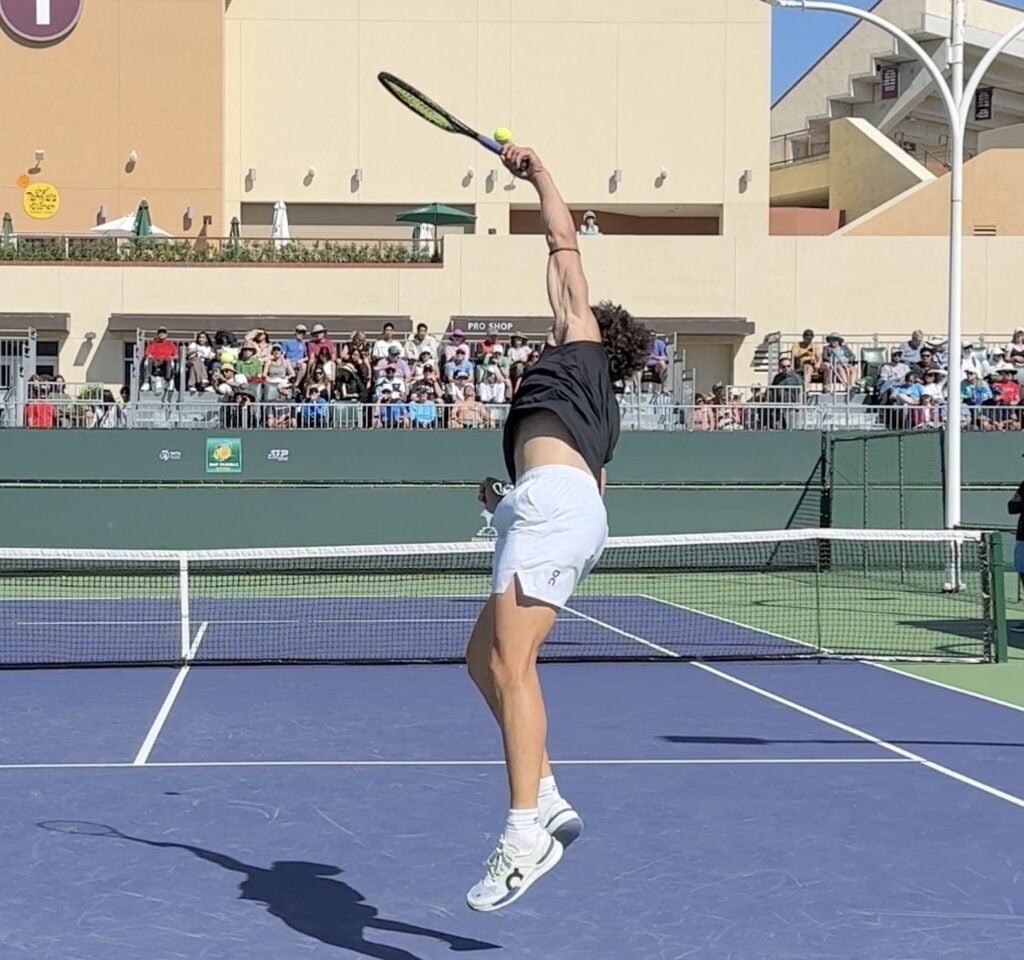
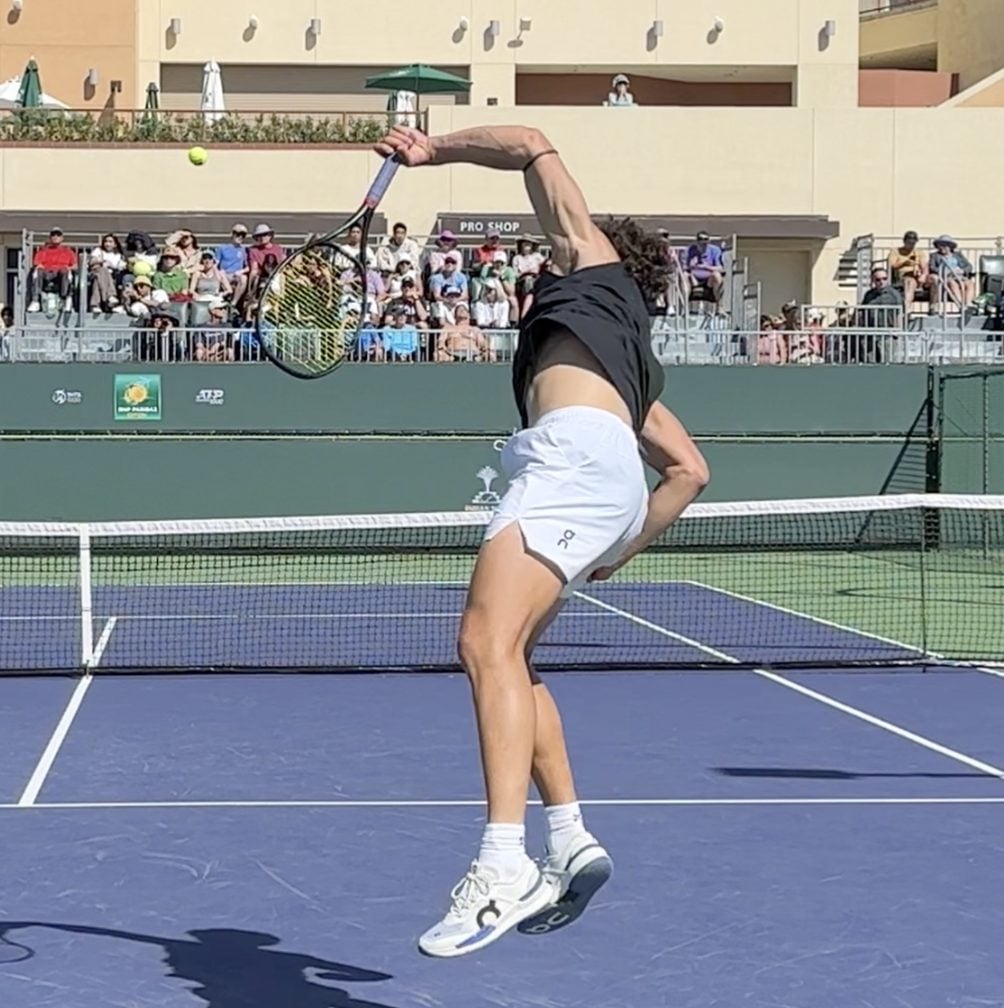
Step 8 : Finish
The follow-through on a kick serve should finish out wide and more toward the baseline compared to a flat serve, where the racket finishes closer to the net post, or a slice serve, which falls somewhere between the net post and the baseline. The direction of your finish is a useful indicator of whether you’re swinging up the ball correctly. If you’re finishing too close to the net post on a kick serve, chances are you’re not generating enough topspin.
Common Mistakes
There are a lot of common mistakes with the kick serve. Let’s look at the main ones:
Exaggerated Swing
Many players exaggerate that swing path using the wrong toss. If the toss is in the correct position then the swing should happen naturally. Don’t force it.
Wrong Toss
As we have already said, the correct toss promotes the correct technique. If you toss is too for forward or to the front of your body you will end up hitting more sidespin than topspin. If your toss is too far back you will hit topspin but often end up off balance or straining your body.
Hitting The Top Of The Ball
Trying to hit over the top of the ball will make it go down. The kick serve needs lift to have it accelerate up and over the net. Think of a rising arc or rainbow flight path
Decelerating
Many players become so focused on making the serve land in that they slow the racket down. Ironically, with the kick serve more racket-head speed usually creates more topspin and therefore more control!
Mastering The Kick Serve
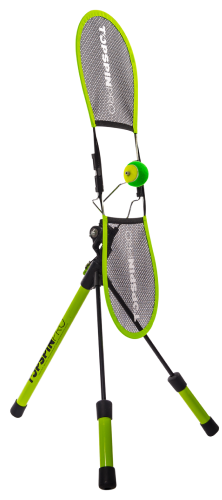
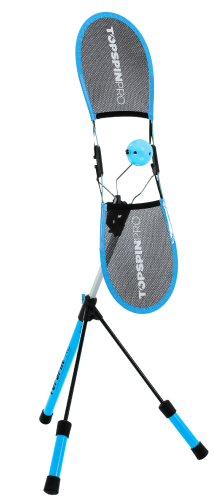
If you are struggling with the kick serve then the SpinPro can help you master all of the fundamentals. Here’s a demo video of how you can learn the serve with easy progressions:

Summary
The kick serve isn’t about complicated wrist movements or trying to “brush underneath” the ball. It’s built on solid fundamentals. The right grip, an efficient toss, explosive upward leg drive, natural pronation, and a fast, upward swing path.
Be patient. The kick serve often takes longer to learn than a flat or slice serve because it relies on timing and racket-head speed rather than force. Start close to the service line, focus on generating heavy topspin, and gradually move back as your confidence grows.
Once mastered, the kick serve becomes one of the most dependable and effective weapons in tennis, giving you a second serve you can trust under pressure and a first serve variation that can trouble even advanced opponents.
Enjoyed this article?
Be sure to sign up for our newsletter and we'll keep you up to date about new posts
5 comments
I have the basic spin pro, and it seems to make sense to have the tall one yo practice the serving motion. How does one acquire it?
Hi Fred, you can get the SpinPro serve pack at topspinpro.com. Thanks!
Interfaces nicely with great Academy content and course.
Interfaces nicely with great Academy content and course.
Thanks so much for the great feedback Fred!