


One of the biggest misconceptions in tennis is that winning a match requires hitting a lot of winners. We all watch pro tennis and are inspired by the number of creative shots we see players hit, but we often remember only the highlights, not the average points in between.
In reality, from beginner level all the way up to pro, the player who makes fewer mistakes comes out victorious, not the player who hits the most winners. Let’s take a look at how you can reduce your number of mistakes, what it really takes to be consistent, and how you can win more matches.
Winners vs Errors
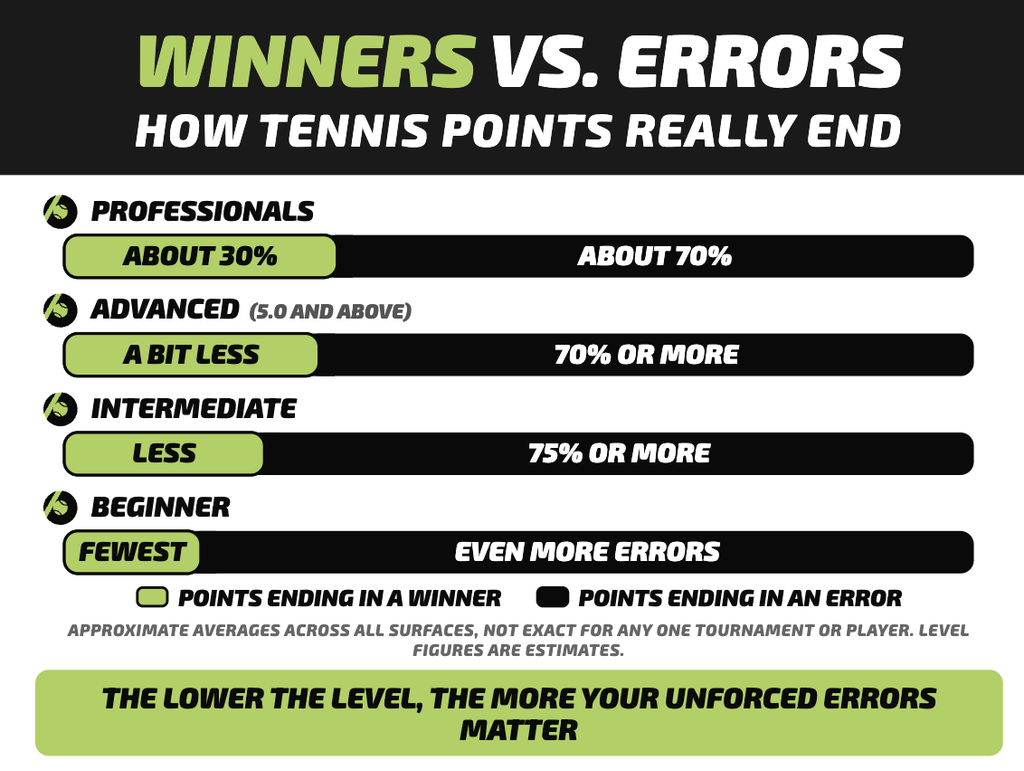
Before we dive into how to become more consistent as a player, let’s take a look at some stats on the average winners vs errors hit in a match. Now, obviously, this varies by surface type and environment. Faster grass courts and hot weather give the most chances to finish points, while slower clay and cold, heavy conditions lengthen rallies and make winners harder to come by, with hard courts and mild weather sitting in between.
See the image below for the average stats (across all surfaces):
Consistency Wins
The higher the level of the player, the more winners they are able to hit. This is due to their ability to consistently apply pressure to their opponent and create opportunities. But when we look at these numbers, it becomes clear that being successful as a player is more about making fewer mistakes. If you can make less mistakes than your opponent, you are always going to win the match.
We have all played against those frustrating types of players who never seem to miss. They often have no style, no pace, and terrible technique, but they just keep pushing the ball back into the court! Then you start to self-implode, there’s no way through them, and you try for too many winners, which ultimately results in error after error. They simply beat you by making fewer mistakes!
So consistency is really the most valuable skill in tennis. You can have a huge serve, an explosive forehand, and an impressive selection of shots, but none of them will help you win if you cannot keep the ball in play.
Becoming more consistent does not mean being the player we talked about, where every ball is pushed back without much substance. It means producing reliable shots, choosing sensible targets, and knowing when to attack and when to stay solid. A consistent player can defend when necessary, build a point patiently, and increase the pressure when the right opportunity appears.
This changes how you should approach a match. If you repeatedly attempt low-percentage winners, you may be giving away more points than you earn. A better strategy is to combine controlled aggression with a sufficient margin over the net and inside the lines. More on that later!
The lower the playing level, the more valuable it becomes to make your opponent play one additional ball.
Forced vs Unforced Errors
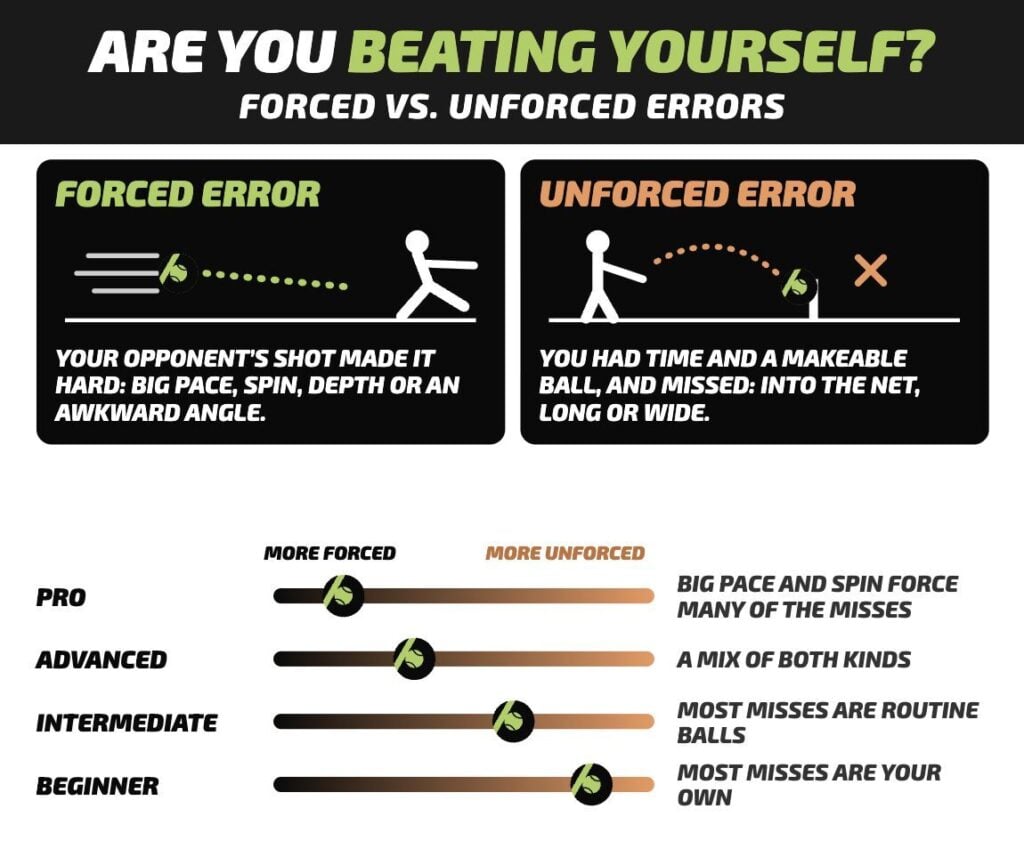
When we talk about the number of winners vs errors, it’s also important to see how many of those are forced vs unforced errors. Here’s the difference:
Unforced Error – You try too hard, hit too close to the lines, or add too much power. Basically, if your opponent hasn’t put you under pressure and you have tried for something too risky, then it’s an unforced error.
Forced Error – Your opponent hits a shot that pushes you way out of position, resulting in a bad contact, or fires the ball at you with heavy pace and spin. Any shot you miss because your opponent put you under too much pressure for you to strike as you would like to is a forced error.
Sometimes, defining the two can be blurry as a spectator, but usually, as a player, you can tell if you tried for something too hard or if you were put under pressure.
What Is Consistency In Tennis?
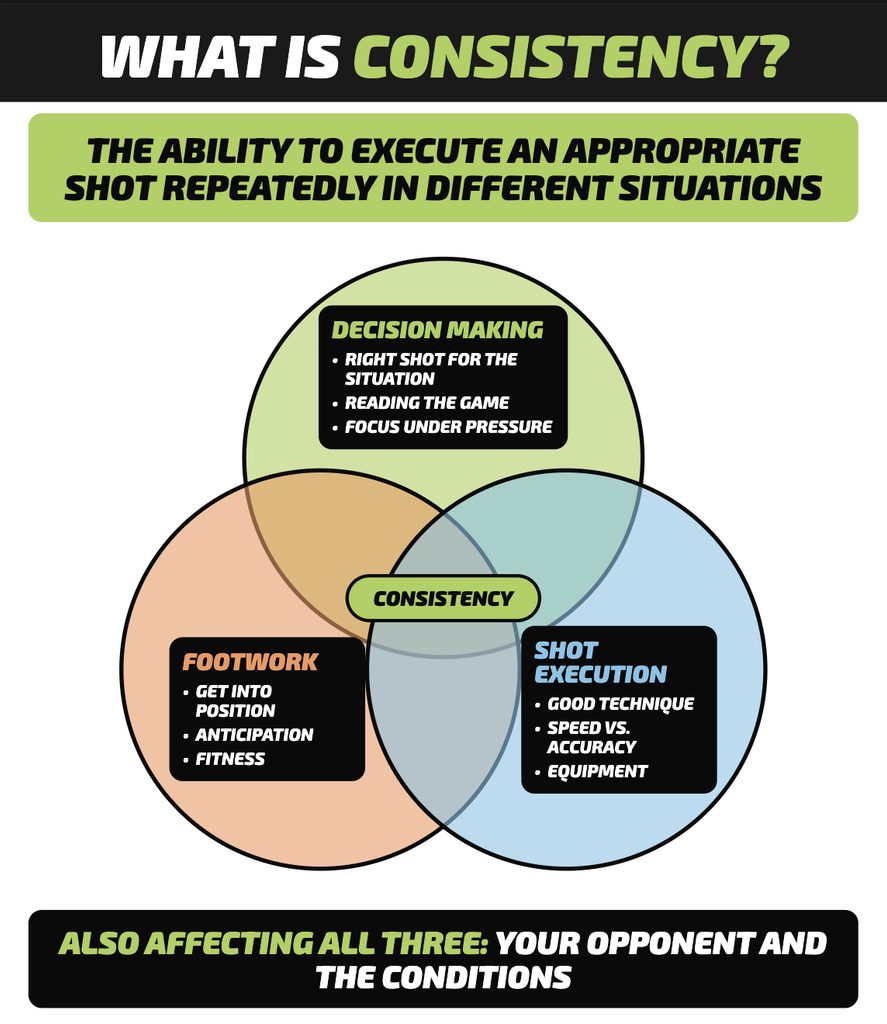
Consistency is the ability to execute an appropriate shot repeatedly in different situations without making an unforced error. It’s a combination of decision-making, footwork, and shot execution.
A technically perfect swing is not enough. True consistency means maintaining control when the ball arrives with different height, speed, spin, and depth.
The goal is not to eliminate every mistake. Unforced errors will happen from time to time, particularly when you are attempting to pressure an opponent, and forced errors are to be expected throughout. The goal is to reduce unnecessary mistakes and make better decisions about when to take risks.
Common Reasons For Inconsistency
So we have already looked at what consistency is, but let’s take a closer look at some of the main reasons the average player struggles.
Decision Making
Common mistakes with decision-making include:
- No Clear Game Plan – Playing reactively or changing tactics after every lost point makes it difficult to develop rhythm and construct points effectively. Even worse is just playing without thinking at all.
- Not Playing The Score – A common problem for rec players is simply not remembering the score. Another one is not playing to the score. If you are 0-40 down, the last thing you want to do is go for a huge winner, but it’s not so drastic if you are 40-0 up!
- Letting Emotions Take Over – Emotions can take a heavy toll on your decision-making ability. We’ve all been there! Getting too hot-headed or tight can affect both your decision-making and shot execution.
- Finishing Too Early – Going for broke when you are pushed 15 feet behind the baseline is not the best, but it happens so often! Knowing when to attack vs defend is the key to making the right decisions.
- Aiming for the lines – Again, this often comes down to trying to hit too many winners. Percentage tennis wins, and you don’t need to paint every line.
Footwork
Common Footwork mistakes include:
- Late Preparation – Being slow to recover and not being on your toes in the ready position will lead to inconsistent contact points and also often send you off balance.
- Inefficient Footwork – This often stems from a lack of fitness or insufficient practice with balance and footwork patterns. Being able to get into a balanced, efficient position enables you to make the most of your technique.
- Lack of Anticipation – Lack of knowledge of patterns of play and court geometry can lead to poor anticipation and, therefore, slow movement into position.
- Physical Fatigue: As players tire, their footwork, concentration, and technique often deteriorate, resulting in more errors.
Shot Execution
Common causes of bad shot execution include:
- Too Much Power – This couples with poor decision-making, but it may just be that you enjoy whacking the ball! There is a time and a place for power, and knowing which shot to hit when can help control it.
- Low Net Clearance – Another common misconception in tennis is that the ball should be low over the net. This leads to inconsistency. Using height, coupled with topspin, helps maintain better consistency.
- Changing The Swing – Many players completely change their swing when under pressure. Staying as close as possible to your practice technique will maintain higher consistency.
- Lack of a Pre-Point Routine: Rushing between points without resetting your breathing, focus, and objectives can cause mistakes to carry over.
Identifying the type of mistake you make is more useful than simply telling yourself to “be more consistent.” Once you understand why your errors are occurring, you can address the underlying cause.
How To Become More Consistent
Once you have identified the factors contributing to your mistakes, you can begin working on trying to improve them. Let’s explore some practical ways to improve your consistency. Many of these strategies address several common causes of inconsistency simultaneously, helping you build a more reliable game.
1. Aim For Safer Targets
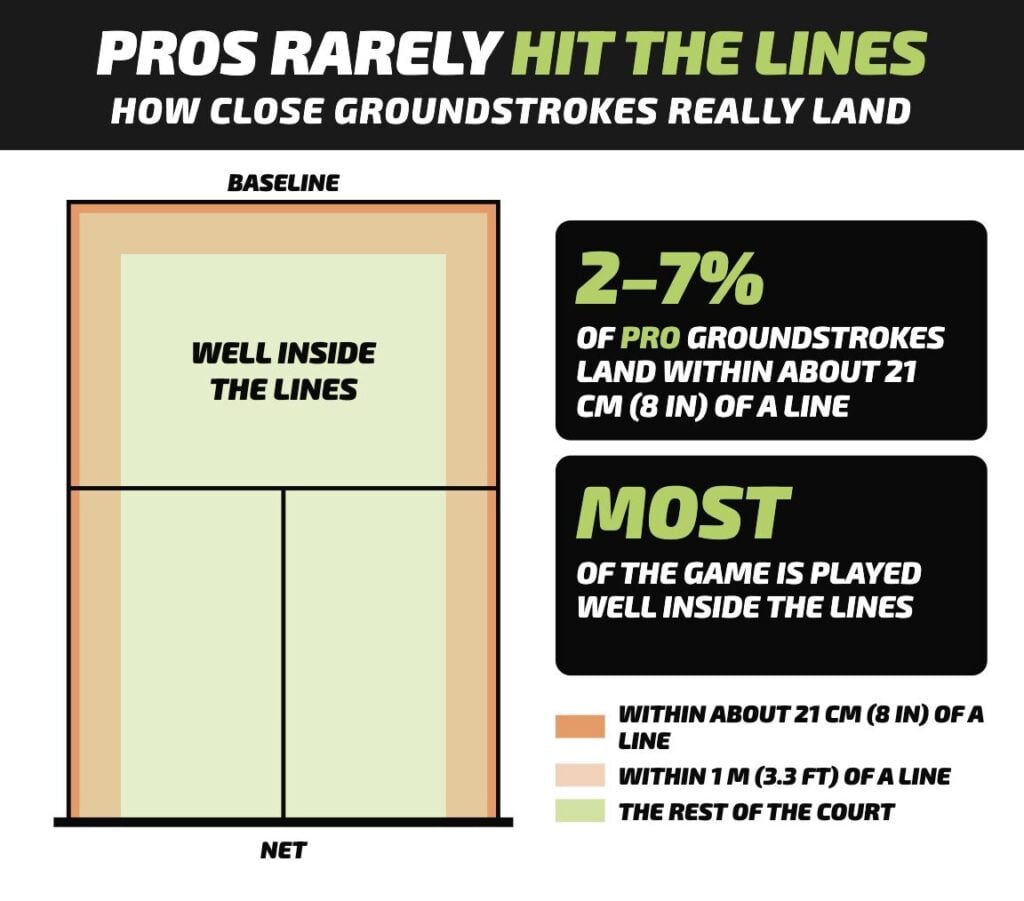
By simply playing it safe, you can eliminate many mistakes. Even at the pro level, they play safely within the lines and clear the net well. At the end of the day, a mistake can either go in the net, long, or wide. If you reduce the chances of that happening, you will make fewer errors.
- Height – Aim for 2-3 x the net height on most shots to reduce errors in the net.
- Depth – Aim well inside the baseline within 3 feet
- Width – Aim well inside the sidelines within 3 feet.
- Direction – Cross-court is also the safest direction to hit. Because of the diagonal, it’s a longer and larger space, and also travels over the lower part of the net. Keep it cross-court a good amount of the time.
2. Add Topspin
Topspin is one of the best tools for consistency and a good way to combine pace with control. The forward rotation on the ball makes it drop sooner into the court than a flatter shot. This enables you to:
- Add More Height – Hit higher over the net to add more margin.
- Increase Power – Hit the ball faster than a flatter shot, and it will still land in.
- Hit Angles – The resulting dip from topspin enables you to hit tighter angles than a flatter shot and create more space.
- Create More Depth – Topspin makes the ball kick higher meaning you can push your opponent back deeper in the court but still use safe margins inside the baseline.
- Dip The Ball – Having the benefit of dipping the ball offers many tactical advantages, such as passing shots or dropping the ball at an opponent’s feet.
You do not need extreme spin on every shot. Even moderate topspin can significantly increase your consistency and margin for error.
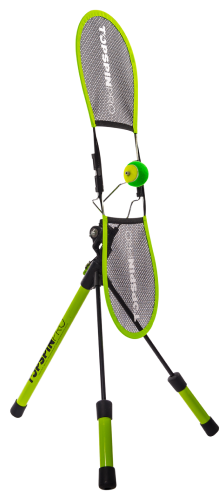
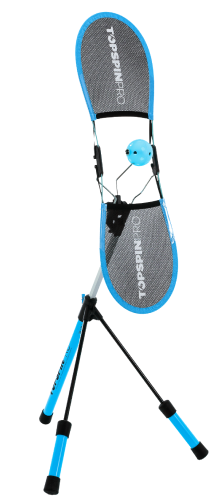
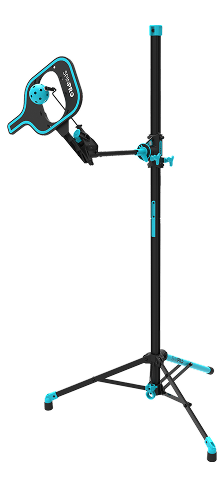
For extra help with your topspin, you can try the TopspinPro or SpinPro. Here’s an example of how to learn and practice the topspin forehand on the SpinPro.

3. Improve Your Preparation and Recovery
The time before and after hitting the ball is more important than the technique itself. All you really need is a good contact point to bunt the ball back in. If you have excellent footwork, you can be a decent player, just like the player we talked about earlier….the pusher who gets to every ball! So, excellent technique alone doesn’t make a great tennis player. Strong preparation and recovery put you in the right position to let that technique shine!
Recovery
Before you can prepare for the next shot, you need to recover well. Effective recovery helps with:
- Anticipation – Recovering to the correct position on the court forces a more predictable response from your opponent.
- Decision Making – Recovering to the correct positions quickly reduces the pressure on your next shot. This helps with clearer decision-making and shot selection.
- Timing – Fast recovery gives you more time for the next shot, resulting in a better strike zone and fewer mistakes.
Preparation
Once you have recovered well, you can prepare for the next shot with less pressure. If you prepare fast and with effective footwork and efficient technique, such as a compact unit turn, it can help with:
- Spacing – Good footwork and early preparation help you get good, solid spacing to the ball and therefore a much more consistent contact point.
- Emotions – Effective preparation and recovery help keep your emotions in check. If you know you are giving it your all, it helps you stay calmer, and if you are outplayed by your opponent, then at least you tried your best.
- Good Technique – The more time you have, the more you can maintain your usual technique.
4. Improve Your Tennis IQ
You have probably heard commentators talk about “tennis IQ” and how certain players seem to possess it more than others.
When you look across the professional game, even just inside the top 50, you will see a huge variety of playing styles and strengths. Some players are incredible natural athletes, some rely on world-class technique, and others have insane mental toughness and a relentless desire to win. Then there are players who separate themselves through their ability to read the game, anticipate what is coming, and make smart decisions under pressure. That is tennis IQ. Often, these players might not look like they should be competing with the very best, but they have outsmarted their way to the top!
Players with a high tennis IQ know which shots give them the greatest margin for error, when to attack, when to defend, and where to position themselves for the next ball. They recognize patterns, expose their opponents’ weaknesses, and avoid unnecessary risks. Basically, they take risks at the right time and make fewer mistakes!
So how should you improve your tennis IQ? Here are some ways you can increase your knowledge and stay more consistent:
- Court Geometry – Learn the geometry of the court so you understand the safest shots, where to recover, and how to create space. You can follow our Instagram page for some regular tips on that.
- Strengths and Weaknesses – Learn how to assess both your own and your opponent’s. Just knowing that can give you a lot of easier options to draw on in a match.
- Play Patterns – Knowing patterns of play doesn’t have to be complicated. It’s more about having something to choose from. It could be as simple as hitting everything crosscourt for the next few games or serving and volleying for a few points in a row. The best way to learn some of these is to watch the pros play, look some up online, and just get on court and practice.
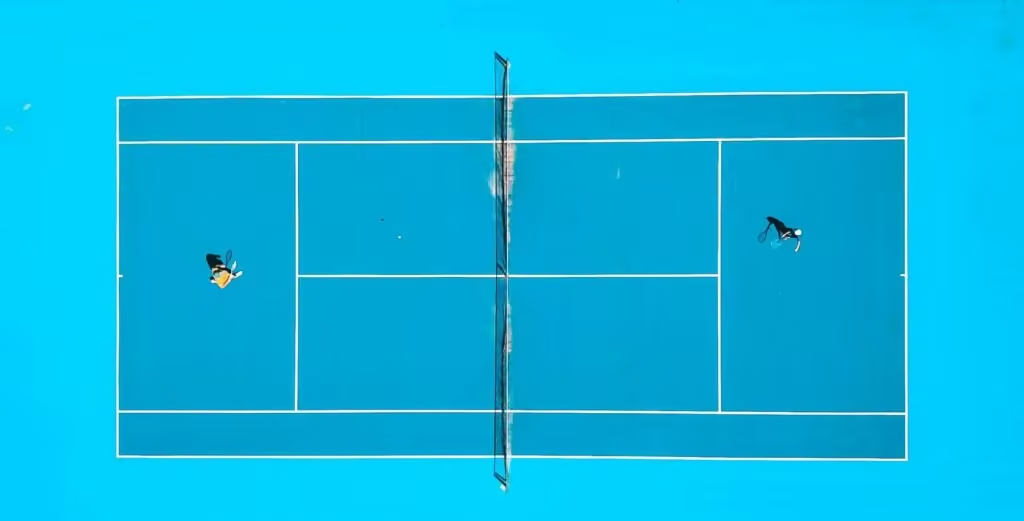
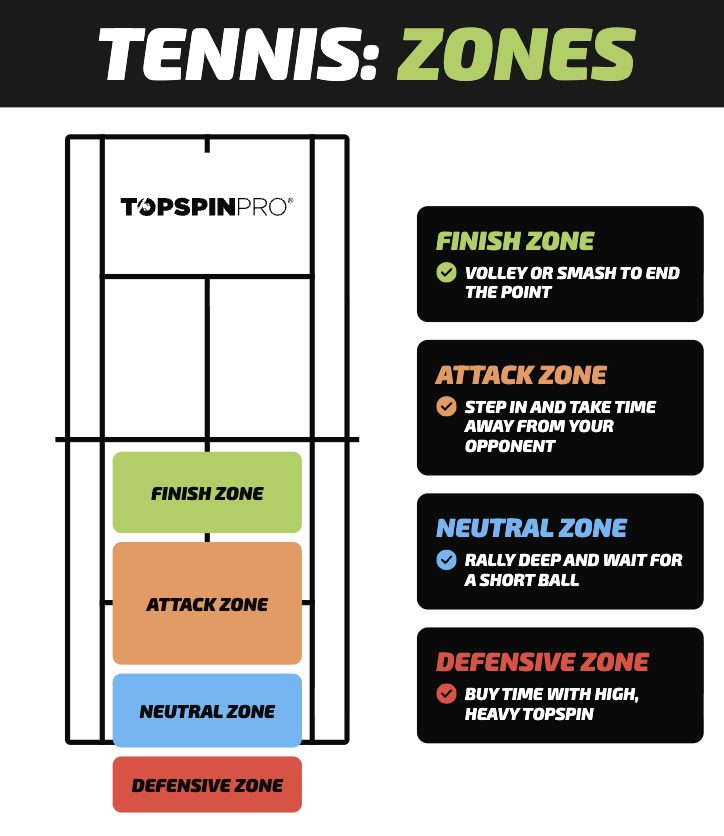
- Situational Awareness – This may sound simple, but when you are in the midst of a game, it is not always easy to recognize whether you are attacking, defending, or more neutral. Improving that awareness makes shot selection a lot easier. See the image below for basic positional awareness.
How Long Does It Take to Become More Consistent?
Don’t put too much pressure on yourself. As with anything in tennis, becoming more consistent takes time. The good news is that tactical changes can happen significantly faster than technical ones. Changing your technique can take thousands of repetitions and months to master, but a tactical change can be as simple as making a better decision, and that can happen overnight!
The main thing is not to work on too many things at once. That will become overwhelming and can actually slow down your progress. Pick the one area that needs the most attention and focus on improving it. You might find that something as simple as aiming three feet inside every line helps eliminate poor shot selection, emotional hitting, and unnecessary mistakes. Small tactical changes like this can make a huge difference to your consistency!
Conclusion
Becoming more consistent doesn’t mean you have to completely rebuild your game or turn into a player who simply pushes every ball back. It means understanding why you are making mistakes and finding simple ways to reduce the avoidable ones (unforced errors). Safer targets, more topspin, better preparation and recovery, and smarter decision-making can all make an immediate difference.
Remember, you don’t need to hit the perfect shot or go for a winner every time. More often than not, you just need to make your opponent play one more ball! Start with one small change, stick with it, and don’t put too much pressure on yourself. The fewer points you give away, the more matches you will give yourself a chance to win!
Enjoyed this article?
Be sure to sign up for our newsletter and we'll keep you up to date about new posts